 |
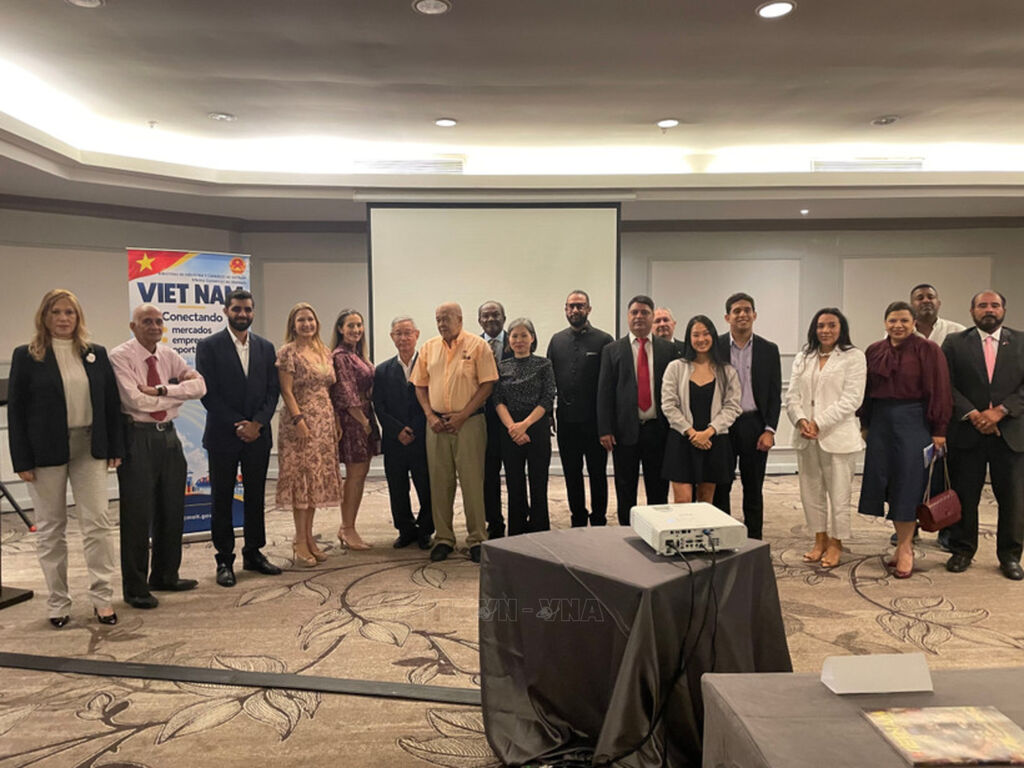
| The Vietnam Trade Office in Mexico, which also covers Panama, has held a conference in Panama City to connect businesses and introduce cooperation opportunities. (Photo courtesy of the Vietnam Trade Office in Mexico and Panama) |
Hanoi (VNA) – The Colon Free Zone is a destination Vietnamese businesses could consider as a base for expanding exports to Latin America and the Caribbean, said Phan Thi Nga, first secretary at the Vietnam Trade Office in Mexico, which also covers Panama.
Nga told the Vietnam News Agency that using the zone as a distribution hub could help businesses reach customers more easily, but they should carefully assess market demand, operating costs and sales potential before deciding to invest.
During his official visit to Vietnam in early October, Panamanian President José Raúl Mulino underscored the message that Vietnam produces goods, while Panama connects them to global markets.
About a week after the visit, the Vietnam Trade Office in Mexico, which also covers Panama, held a conference in Panama City to connect businesses and introduce cooperation opportunities. At the conference, the Panamanian side provided information on the business environment, logistics operations and support policies in the Colon Free Zone, encouraging Vietnamese businesses to explore its potential as a base for expanding into new markets.
Established in 1948, the zone has grown into one of the major free-trade and goods distribution hubs in the Western Hemisphere. According to figures released by Panama, the zone currently hosts around 2,650 businesses. Its total trade volume reached nearly 22.62 billion USD in 2025, covering imports and re-exports.
The zone offers import, warehousing, packaging, sorting, distribution and re-export services for a wide range of goods, from electronics, clothing and cosmetics to pharmaceuticals, automobiles and construction materials. Its container port system, connected to road, rail and airport networks, enables goods from major production centres in Asia, Europe and North America to be consolidated before distribution to markets across the region.
VietPa’s experience offers a useful case study. Founded by Vietnamese entrepreneur Le The Tam, the company began operations in Colon in 2007. It trades in construction stone, cut stone and sanitary ware sourced from Vietnam, serving customers in Bolivia, Costa Rica, Venezuela and Cuba.
According to Tam, shipping goods by sea from Vietnam to Central America typically takes around 35–45 days. Maintaining a warehouse in Colon gives the company greater control over delivery schedules while allowing it to meet customers’ varying requirements for the colours, sizes and finishes of stone products./.