 |
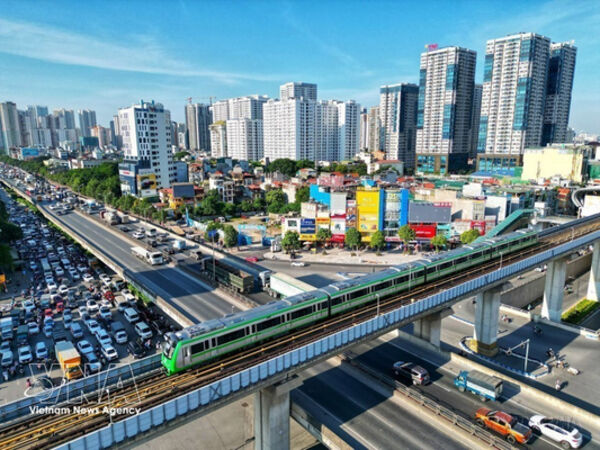
| Construction of Tu Lien bridge in Hanoi (Photo: VNA) |
Hanoi (VNA) – Soaring domestic gas prices, riding a global fuel rally, alongside steeper costs for dining-out services and construction materials drove Vietnam’s Consumer Price Index (CPI) up 0.84% in April from the previous month, the Finance Ministry’s National Statistics Office reported May 3.
The CPI in April advanced 3.31% compared to December 2025 and 5.46% from a year earlier. For the first four months of 2026, the index climbed 3.99% against the same period last year, with core inflation growing 3.89%.
Month-on-month, the April CPI gained 0.84%, with urban areas up 0.83% and rural areas seeing a 0.86% bump. Ten of the 11 main goods and services groups became more expensive, while only transportation managed to buck the trend and dip.
The NSO flagged key inflation drivers for the January-April period. Housing and construction materials prices jumped 6.25% year-on-year, contributing 1.42 percentage points to the overall CPI. Rental housing costs climbed 6.47% on higher maintenance and operating expenses, while home maintenance materials surged 13.52% amid rising construction input costs and robust demand for construction and repairs. Household electricity prices rose 5.53% following stronger consumption and an adjustment to average retail electricity rates effective on May 10, 2025.
Food and catering services prices crept up 4.71%, piling on 1.69 percentage points to the CPI. Pork prices gained 6.07%, adding 0.26 percentage points, as holiday supply ran thin and livestock production costs stayed high. Poultry prices edged up 4.6%, while eating out got 6.12% pricier as restaurants passed along higher input and service costs.
Education costs rose 3.25%, contributing 0.19 percentage points to the CPI, as some private and vocational establishments adjusted tuition fees for the 2025–2026 academic year. Beverages and tobacco prices went up 3.15%, adding 0.06 percentage points, while household equipment and appliances gained 2.38%, contributing 0.12 percentage points.
Meanwhile, culture, entertainment and tourism prices climbed 2.05%, and apparel, headwear and footwear rose 1.79%, together adding 0.06 percentage points to the CPI. Transportation prices advanced 3.48%, contributing 0.35 percentage points, fueled primarily by a 5.16% increase in fuel costs.
Offsetting some pressure, information and communications prices slipped 0.09% over the four-month period, weighed down by cheaper technology devices amid abundant supply and intensifying competition among distributors.
Domestically, the gold price index tumbled 6.71% in April from the prior month, mirroring businesses marking down prices to track global moves. It remained up 54.24% year-on-year and 10.83% compared to December 2025. Gold prices skyrocketed 75.13% in the first four months of 2026.
The greenback fetched around 26,360 VND on the free market. The USD price index inched up 0.17% in April from the previous month, buoyed by stronger domestic demand for foreign currency. It rose 1.44% year-on-year but slipped 0.31% against December 2025. Through the first four months, the USD index ticked up 2.29%.
Core inflation in April hiked 0.88% month-on-month and 4.66% year-on-year. In the first four months, it rose 3.89%, trailing the headline CPI gain of 3.99%, as swings in fuel, gas, and food prices, stripped out of core inflation calculations, drove the broader index higher./.