Cuban magazine praises Vietnam’s forward-looking spirit
Vietnam is admired not only for its rich natural landscapes, from mountains and terraced fields to deltas, tropical forests and mangroves, but also for the beauty of its people and its “countless” achievements in politics, socio-economic development, culture and environmental protection, according to Cuba’s Bohemia magazine.
Cuban magazine praises Vietnam’s forward-looking spirit

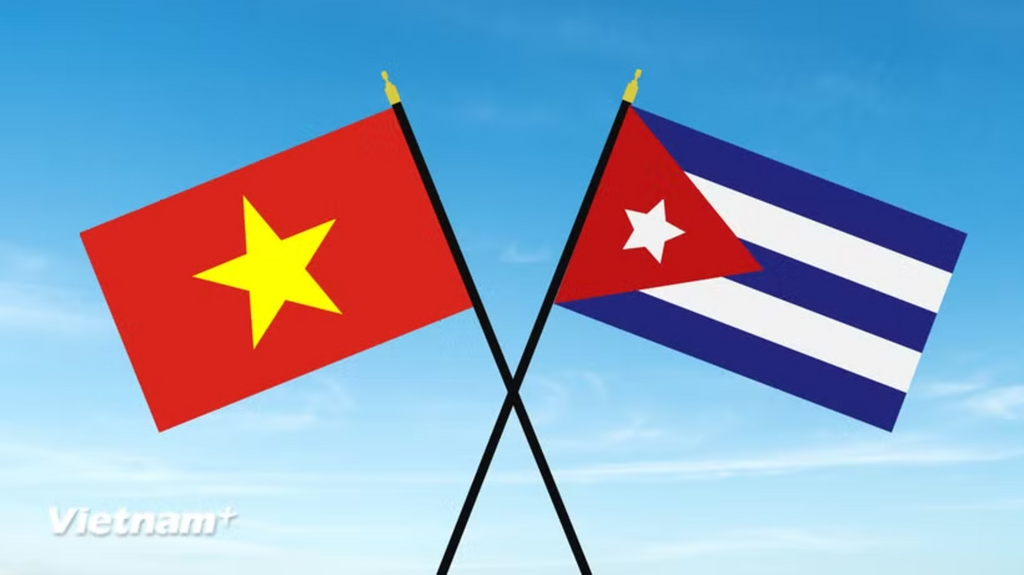
Havana (VNA) – A recent article in Cuba’s Bohemia magazine has praised Vietnam’s forward-looking spirit, highlighting its continued efforts to develop and renew itself, underpinned by the strength of national solidarity.

The article, entitled “Nacion ejemplar” (An exemplary nation), by Maria Victoria Valdes Rodda, noted that Vietnam is admired not only for its rich natural landscapes, from mountains and terraced fields to deltas, tropical forests and mangroves, but also for the beauty of its people and its “countless” achievements in politics, socio-economic development, culture and environmental protection.

Citing figures from a keynote address delivered by General Secretary of the Communist Party of Vietnam Central Committee and President To Lam at the APEC 2026 CEO Summit on November 18, during his attendance at the APEC 2026 Economic Leaders’ Week in Shenzhen, China, the author highlighted that Vietnam’s gross domestic product (GDP) had exceeded 500 billion USD by 2025, making the Southeast Asian nation one of the world’s 32 largest economies. Steady growth, export-oriented manufacturing, stable foreign direct investment (FDI) inflows and sustained domestic demand have continued to drive the economy, the article said.

Bohemia also referred to the “Vietnamese miracle”, citing the development vision outlined by General Secretary and President To Lam. He said Vietnam is entering a new era of development with a strong and comprehensive commitment to renewal. Recognising that the economy could no longer rely primarily on capital, natural resources and low-cost labour for growth, Vietnam has chosen a self-reliant, innovative, humane, sustainable and internationally integrated development model to lay the foundation for national development towards 2045. This approach, he stressed, will link development with people’s happiness, promote humanistic values and harness the soft power of culture.

According to the author, the shared ideals and friendship between Vietnam and Cuba were reaffirmed during the recent official visit to Hanoi by Politburo Member, Foreign Minister and Special Envoy of the Cuban Party and Government Bruno Rodriguez Parrilla. Receiving the Cuban official during the visit, General Secretary and President To Lam underscored the exemplary relationship between the Parties, States and people of Vietnam and Cuba. For his part, Rodriguez Parrilla expressed deep gratitude for Vietnam’s steadfast support for Cuba amid its current difficult circumstances.

Concluding the article, the author noted that as Cuba strives to implement 176 measures for socio-economic transformation, and its brotherly country Vietnam reflects on its remarkable journey of renewal, the people of the two countries have much to share with each other./.
See Also

APEC 2027 to affirm Vietnam’s role, standing: Malaysian scholar

For Vietnam, APEC 2027 is a chance to advance productivity, innovation, infrastructure links and economic resilience while expanding its diplomatic reach. China’s 2026 initiatives provide a starting point, and Vietnam’s host year will test whether that momentum can be carried forward into durable regional cooperation

APEC 2026: Top Vietnamese leader’s speeches offer far-sighted vision

The top Vietnamese leader’s APEC Leaders’ Week attendance and bilateral engagements in China signal both Vietnam’s confidence in its own development path and its sense of responsibility for regional governance and shared prosperity, said Liu Ying, a research fellow at the Chongyang Institute for Financial Studies at Renmin University of China.

APEC 2027: Vietnam aims to promote regional connectivity, sustainable development

Professor Tao Yitao, Dean of the Belt and Road Research Institute at Shenzhen University, China, described the visit as having three interconnected dimensions, namely political orientation, continuity in the APEC agenda and industrial cooperation. Its significance extended beyond the signing of cooperation documents, reflecting the strategic importance both countries attach to their bilateral relationship amid changes in regional cooperation.

Vietnam builds on APEC 2026 outcomes towards hosting APEC 2027: Foreign minister

Vietnam participated in APEC 2026 not only as an active and proactive member but also with the responsibility of the host of APEC 2027. Its engagement reflects the country's consistent foreign policy, ambitious and sustainable development goals in the new era, and desire to make greater contributions to the common future of the Asia-Pacific region.

Vietnam’s independent foreign policy strengthens ASEAN’s unity: Thai scholar

Prime Minister Le Minh Hung’s participation in the 49th ASEAN Summit and related summits in Manila, the Philippines, reaffirms Vietnam’s commitment to an independent and self-reliant foreign policy while contributing to ASEAN’s unity and regional cooperation, according to Songkrit Kirk Pongern, a lecturer in ASEAN Studies at Kasetsart University, Thailand, in an interview with Vietnam News Agency (VNA).

Vietnam’s development inspires Francophone community: OIF Representative

The IOF official recalled that the Francophonie Summit in Hanoi in 1997 marked a turning point for the organisation, with leaders establishing the position of OIF Secretary-General and placing economic cooperation at the centre of its agenda. Nearly three decades later, the Francophonie Summit is returning to Asia, with Phnom Penh hosting the summit under the theme “Reinvesting in Peace for Shared Prosperity and Lasting Stability”.

UNESCO highlights Quoc Tu Giam’s enduring value in inspiring education

As Vietnam marks the 950th anniversary of Quoc Tu Giam (1076-2026) and 50 years of cooperation with UNESCO, Jonathan Wallace Baker, UNESCO Representative to Vietnam, discussed the role of cultural heritage in education, connecting generations and promoting cultural exchange. He also shared recommendations on preserving Vietnam’s cultural identity while harnessing culture as a driver of sustainable development.