 |
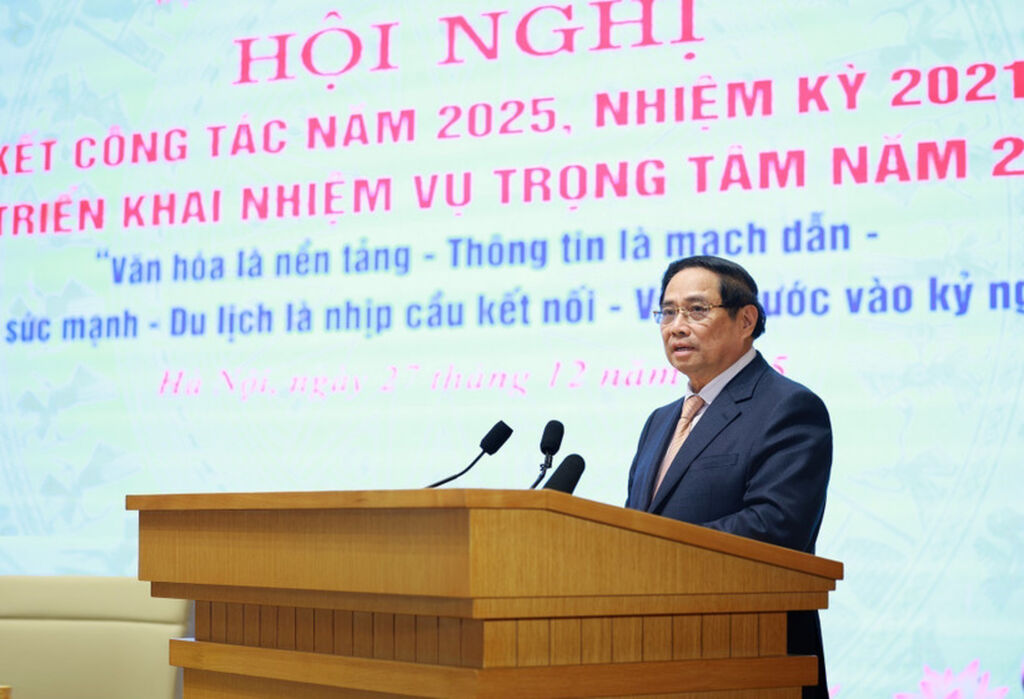
| Prime Minister Pham Minh Chinh chairs a conference in Hanoi on December 27 to review the culture, sports and tourism sector’s performance in 2025 and over the past five years, and and outline key tasks for 2026. (Photo: VNA) |
Hanoi (VNA) – Prime Minister Pham Minh Chinh has emphasised that the culture, sports, and tourism sector must embrace innovative mindset and decisive action to achieve tangible results, creating a vibrant space for development in the new era and positioning culture as both intrinsic strength of the nation and spiritual foundation of its people.
Chairing a conference in Hanoi on December 27 to review the sector’s performance in 2025 and over the past five years, and outline key tasks for 2026, PM Chinh stressed that sports should embody the nation’s spirit and strength, tourism should serve as a channel connecting friendship, peace, and development, while the media should build trust and hope, acting as a bridge between the people and the Party and State.
Looking back at key achievements of the sector, and mentioning specific notable events, the PM acknowledged and commended the Ministry of Culture, Sports and Tourism, and the entire sector for their dedication, efforts, and remarkable results in 2025 and over the past five years.
He said their contributions have played a significant role in the nation’s overall progress, marked by deep-rooted culture spreading widely; focused and strategic sports; and breakthrough tourism; strengthened trust through media; mutual care and support within the sector; achievements elevated in quality and stature.
To achieve these goals, the government leader highlighted the importance for competitive institutions, modern infrastructure, skilled human resources, global connectivity, outstanding achievements, a streamlined organisational system, benefits for the people, and international recognition.
He urged the Ministry of Culture, Sports, and Tourism, together with relevant agencies and localities, to effectively implement policies and directions of the Party and the State, especially the Politburo’s resolution on cultural development.
The PM asked for bold reforms in institutions, policies, and laws, stressing that policies must be proactive, practical, and feasible; decisively abandoning outdated ‘control-first’ mindset, and strengthening decentralisation with robust oversight.
The culture, sports, and tourism sector, together with other ministries, agencies, and localities, must continue streamlining and optimising organisational structures, ensuring smooth, effective, and efficient operations of all units after restructuring, he noted, adding that priority should be given to training, fostering and improving the quality of grassroots cultural officials to meet the requirements of the two-tier local administration model, especially at the commune level.
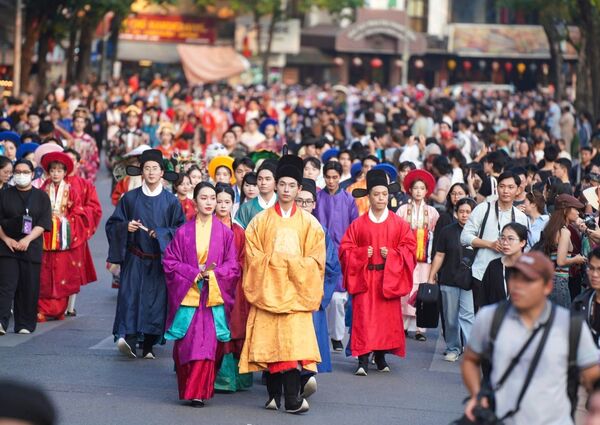
He emphasised that the sector must cultivate an advanced Vietnamese culture rich in national identity, promote well-rounded human development, and foster a humane, civilised, and modern cultural environment, ensuring that culture permeates society and serves as both a strong spiritual foundation and an internal driver of development.
The PM urged faster development of cultural and entertainment industries and cultural markets, alongside the building of a comprehensive cultural ecosystem. He stressed the need for more effective mobilisation and use of resources, stronger infrastructure development, improved quality of the cultural workforce, and special mechanisms to discover, train and nurture talents in culture and the arts.
He called for the advancement of grassroots culture in line with the two-tier local administration model, the creation of bright, green, clean and beautiful grassroots cultural communities, and the building of a cultural posture closely linked with national defence and security to reinforce the ideological and cultural front. Cultural management should be renewed toward a facilitative, service-oriented approach, with greater emphasis on the application of science and technology and digital transformation.
At the same time, Vietnam should proactively deepen international integration, absorb the essence of global cultures, and strengthen national soft power through the internationalisation of a culture imbued with Vietnamese identity and the Vietnamisation of the world’s cultural values, he said.
Calling for breakthroughs in sports development, the PM stressed the need for balanced growth between mass participation and high-performance sports, with focused and targeted investment. He urged stronger application of science and technology, sports medicine and digital transformation in training and competition, alongside the upgrading, modernisation and more effective use of key sports facilities, and greater investment in infrastructure and technical facilities, particularly at major athlete training centres.
He requested the sector, relevant stakeholders and localities to restructure operations, improve quality and competitiveness, and firmly establish tourism as a spearhead economic sector, with priority given to high-quality, sustainable, smart and green tourism, as well as a communications strategy to promote Vietnam’s image abroad. By 2026, the sector aims to attract 25 million international visitors and serve 150 million domestic tourists.
The PM underscored that the press and media must proactively guide public opinion, counter false and hostile information, vigorously promote positive and humanistic values, and help foster a healthy and modern communications environment.
According to the PM, the culture, sports and tourism sector is playing an increasingly important role with far-reaching societal impacts. Its tasks are both urgent and strategic, and of decisive significance to the country’s rapid and sustainable development and the enduring vitality of the Vietnamese nation.
The PM expressed his confidence that the sector will continue to uphold its proud traditions and achievements, remain united, pursue strong renewal, adopt a long-term vision and bold action, stride firmly into a new era and make important contributions to building a prosperous nation and ensuring warm and happy lives for the people.
On this occasion, PM Chinh presented prestigious awards of the Party, the State and the PM to collectives and individuals of the Ministry of Culture, Sports and Tourism in recognition of their outstanding achievements./.