 |
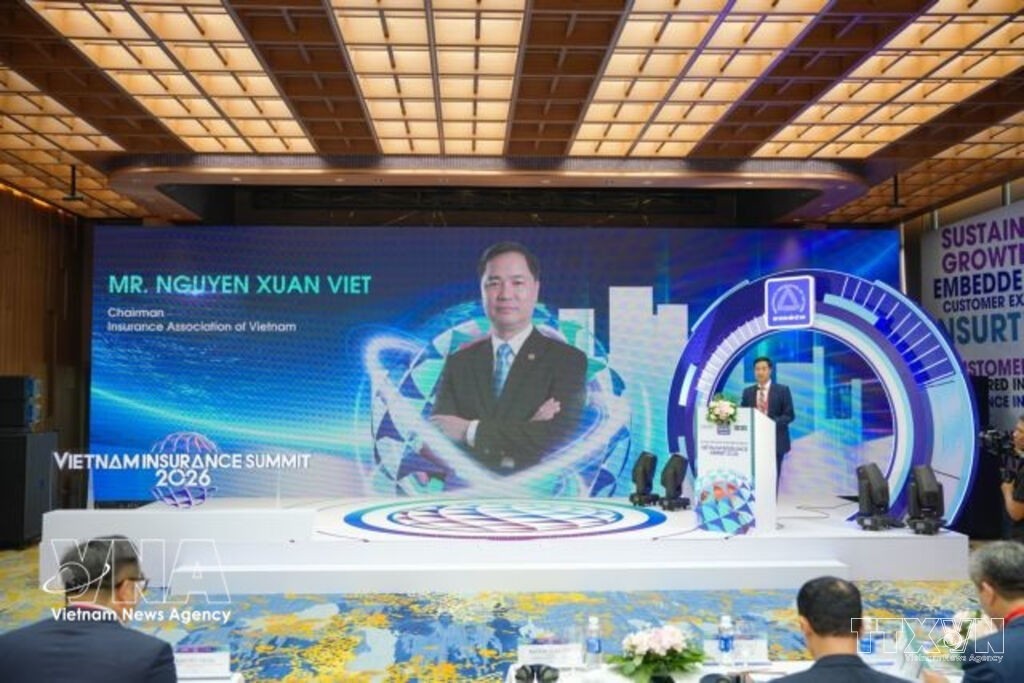
| Nguyen Xuan Viet, Chairman of the Insurance Association of Vietnam, speaks at the summit. (Photo: VNA) |
Hanoi (VNS/VNA) - The Vietnamese insurance industry is making use of global technological trends to meet the development requirements in the new era, where AI, data and resilient transformation have become a decisive factor for the sector's competitive edge and sustainable development, experts said at a summit on July 30.
Nguyen Xuan Viet, chairman of the Insurance Association of Vietnam (IAV), told attendees at the 2026 Vietnam Insurance Summit that the insurance industry is entering a new phase of development with higher demands.
Market growth is no longer measured solely by revenue size or the number of contracts, but increasingly depends on service quality, risk management capabilities, innovation and the ability to build lasting trust with customers, Viet said.
Meanwhile, the global economy continues to see uncertainties and new challenges, he noted. This means that customers not only want faster claims processing but also expect insurance companies to be able to support them in predicting and mitigating risks early.
Data and AI are therefore becoming core competencies in the modern insurance industry, according to Việt. When used effectively and responsibly, AI not only helps insurers improve operational efficiency, but also unlocks the potential for deeper customer understanding, the development of more relevant products and the provision of more proactive and personalised service.
“However, we must also recognise that technology is not the destination. The true value of the technology transformation lies in using technology to build trust, enhance service quality and develop a transparent, safe and sustainable insurance market.
"This is a journey that requires the collaboration of regulatory bodies, insurance companies, technology partners and the entire ecosystem,” he noted.
Ngo Viet Trung, director of the Ministry of Finance’s Insurance Supervision and Management Department, told the summit that domestic insurers have actively invested in data, AI and digital platforms to optimise operations, improve customer experience and develop new products and services.
He said that the department will continue to support the business community in the process of innovation, while gradually perfecting the legal framework for the research and application of AI and new technologies in insurance operations.
Trung also noted that the application of AI for the insurance sector – where customer trust is the foundation of development – needs to ensure transparency, accountability in decision-making, protection of personal data, information security and effective risk management mechanisms. These are also priorities for many regulatory bodies and insurance markets worldwide building a safe and sustainable digital insurance ecosystem.
“Our approach is to encourage innovation while managing risks, promoting the use of technology to improve operational efficiency, product development and service quality, while safeguarding policyholders' legitimate rights and interests and ensuring data security, cybersecurity and transparency in the use of AI," Trung said.
“We also believe that the development of AI is not just a matter for individual businesses, but requires close coordination among regulatory agencies, insurance and technology companies, research organisations and partners in the ecosystem."
He said sharing international experience, updating new trends and discussing management models and solutions will help develop the Vietnamese insurance market in a modern, transparent and sustainable direction.
At the summit, experts discussed how data and AI can be used to enhance resilience, while also examining the shift toward customer-centric, platform-based ecosystems. They also highlighted critical approaches to transforming insurance operations and business models in an increasingly digital landscape.
Sang Lee, president of Chubb Life Southeast Asia and New Zealand and country president of Chubb Life Vietnam, shared a strategic perspective on the imperative to reshape the insurance industry amid growing global uncertainties, rising customer expectations and an increasingly dynamic business landscape.
Lee highlighted three strategic priorities: better distribution, smarter use of platforms and data, and a more proactive claims model to enhance operational efficiency while delivering greater value to customers and business partners.
“Successful transformation is not driven by technology alone, but also requires a fundamental shift in business models, organisational capabilities and corporate culture to build a more resilient, customer-centric and future-ready insurance industry,” he said.
On the sidelines of the summit, which was organised by the IAV and IEC Group, an insurtech exhibition showcased cutting-edge solutions and emerging innovations from leading technology providers and industry partners./.