 |
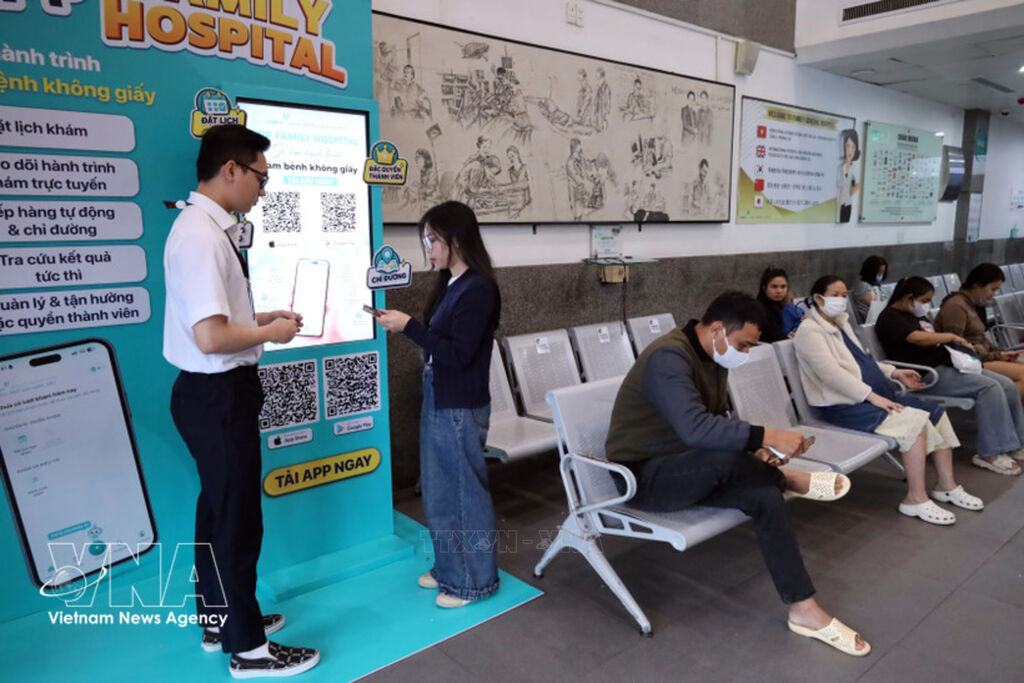
| A staff member of Gia Dinh General Hospital guides a patient on how to use the FAMILY Hospital application. (Photo: VNA) |
Da Nang (VNA) – The central city of Da Nang is accelerating the digitalisation of medical examination and treatment procedures to reduce paperwork, simplify administrative processes and make healthcare services more accessible to the public.
Medical facilities are gradually introducing electronic medical records, online appointment systems and digital test result services, enabling patients to take a more active role in their healthcare journey.
According to local health authorities, by early September, all hospitals in the city had announced the implementation of electronic medical records. Under Plan No. 212/KH-UBND, issued by the municipal People's Committee on April 29, 2026, the city aims to ensure that all medical examination and treatment facilities complete the transition by the end of this year.
Hospitals under the municipal Department of Health have been required to stop using paper medical records from November 1, while facilities under ministries and sectors, as well as private ones, will do so from January 1, 2027.
The city is also promoting data connectivity for health insurance-based medical examinations and referral documents among healthcare facilities.
Digital services are already available at many hospitals. Da Nang Hospital has introduced self-service kiosks allowing patients to register for examinations using chip-based citizen identity cards or Level-2 VNeID accounts. Meanwhile, the Hai Chau regional medical centre has deployed an electronic medical record system integrating patient information, examination, test and treatment results.
Among private healthcare facilities, Gia Dinh General Hospital launched its FAMILY Hospital application on November 11, enabling patients to monitor waiting times, find ways to examination and testing rooms, and access medical results via their smartphones. It has also begun the first phase of reducing printed paperwork in its examination and treatment procedures.
Beyond appointment registration, the application supports patients throughout their hospital visits. Users can check their queue numbers, identify the next department they need to visit and receive directions. For certain diagnostic tests, the application also suggests areas with shorter waiting times, helping patients arrange their schedules more efficiently.
Built on the hospital's electronic medical record platform and online result delivery system, the application helps patients record symptoms, medical history and questions for doctors before consultations. After returning home, they can review updated medical results and submit further questions when clarification is needed.
For patients travelling from other central provinces to Da Nang, particularly those visiting hospitals for the first time, digital queue monitoring and navigation services offer greater convenience. They can also access their medical results remotely after returning home, avoiding unnecessary trips to hospitals just to collect printed documents.
These initiatives represent practical applications of electronic medical records in improving public healthcare services. At the national level, Politburo Resolution No. 72-NQ/TW, dated September 9, 2025, calls for the effective use of electronic medical records, electronic health books and e-prescriptions, alongside data connectivity to support long-term monitoring of people's health./.