 |
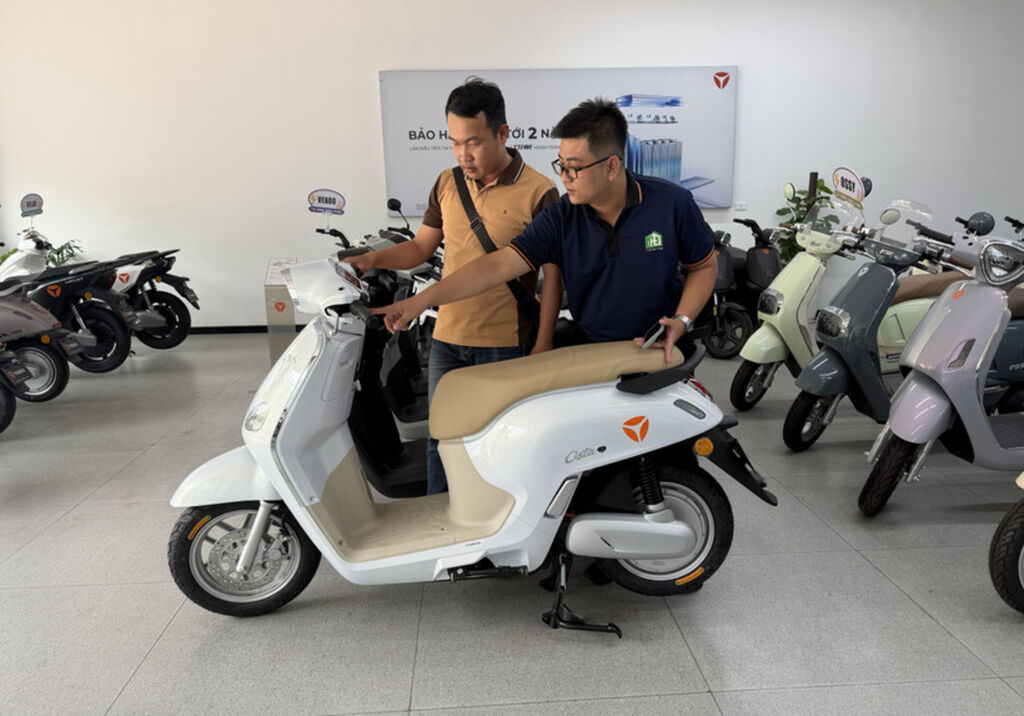
| Vietnam has a total of 374,816 electric vehicles (EVs) in circulation nationwide as of the end of May 2026 (Photo: VNA) |
Hanoi (VNA) – Vietnam had a total of 374,816 electric vehicles (EVs) in circulation nationwide as of the end of May 2026, reflecting a growing shift toward green transport, particularly in the private vehicle and public passenger transport segments.
The information was released by Tran Huu Minh, Deputy Director of the Department of Transport and Traffic Safety under the Ministry of Construction (MoC), at the ministry’s second-quarter press conference held in Hanoi on June 18.
According to official statistics, the total included 369,849 electric passenger cars, 3,396 electric trucks, and 1,571 electric buses. The rising number of EVs is helping to reshape public transport systems in major urban centres, while contributing to reductions in greenhouse gas emissions and improvements in urban air quality.
The progress has been attributed to the implementation of a range of policies and mechanisms introduced by the Government and relevant ministries. Key among them are Decision No. 876/QD-TTg issued by the Prime Minister and the Ministry of Construction’s Plan No. 1679 on green energy transition and the reduction of carbon and methane emissions in the transport sector.
Despite these achievements, Minh noted that the transition from conventional vehicles to electric cars and motorcycles continues to face significant challenges. Common concerns raised by residents and businesses include the availability of charging infrastructure, charging times, as well as investment and operating costs.
To further promote green transport, the MoC is reviewing and revising its green energy transition action programme. It is also coordinating with local authorities to integrate green transport infrastructure into urban planning, including EV charging networks and facilities for non-motorised transport.
At the same time, the ministry is developing a smart city criteria framework, with the potential to expand it into a Green-Smart City framework, providing localities with clearer benchmarks for implementation.
In the period leading up to 2030, the construction sector will prioritise areas with strong potential for reducing urban air pollution, particularly rail and road transport. Relevant agencies are developing criteria for green rest stops, green railway stations, green seaports, and green airports. These standards are expected to be finalised in 2026 and widely applied from 2027.
The ministry is also working with localities to review urban railway development plans in line with the amended Railway Law and National Assembly Resolution No. 188/2025/QH15. Efforts will focus on transit-oriented development (TOD) models and accelerating metro projects in Hanoi and Ho Chi Minh City.
In parallel, the ministry is promoting multimodal transport and restructuring the transport sector to reduce reliance on road transport. Priority will be given to developing modern, integrated transport corridors and policies that increase the share of rail, inland waterway, and maritime transport.
Authorities are also studying incentives to modernise railway, shipping, and aviation fleets, strengthen connectivity between transport modes, and enhance the competitiveness of logistics and international transport services./.