 |
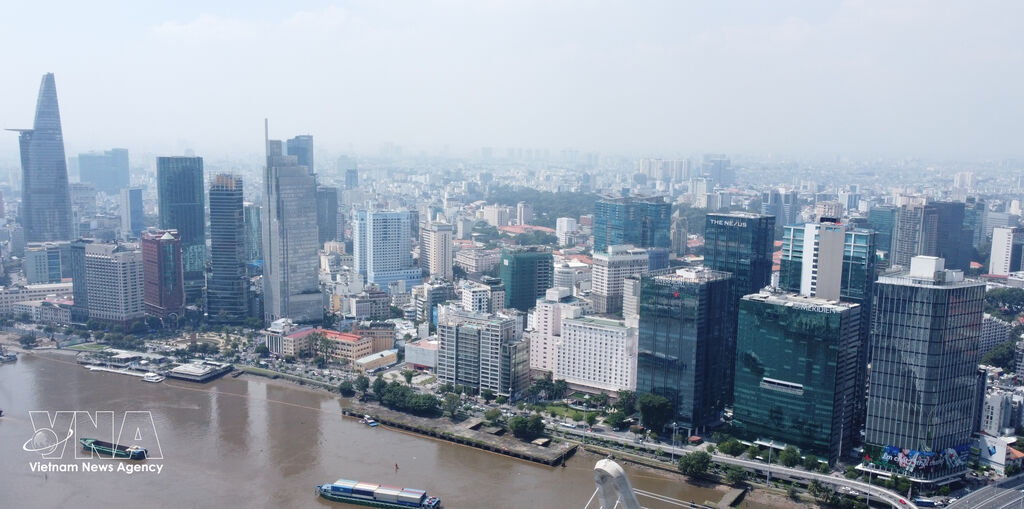
| A corner of Ho Chi Minh City (Photo: VNA) |
Hanoi (VNA) – The “era of the nation's rise” is a new strategic concept that marks a critical turning point in the development history of modern Vietnam. More than a political goal, it’s a national aspiration clearly articulated in the strategic orientations laid out from the 13th to the 14th National Party Congresses.
Hostile and opportunistic forces have deliberately distorted and denied the concept’s scientific and practical foundations, dismissing it as a hollow political slogan. By seeding disinformation, they aim to sow confusion and erode public confidence, particularly among those who may not yet fully understand the “new era – era of the nation's rise” concept, and even shake the confidence of some officials and Party members in the country’s long-term growth path.
Distorting a key national orientation risks weakening society’s motivation for action, warned Lieut. Col. Pham Van Long, a lecturer at the Political Officers’ College under the Ministry of National Defence. If young people are pulled into skepticism, he said, they stand to lose purpose, resolve, and the will to contribute.
Such distortions are a well-worn tactic to challenge the Party’s leadership, discredit the achievements of the Doi Moi (renewal) process, erode public trust, and seed doubt about the country’s long-term ambitions, said Assoc. Prof. Dr. Nguyen Thi Bao, former Chief Inspector and senior lecturer at the Ho Chi Minh National Academy of Politics (HCMA).
She identified three logical fallacies driving these narratives. First, they equate development ambitions with populism, even though every advancing nation requires a strategic vision and long-term goals. Second, they treat near-term hurdles as evidence of a foreclosed future. Third, they spin the call for collective perseverance as a string of unrealistic promises, though the Party has never portrayed the path to prosperity as easy.
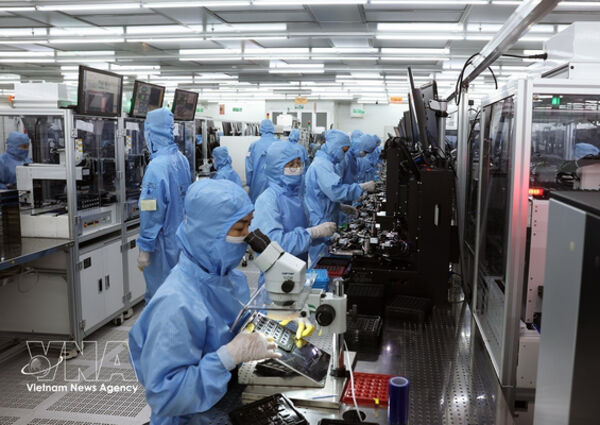
More than four decades since Doi Moi, Vietnam has turned from an impoverished, embargoed backwater into a deeply open economy woven into global and regional supply chains. Living standards have risen, and important strides have been made in governance, sci-tech, digital transformation, and global integration.
Bao argued that pushing back against false allegations requires more than emotion; it must be grounded in theory, evidence, on-the-ground experience, and measurable results. Citizens need to grasp how development goals translate into direct personal benefit; businesses must spot growth opportunities; officials should understand their duty to serve; and the youth need to see their own futures as closely linked to the country’s.
Researchers pointed to four decades of renewal that have delivered a sweeping transformation: from centrally planned economy to a socialist-oriented market one; from a poor, sanctioned state to one of Southeast Asia’s large economies with extensive global ties. Political stability has held firm, society has flourished, living standards have climbed sharply, national defence-security has been maintained, and Vietnam’s global stature has risen.
Long cited the sustained economic momentum as a direct proof of Vietnam’s rise. The economy expanded at an average 6.2% a year in 2021–2025, among the fastest globally. Its GDP growth hit 8.02% in 2025, laying a solid base for the Government’s target of 10%-plus expansion from 2026 onward.
Beyond domestic strength, deepening global integration and rising competitiveness have anchored Vietnam’s role on the world stage. Export-import turnover has topped 900 billion USD, putting the country among the world’s top trading nations.
Dr. Nguyen Thi Mai Chi from the HCMA said the digital age requires ideological protection to move decisively into cyberspace, which she described as the “primary battlefield”. The 14th National Party Congress called for effective cybersecurity and protection of the Party’s ideological foundation in the new context. That means heavier reliance on technology, including artificial intelligence, big data, and digital media analytics, to monitor, forecast, and steer public sentiment. Responses must be fast, precise, targeted, and credible, combining speed with rigorous scientific reasoning.
Underscoring the workforce’s central role, she stressed the need to build a contingent of personnel tasked with defending the Party’s ideological line who possess both strong political mettle and advanced tech skills. She called for more training in digital communications, data analysis, and detecting harmful content, and the creation of rapid-response units that can spot and counter disinformation before it goes viral.
Assoc. Prof. Dr. Doan Khac Manh, Dean of the Faculty of Party and Political Work at the Political Officers’ College, said the response must be diverse, flexible, and multi-layered, combining direct and indirect engagement. He advocated using personal accounts, social platforms like Facebook and Zalo, fan pages, blogs, websites, newspapers, and online magazines to push out articles, commentaries, talks, and videos anchored in evidence and real-world outcomes. The goal is to lay bare factual errors, unscientific reasoning, and impractical claims, and expose the underlying aim of denying the Party’s ideological foundation.
Vietnam’s development track record shows that the “era of the nation's rise” is a political and theoretical marker of a new development phase. It represents a commitment, a rallying cry for progress, and a shared duty of the Party, people, and army to deliver a strong, prosperous Vietnam by 2045./.