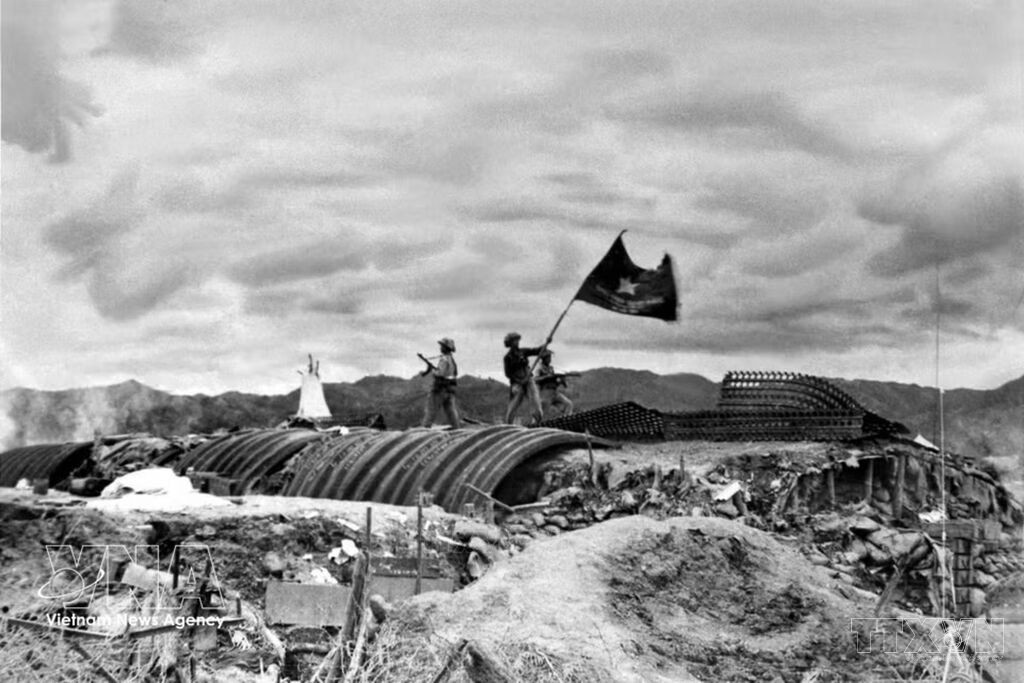
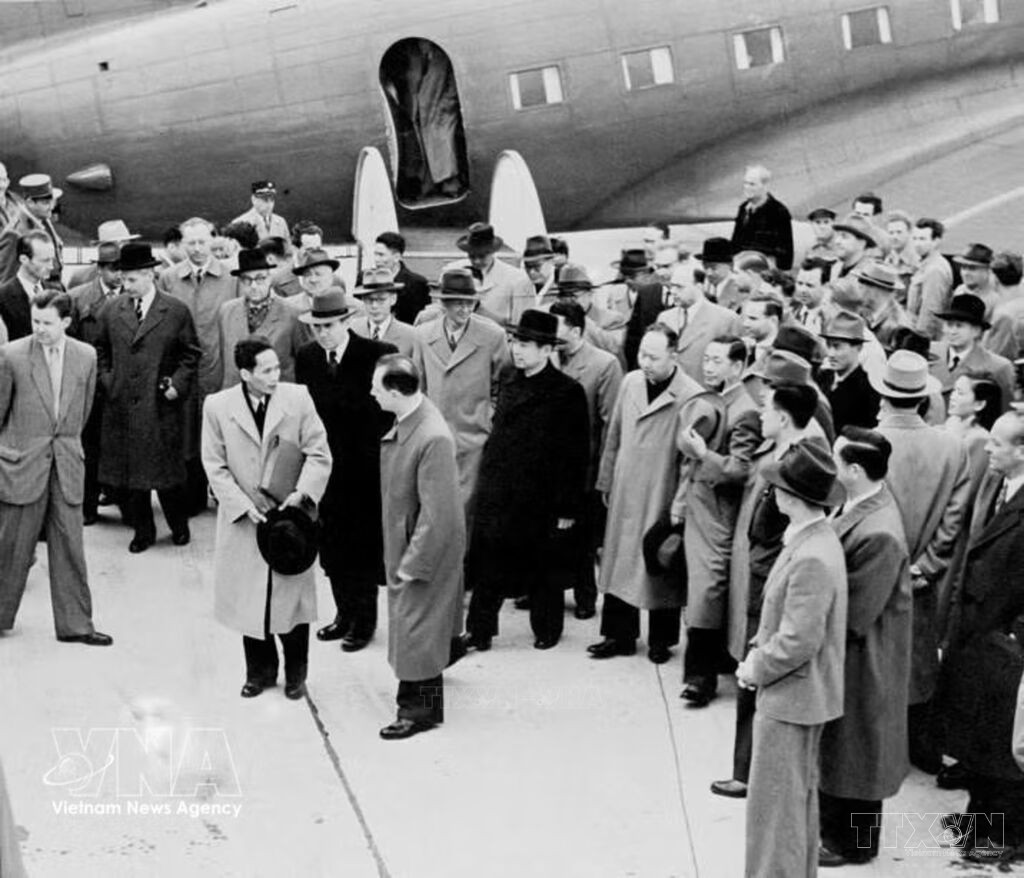
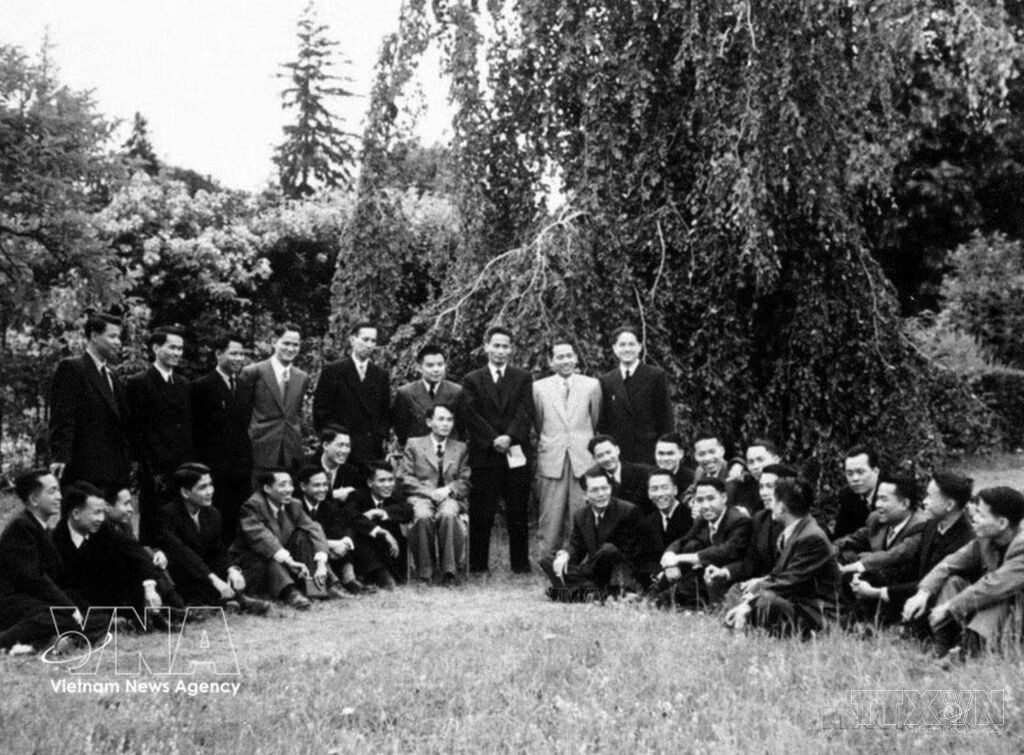
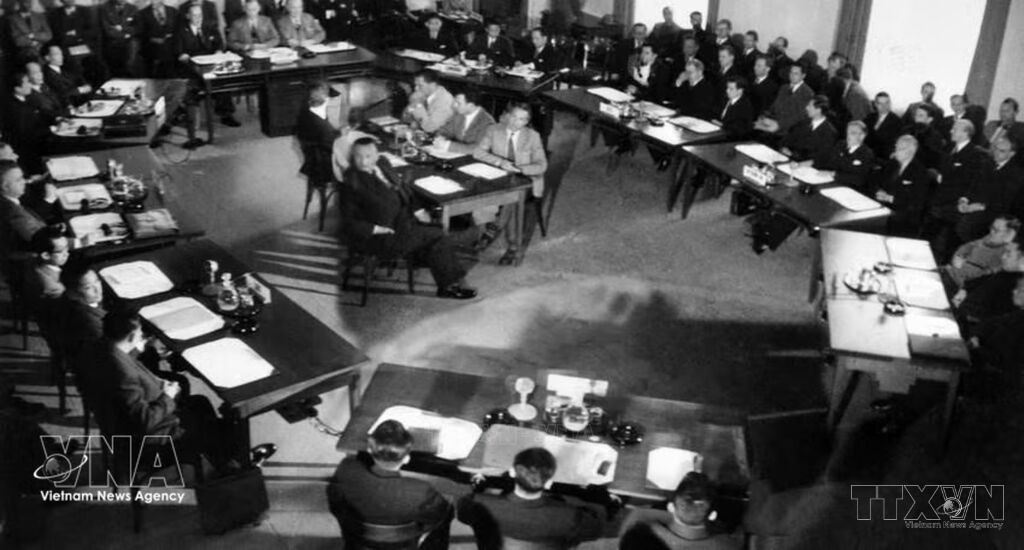
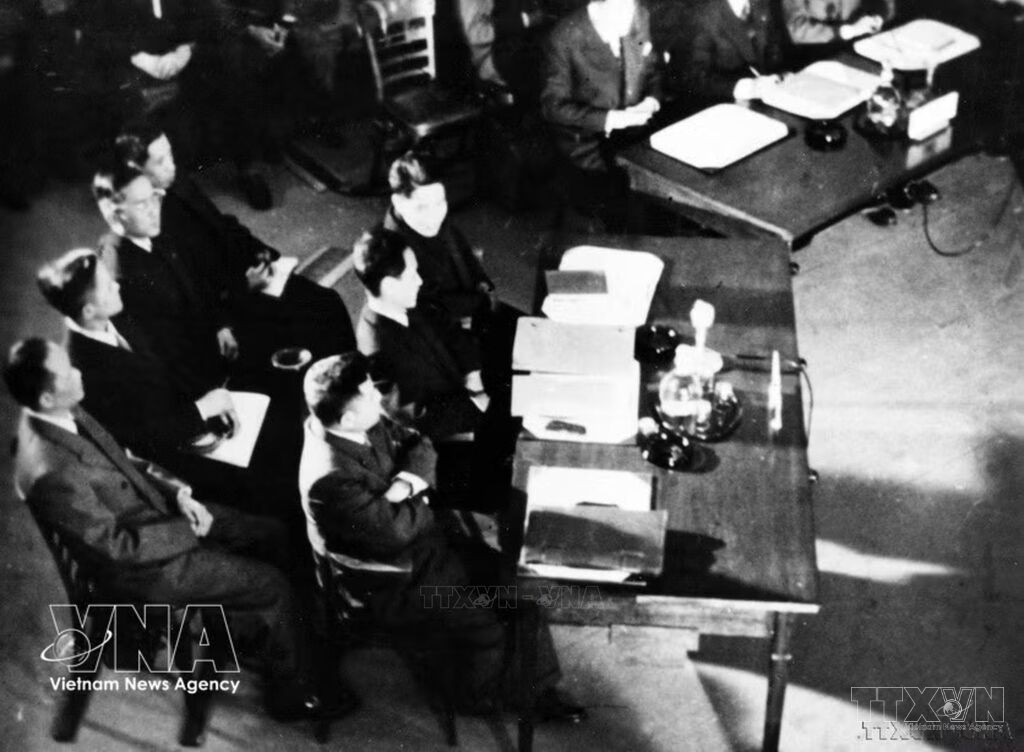
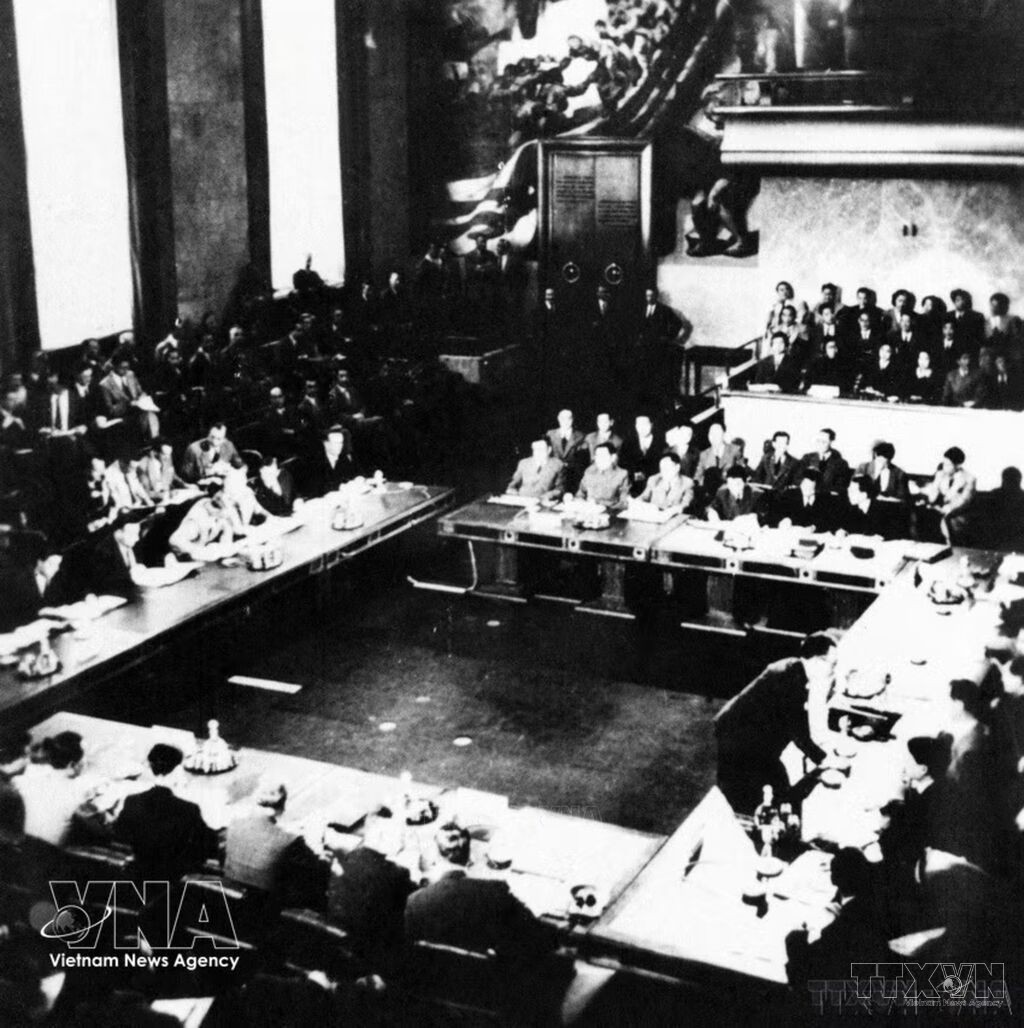
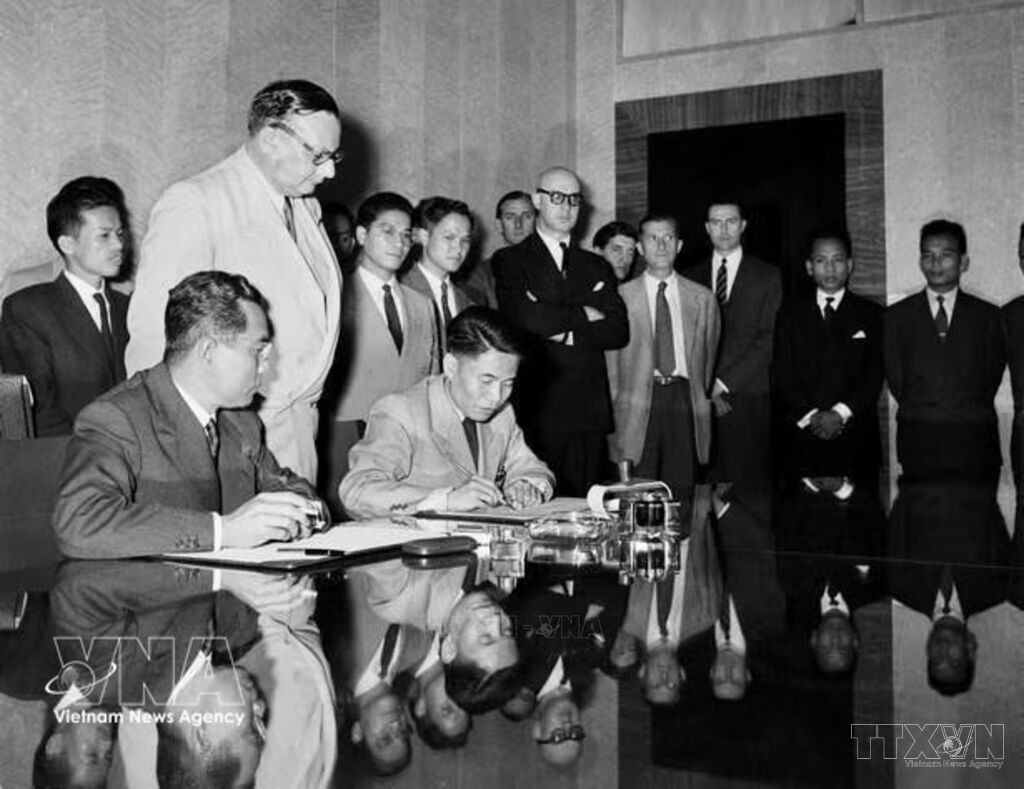
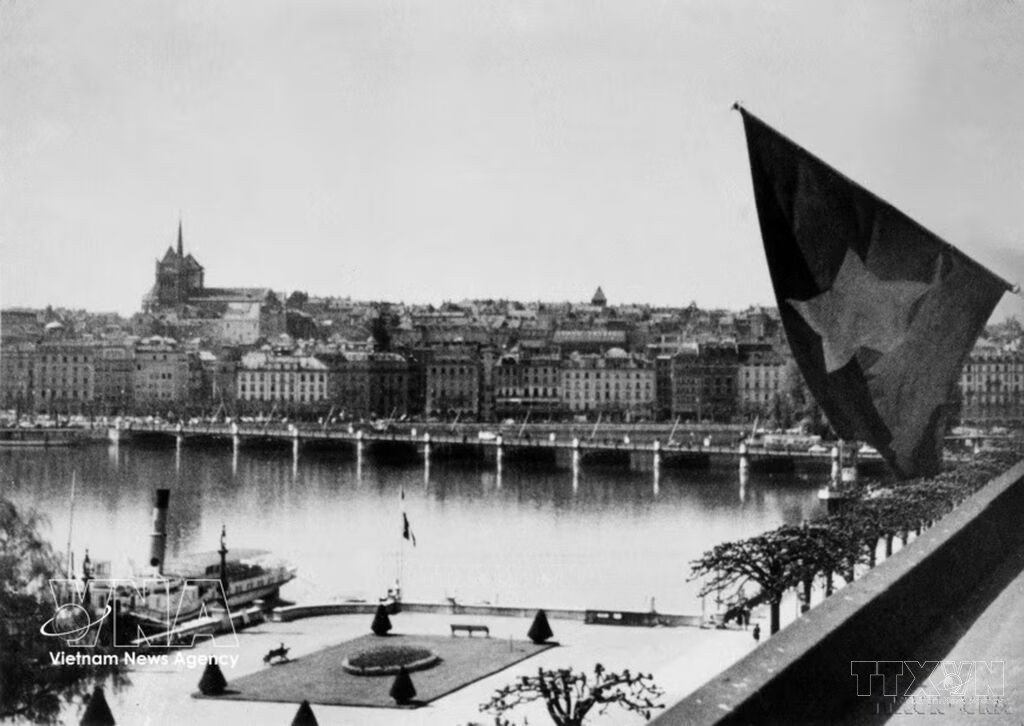
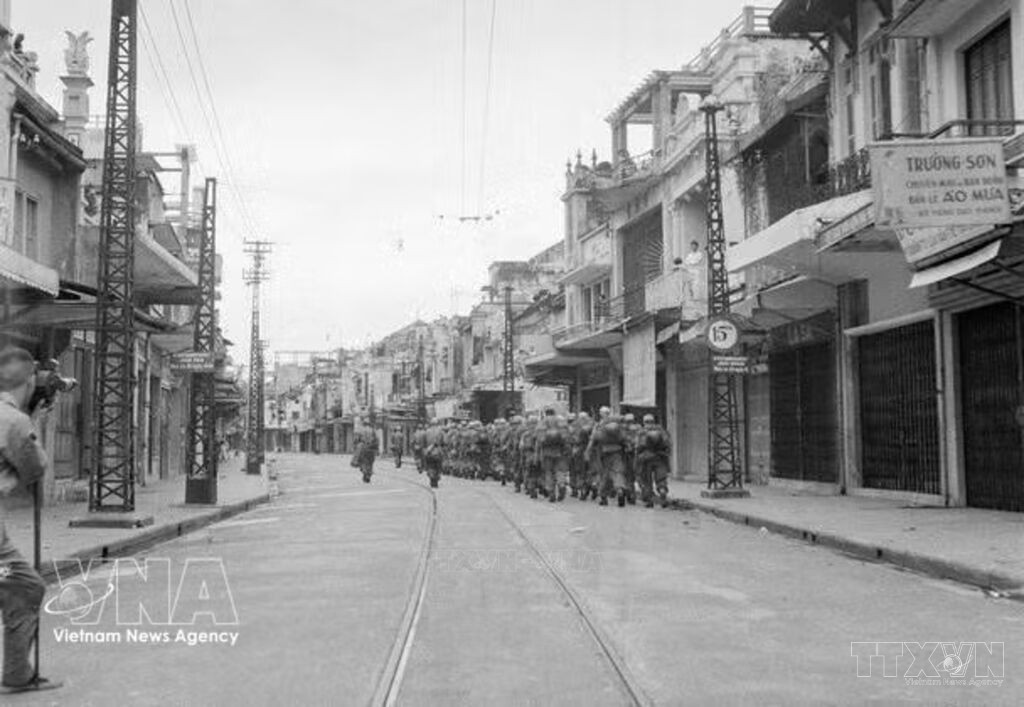
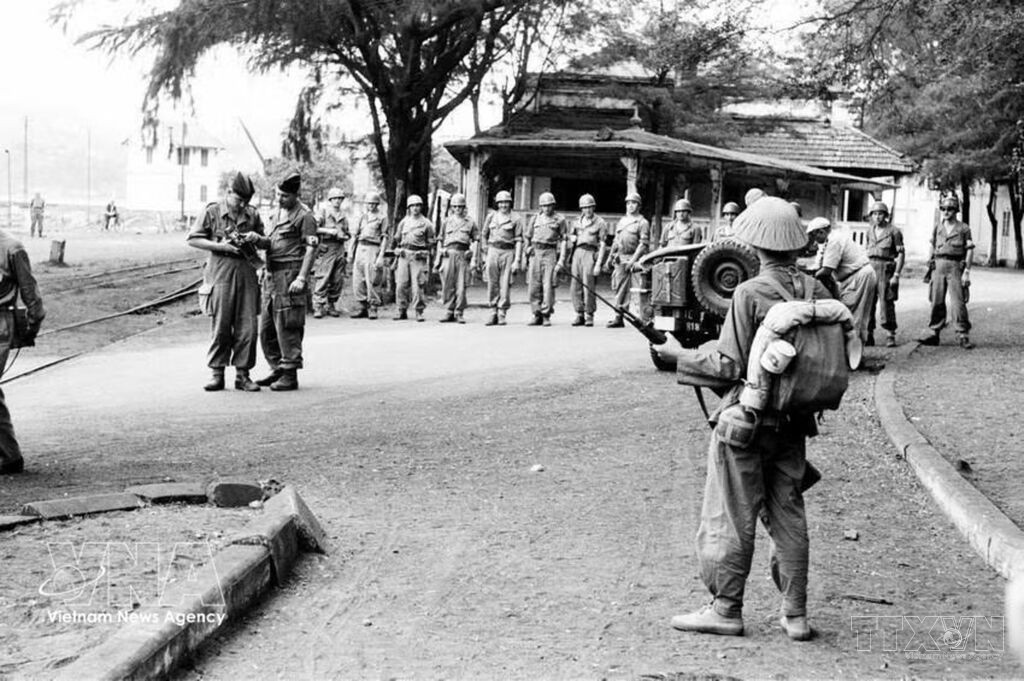
The historic Dien Bien Phu Campaign ended in victory on the afternoon of May 7, 1954, with Vietnamese forces completely overrunning the French stronghold. (Photo: VNA archives)On May 4, 1954, the delegation of the Democratic Republic of Vietnam, led by Deputy Prime Minister Pham Van Dong, arrive in Geneva, Switzerland, to attend the Geneva Conference on Indochina following the Vietnamese army's major victory at Dien Bien Phu. (Photo: VNA archives)Deputy Prime Minister Pham Van Dong and the Government delegation of the Democratic Republic of Vietnam at the Geneva Conference in 1954. (Photo: Vo Nang An/VNA)News of Vietnam's victory at Dien Bien Phu reached Geneva on May 7, 1954. The following morning (Geneva time), the question of Indochina was officially placed on the conference agenda. (Photo: VNA archives)Led by Deputy Prime Minister Pham Van Dong, the delegation of the Democratic Republic of Vietnam attend the opening session of the Geneva Conference on Indochina on May 8, 1954, with the confidence of a victorious nation. (Photo: VNA archives)The Geneva Conference on Indochina, which opened on May 8, 1954, lasted 75 days and comprised 31 negotiating sessions. On July 20, 1954, the Geneva Agreement on Indochina was signed. The landmark diplomatic agreement called for respect for the sovereignty, independence, unity, and territorial integrity of Vietnam and the other Indochinese countries. In the photo: An overview of the Geneva Conference on Indochina in Geneva in 1954. (Photo: VNA archives)At midnight on July 20, 1954 (Geneva time), corresponding to the morning of July 21 in Hanoi, Deputy Minister of National Defence Ta Quang Buu signs the Agreement on the Cessation of Hostilities in Vietnam on behalf of the Government and the High Command of the Vietnam People's Army. Ceasefire agreements for Laos and Cambodia were signed shortly afterwards. (Photo: VNA archives)The red flag with a yellow star flies above the headquarters of the delegation of the Democratic Republic of Vietnam in Geneva, Switzerland, in 1954. (Photo: VNA archives)Under the Geneva Agreement, French forces were given 80 days to withdraw from Hanoi. The French flag was lowered on October 8, 1954, and the withdrawal began the following day. As French troops pulled out, Vietnamese forces moved in to take over the areas they had vacated. At exactly 4:30 p.m. on October 9, the last French troops crossed Long Bien Bridge, leaving Hanoi entirely under Vietnamese control. In the photo: French infantry unit withdraws through Hang Dao Street toward Long Bien Bridge on their way to Hai Phong on the afternoon of October 9, 1954. (Photo: VNA archives)In accordance with the Geneva Agreement, French forces withdrew from Hong Gai in the Hong Quang area (now Quang Ninh province) on April 24, 1955. At noon that day, the last French soldier boarded a ship at Bai Chay Ferry Terminal. In the photo: Vietnamese troops take over positions vacated by French forces in Hong Gai on April 24, 1955. (Photo: VNA archives)
Geneva Agreement: A historic milestone in Vietnam's revolutionary diplomacy
The Geneva Agreement, signed on July 20, 1954 (local time), marked the culmination of the Vietnamese people's long and resilient struggle, crowned by the victory at Dien Bien Phu, which brought nearly a century of French colonial rule in Vietnam to an end.