 |
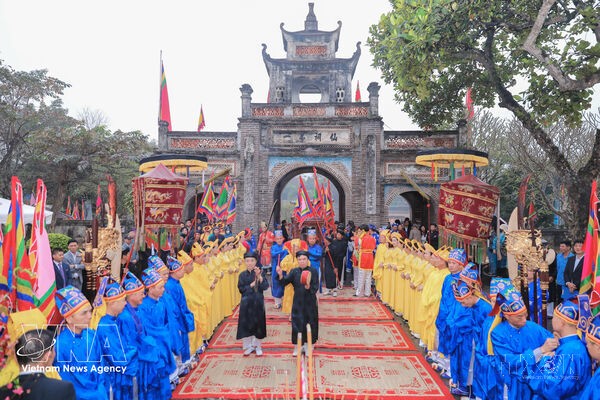
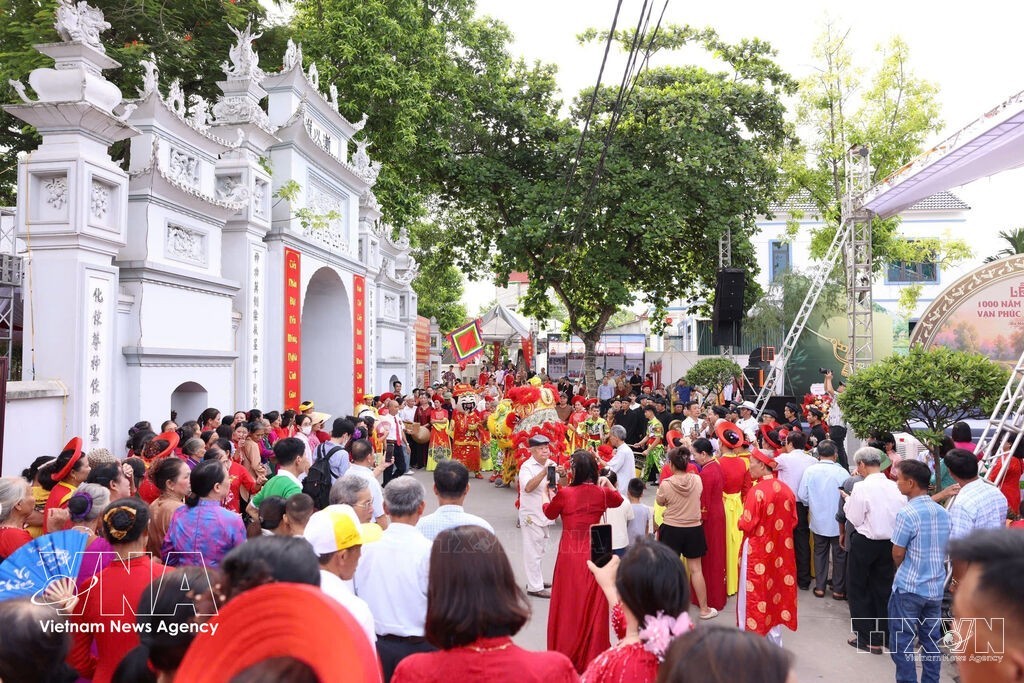
| The ceremony marking 1,000 years of the Van Phuc–Nga My ceremonial brotherhood draws a large number of participants. (Photo: VNA) |
Hanoi (VNA) – Amid rapid urbanisation and globalisation, Vietnam's centuries-old tradition of “ket cha” (establishing village twinning relations or alliances) – a ceremonial bond between villages – continues to endure as a symbol of solidarity, mutual support and community cohesion. Today, the custom is increasingly viewed not only as intangible cultural heritage but also as a source of cultural vitality and soft power in the country's new era of development.
A millennium of friendship
On July 18–19 (the fifth and sixth days of the sixth lunar month), residents of Van Phuc village, now in Nam Phu commune, and Nga My village, now in Thanh Oai commune, Hanoi, commemorated 1,000 years of ceremonial brotherhood through a series of cultural and artistic events.
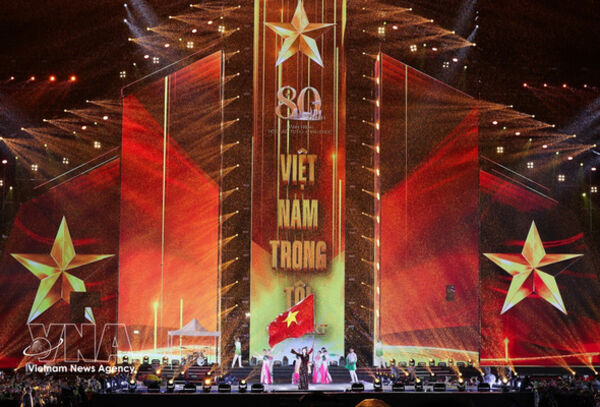
The highlight was a commemorative ceremony at the Van Phuc communal house, accompanied by an epic stage production, "Van Phuc – Nga My: Ancient villages, enduring legacy", which brought together historical records, music, dance, narration and theatrical performance to recount the villages' shared history. Drawing on images of the Red River Delta, traditional festivals, dyke construction and the enduring “ket cha” ritual, the production celebrated a living heritage that continues to resonate in contemporary life.
According to village elders, the tradition has been passed down through generations as a testament to the Vietnamese spirit of solidarity and mutual assistance.
Researchers note that what makes the Van Phuc–Nga My relationship particularly remarkable is not only its thousand-year history but also the wealth of historical evidence that has survived, including imperial decrees, village genealogies and valuable Han-Nom manuscripts preserved in both villages.
Traditional accounts trace the custom back to the reign of King Ly Thai To (974–1028), following the relocation of the capital to Thang Long, now Hanoi. Repeated breaches of the Dinh Nhi dyke south of the capital caused devastating floods until residents of Van Phuc helped reinforce the embankment in Nga My. In gratitude, Nga My villagers sought to establish a permanent bond of friendship, pledging to support one another in farming, flood control and community affairs. The emperor is said to have endorsed the agreement, which has endured ever since.
The relationship evolved into a distinctive social tradition. Residents address one another as family. Marriages between the two villages are traditionally discouraged because they are regarded as members of the same extended family. Delegations regularly visit one another during festivals, jointly worship village guardian deities, inspect flood defences and cooperate in community matters.
Historical documents further attest to the depth of the relationship. A study published in the Han-Nom Studies Bulletin 2011 by Associate Professor Bui Xuan Dinh from the Institute of Anthropology and Religious Studies and Dr Nguyen Thu Hien from the Hanoi Museum identified seven Han-Nom manuscripts dating from the King Tu Duc to King Bao Dai reigns (from the 19th century to the early 20th century) that document invitations to festivals, ceremonial exchanges and mutual assistance between the villages. They also record how Nga My residents contributed to rebuilding Van Phuc's communal house after flooding in the late 19th century, while Van Phuc villagers later reciprocated during Nga My's restoration projects and religious ceremonies.
Historian Le Van Lan described the Van Phuc–Nga My relationship as one of the most exceptional examples of village alliances in Vietnam, noting that few such traditions have remained intact for a millennium.
A living heritage for modern Vietnam
Unlike physical monuments or artefacts, “ket cha” survives through collective memory, shared customs and enduring social relationships. Developed from the practical need for neighbouring communities to cooperate in land reclamation, flood control, production and mutual defence, the tradition reflects the core Vietnamese values of solidarity, reciprocity, respect and collective responsibility.
Lan said the custom's greatest significance lies not in its rituals but in the humanistic philosophy it embodies – placing community and enduring relationships above individual interests. That ethos, he noted, remains highly relevant today.
As Vietnam seeks to preserve its cultural identity while promoting sustainable development, “ket cha” offers more than a historical legacy. It demonstrates how traditional values can contribute to education, tourism, cultural industries and community development.
This vision aligns with the Politburo's Resolution No. 80 on developing Vietnamese culture in the new era, which identifies culture not only as the spiritual foundation of society but also as an internal resource and a key driver of national development. Under this approach, heritage is no longer viewed simply as something to be preserved but as a source of creativity, soft power and economic growth.
At the second meeting of the Central Steering Committee for the Development of Vietnamese Culture, Party General Secretary and State President To Lam underscored the importance of "cultural sovereignty" in the digital age. Beyond protecting territorial integrity, he said, safeguarding national identity, preserving cultural values and promoting the system of Vietnamese values in the digital space have become a crucial aspect of national strength.
Viewed in this context, the thousand-year bond between Van Phuc and Nga My represents more than the history of two villages. It illustrates how living heritage can reinforce Vietnam's cultural identity while contributing to the country's soft power. As more traditional values are preserved, reinterpreted and shared with new generations, they become not only a bridge to the past but also a foundation for Vietnam's future cultural development./.