Vietnam earmarks at least 2% of annual state budget for cultural development
The resolution stipulates that cultural spending will be increased in line with development needs in each period to implement the Party’s guidelines and the State’s policies.
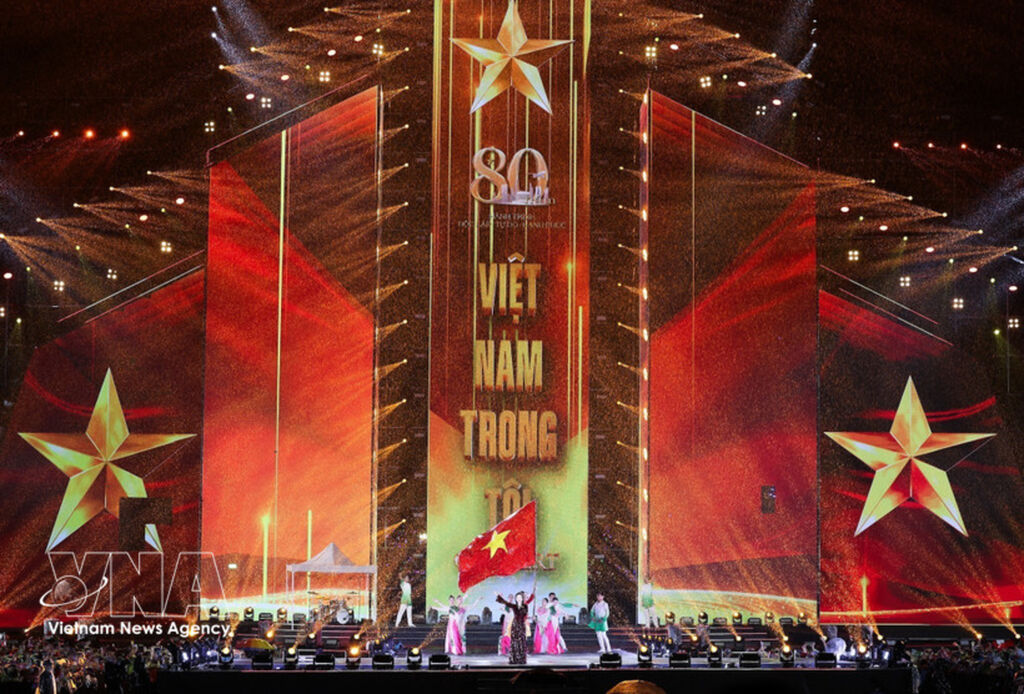
A performance at the grand concert themed “Viet Nam trong toi” (Vietnam in Me) is held last August, marking the opening of a series of activities celebrating the 80th anniversary of National Day. (Photo: VNA)

Hanoi, May 6 (VNA) – Under the National Assembly's Resolution No. 28/2026/QH16 on the development of Vietnamese culture, the State is set to allocate at least 2% of total annual state budget expenditure to cultural development.

The resolution stipulates that cultural spending will be increased in line with development needs in each period to implement the Party’s guidelines and the State’s policies. It also encourages the mobilisation of social resources for cultural development.

Under the resolution, November 24 is designated as Vietnam Culture Day. On that day, employees will be entitled to a paid day off. Entrance fees and service charges at public cultural and sports facilities may be reduced or waived on the occasion, subject to decisions by competent authorities.

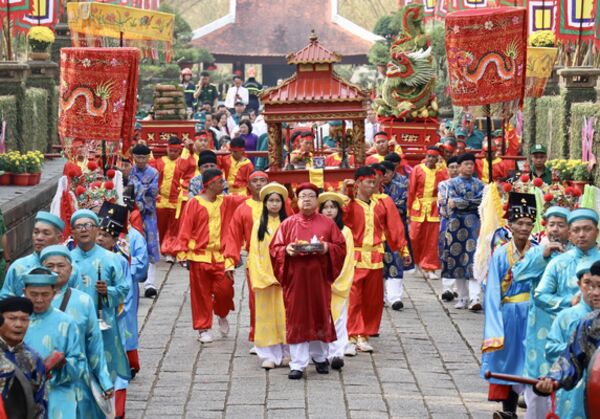
The document also encourages public participation in cultural activities during major national holidays, with particular attention given to young people and children.

It specifies mechanisms and policies for attracting investment in cultural development. Accordingly, it stipulates the establishment of cultural creative industrial parks and clusters which are geographically defined areas bringing together organisations, enterprises and individuals engaged in cultural industries. The zones are aimed at connecting creative spaces and promoting research and development, experimentation, production, distribution and commercialisation of cultural products and services.

The sites will also provide training in culture, arts, entertainment and related services to support the development of modern and integrated cultural industry ecosystems based on high technology and innovative business models.

The resolution further provides for the development of cultural creative complexes – multi-functional spaces combining cultural industry activities with commercial and service purposes. These may be located in urban areas, residential communities, cultural tourism zones, and industrial parks, factories or other facilities converted for creative use.
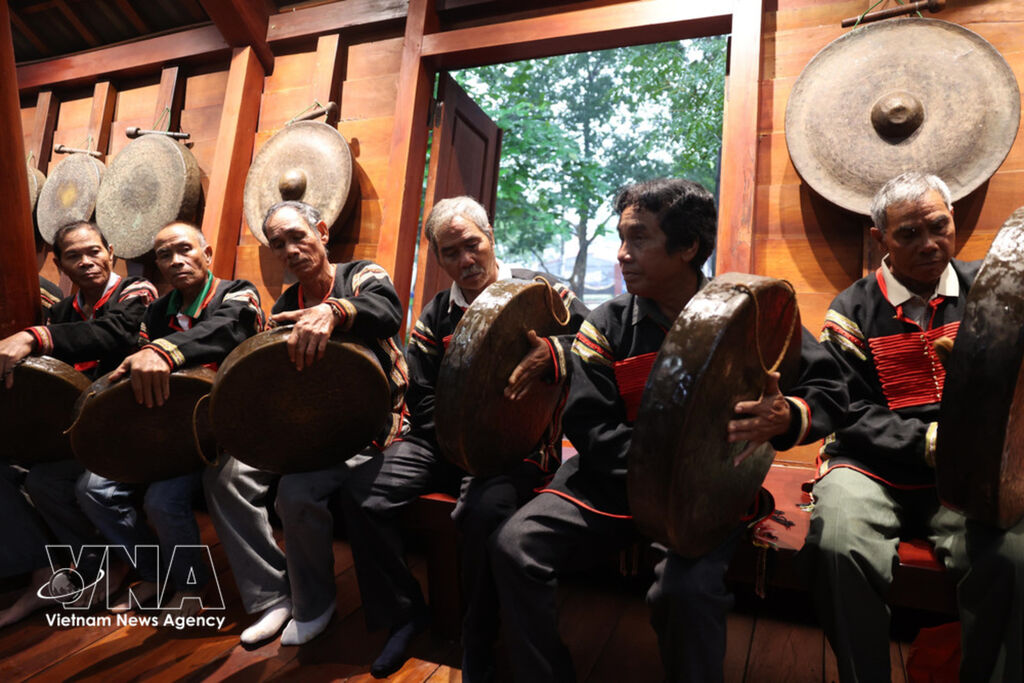
Men play gongs at a traditional longhouse of the Ede ethnic minority people. (Photo: VNA)

Investors in such projects will be eligible for support in accessing land and production premises in line with the National Assembly's Resolution No. 198/2025/QH15 on special mechanisms and policies for private-sector development.

Preferential tax policies will also apply to organisations and individuals investing in digital infrastructure, high-tech cultural solutions and key cultural industry sectors such as cultural tourism, cinema, performing arts, fine arts, and online video games that promote Vietnamese cultural and historical values.

In particular, enterprises will enjoy a two-year corporate income tax exemption, followed by a 50% tax reduction for the subsequent four years. Similar incentives will apply to experts and scientists working in cultural activities. Income from transfers of shares, capital contributions and related investment rights in enterprises engaging in cultural activities will also be exempt from personal and corporate income taxes.

The resolution will take effect on July 1, 2026./.

Related News

Party Central Committee stresses significance of cultural development

Party General Secretary To Lam has issued Conclusion 18 on the outcomes of the second meeting of the 14th Party Central Committee, outlining key directions for the 2026–2030 socio-economic development plan towards double-digit growth. The Central Committee called for building and developing an advanced Vietnamese culture imbued with national identity, aligned with national, cultural and family value systems, as well as Vietnamese human standards.

Targets for cultural development to 2030

On January 7, 2026, on behalf of the Politburo, Party General Secretary To Lam signed and promulgated Resolution 80 on the development of Vietnamese culture. The resolution was issued as the country enters a new stage of development marked by growing demands for rapid and sustainable growth, with closer integration between economic, political and social development, and culture and people.

See Also

Vietnam railways accelerate digital shift, green transition

By 2030, Vietnam’s railway sector aims to achieve sustainable growth on existing lines while playing a greater role in supporting a green and circular economy. It also focuses on improving efficiency, reducing environmental impact, and upgrading service quality.

Health ministry targets annual fertility rate of 2% by 2030

Vietnam’s fertility has dropped below replacement in recent years, from 2.11 children per woman in 2021 to 1.91 in 2024 and 1.93 in 2025, especially in major cities and more developed regions, prompting the need for coordinated measures to encourage childbirth.

Vietnam picks one textbook set for all schools, targets free books by 2030

The Ministry of Education and Training has selected the “Ket noi tri thuc voi cuoc song” (Connecting Knowledge with Life) series, published by state-owned Vietnam Education Publishing House (VEPH), from among three existing sets. The education minister approved the choice on December 26, 2025, locking in enough time for preparation before the new school year.

Dien Bien accelerates construction of boarding schools in border areas

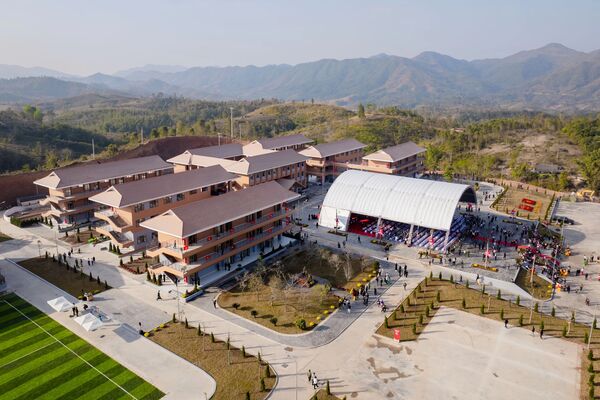
In the border communes of the northwestern province Dien Bien, several inter-level boarding schools for primary and secondary students are being built simultaneously. To meet strict deadlines, contractors are mobilising maximum workforce and machinery to ensure the facilities are ready for the new school year.

New businesses, market re-entries up 32.8% in first four months

In April alone, nearly 20,400 enterprises were newly established. The most notable feature was not the number of new firms but the quality of capital inflows. Although the number of newly established enterprises fell 7.1% from March, registered capital increased 9.7% to nearly 246.8 trillion VND (9.36 billion USD).

PM orders further cuts, simplification of administrative procedures, business conditions

In Document No. 3905/VPCP-CDS, addressed to the ministries of Public Security, Industry and Trade, Agriculture and Environment, Construction, and Justice, the Government Office said that on April 29, the Government issued eight resolutions focused on cutting, decentralising and simplifying administrative procedures and business requirements across sectors managed by 14 ministries and agencies.

Japanese PM delivers keynote policy speech in Hanoi

Commenting on Vietnam’s economic progress, PM Takaichi expressed admiration for the country’s rapid rise. Ten years ago, “Made in Vietnam” typically referred to clothing and textiles. Today, however, numerous global companies have established a presence in Vietnam, and many of the gadgets supporting youth culture are now manufactured here. Moreover, many of these electronic products incorporate cutting-edge Japanese technology in their core components.