Vietnam railways accelerate digital shift, green transition
By 2030, Vietnam’s railway sector aims to achieve sustainable growth on existing lines while playing a greater role in supporting a green and circular economy. It also focuses on improving efficiency, reducing environmental impact, and upgrading service quality.
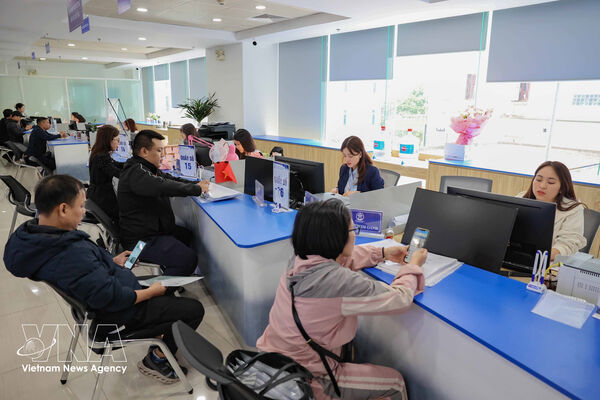
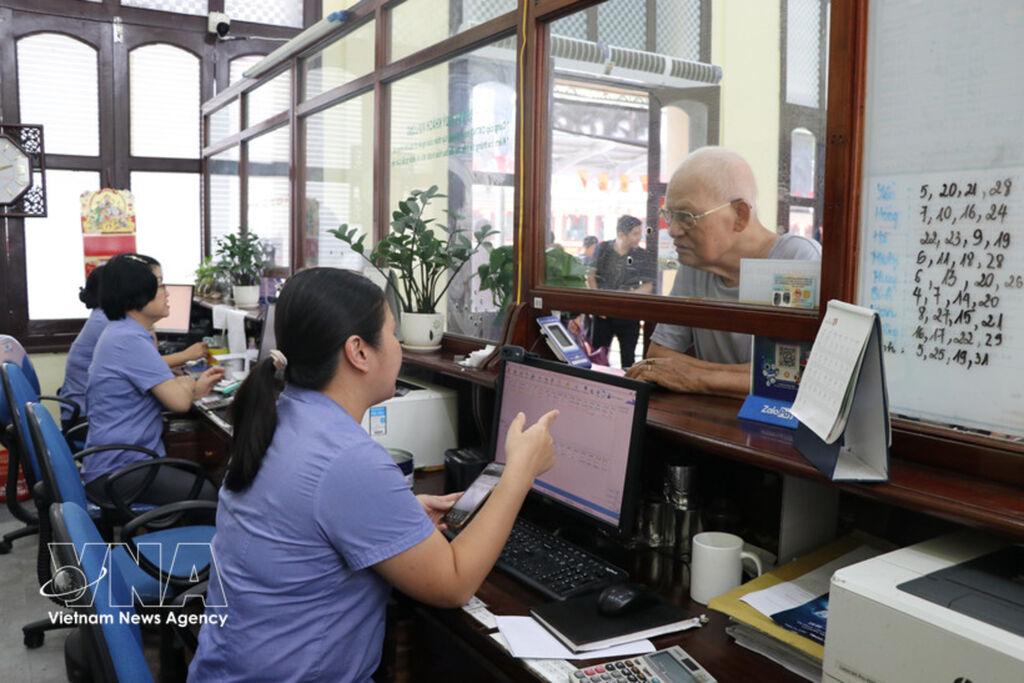
Staff at Hai Phong Railway Station assist passengers with ticket purchase procedures (Photo: VNA)

Hanoi (VNA) – Vietnam’s railway sector is advancing digital transformation and adopting cleaner energy to reduce greenhouse gas emissions, improve efficiency, and regain competitiveness in the transport market.

The industry currently operates 258 locomotives, 128 generators, about 4,000 carriages, and roughly 2,600 kilometres of track. Once a backbone of national transport, rail has lost market share to road, air, and waterway services in recent years.

After a downturn during the COVID-19 pandemic, the sector has rebounded, carrying around 40 million passengers and more than 5 million tonnes of cargo in 2025. While still accounting for a modest share of the market, the recovery reflects improvements in infrastructure and service quality, driven largely by digitalisation.

Nguyen Quoc Vuong, Deputy General Director of Vietnam Railways (VNR), said that the Politburo’s Resolution No. 57-NQ/TW on breakthroughs in science-technology development, innovation, and national digital transformation has opened up strategic opportunities for the sector to enhance its competitiveness.

Following this direction, VNR’s Party Committee has issued a series of resolutions and action plans focusing on six priority areas: improving institutions and digital governance; developing digital infrastructure and data; advancing railway technology and industry; promoting digital transformation in transport and services; building a digital workforce; and fostering innovation across the sector.

VNR has rolled out a range of digital tools, including e-office systems, digital signatures, e-ticketing, chatbot-based customer care, and the VNRA-MIS platform for infrastructure asset management. Technologies such as train monitoring systems, surveillance cameras, and Lidar-based warning devices have been introduced to enhance safety and operations.

An emergency response centre has also been established, enabling real-time connections to incident sites, particularly at level crossings and key traffic points.

This allows rapid assessment and response, helping minimise disruptions.

Since 2025, VNR has put in place a “digital railway” model, integrating artificial intelligence (AI), big data, and the Internet of Things (IoT) into management and operations. These applications have helped optimise performance, reduce costs, and improve service quality.

Challenges in green transition

Alongside digitalisation, the sector is pursuing greener operations. Rail transport is considered energy-efficient and low-emission, accounting for just 0.2% of the economy’s total greenhouse gas emissions and about 3% of emissions in the transport sector. Expanding rail’s market share could therefore help reduce overall transport emissions.
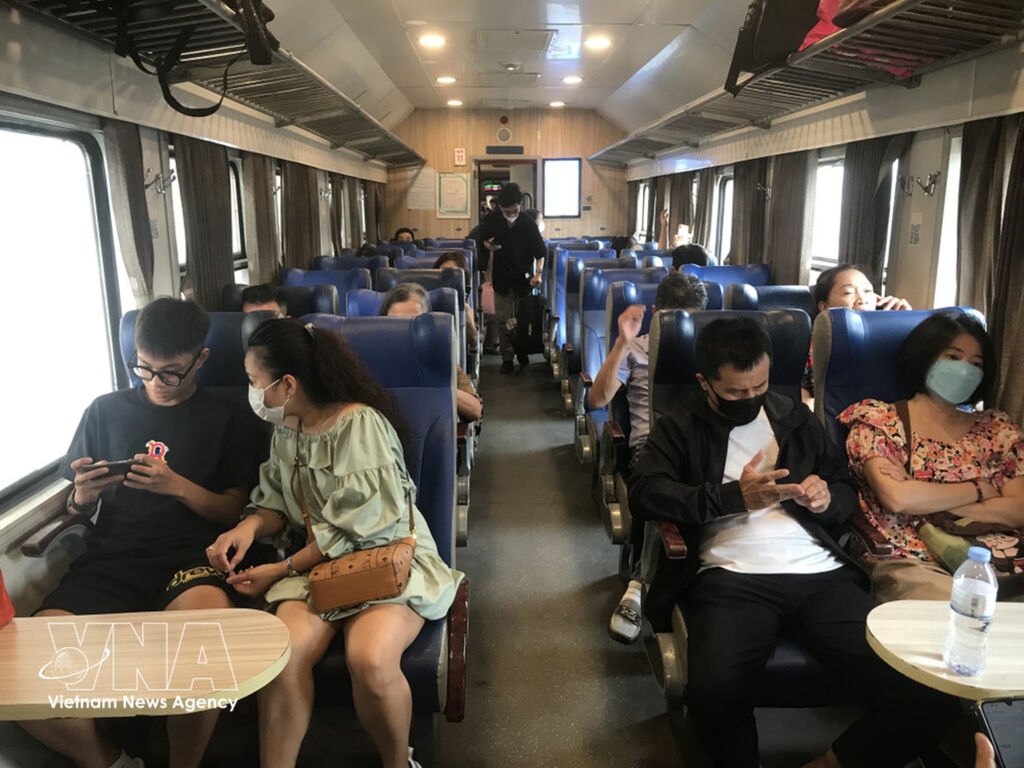
Passengers on the train carriages preparing for departure (Photo: VNA)

However, challenges remain as railways face limitations in speed, flexibility, connectivity, and transshipment capacity, as well as service quality constraints and limited investment resources.

VNR identifies five main emission sources: diesel-powered locomotives, energy use at stations and offices, maintenance activities, domestic waste, and logistics operations. Diesel consumption alone reaches about 46,000 tonnes annually, accounting for over 70% of total emissions.

To address these issues, VNR has set targets for 2030, focusing on full implementation of digital transformation and gradual modernisation of infrastructure, alongside the adoption of cleaner fuels that meet emission standards.

The corporation is pursuing four key solution groups: strengthening governance, improving management processes, developing infrastructure and technology, and enhancing human resources and innovation capacity.

By 2030, Vietnam’s railway sector aims to achieve sustainable growth on existing lines while playing a greater role in supporting a green and circular economy. It also focuses on improving efficiency, reducing environmental impact, and upgrading service quality.

With digital transformation and green transition identified as core pillars, the sector is working to remove bottlenecks in institutions, resources, and infrastructure to unlock its full potential and secure long-term development./.
Related News

Vietnam fast-tracks key national railway projects

With the completion of a key legal framework, Vietnam's major national railway projects have kicked off the new year of 2026 with an accelerated implementation phase, notably the North-South high-speed railway and the Lao Cai-Hanoi-Hai Phong railway line

Railway sector must master technology to secure long-term autonomy: PM

Governing agencies, project management units, consultants, contractors, and especially Steering Committee members were urged to redouble efforts, heighten accountability, and carry out assigned tasks in accordance with legal procedures and proper authority. All projects must ensure progress and quality while preventing corruption, misconduct, and any form of wastefulness.

North-South high-speed railway must ensure optimal early operation: Deputy PM

Chairing a working session with several ministries, agencies and authorities from Hanoi and Ho Chi Minh City in Hanoi on April 22, Deputy Prime Minister Pham Gia Tuc underscored railway projects’ significance, saying that they will deliver substantial contributions to Vietnam’s long-term double-digit growth targets and unlock numerous development opportunities.

See Also

Health ministry targets annual fertility rate of 2% by 2030

Vietnam’s fertility has dropped below replacement in recent years, from 2.11 children per woman in 2021 to 1.91 in 2024 and 1.93 in 2025, especially in major cities and more developed regions, prompting the need for coordinated measures to encourage childbirth.

Vietnam picks one textbook set for all schools, targets free books by 2030

The Ministry of Education and Training has selected the “Ket noi tri thuc voi cuoc song” (Connecting Knowledge with Life) series, published by state-owned Vietnam Education Publishing House (VEPH), from among three existing sets. The education minister approved the choice on December 26, 2025, locking in enough time for preparation before the new school year.

Dien Bien accelerates construction of boarding schools in border areas

In the border communes of the northwestern province Dien Bien, several inter-level boarding schools for primary and secondary students are being built simultaneously. To meet strict deadlines, contractors are mobilising maximum workforce and machinery to ensure the facilities are ready for the new school year.

New businesses, market re-entries up 32.8% in first four months

In April alone, nearly 20,400 enterprises were newly established. The most notable feature was not the number of new firms but the quality of capital inflows. Although the number of newly established enterprises fell 7.1% from March, registered capital increased 9.7% to nearly 246.8 trillion VND (9.36 billion USD).

PM orders further cuts, simplification of administrative procedures, business conditions

In Document No. 3905/VPCP-CDS, addressed to the ministries of Public Security, Industry and Trade, Agriculture and Environment, Construction, and Justice, the Government Office said that on April 29, the Government issued eight resolutions focused on cutting, decentralising and simplifying administrative procedures and business requirements across sectors managed by 14 ministries and agencies.

Japanese PM delivers keynote policy speech in Hanoi

Commenting on Vietnam’s economic progress, PM Takaichi expressed admiration for the country’s rapid rise. Ten years ago, “Made in Vietnam” typically referred to clothing and textiles. Today, however, numerous global companies have established a presence in Vietnam, and many of the gadgets supporting youth culture are now manufactured here. Moreover, many of these electronic products incorporate cutting-edge Japanese technology in their core components.

Targets for cultural development to 2030

On January 7, 2026, on behalf of the Politburo, Party General Secretary To Lam signed and promulgated Resolution 80 on the development of Vietnamese culture. The resolution was issued as the country enters a new stage of development marked by growing demands for rapid and sustainable growth, with closer integration between economic, political and social development, and culture and people.