Vietnam fast-tracks key national railway projects
With the completion of a key legal framework, Vietnam's major national railway projects have kicked off the new year of 2026 with an accelerated implementation phase, notably the North-South high-speed railway and the Lao Cai-Hanoi-Hai Phong railway line
An illustration of the North-South high-speed railway project (Image created by AI)

Hanoi (VNA) – Entering 2026, with the completion of a basic legal framework, Vietnam’s key national railway projects are moving into an accelerated implementation phase, notably the North–South high-speed railway and the Lao Cai–Hanoi–Hai Phong railway line.

Legal framework completed

Immediately after the National Assembly approved the investment policy for these flagship projects, the Ministry of Construction (MoC) and relevant ministries and agencies moved quickly to finalise the legal framework. To date, four related laws have been promulgated, including the revised Railway Law, the Construction Law, the Law on Planning and the Law on Investment.

These were followed by a series of resolutions, decrees and guiding circulars. For the first time, Vietnam has issued standards and technical regulations specifically for high-speed rail, including nine construction technical regulations, 219 sector-specific national standards, 37 general standards, and 146 standards aligned with European and international benchmarks.

Deputy Director of the Vietnam Railway Authority Nguyen Tien Thinh said relevant agencies have comprehensively reviewed the mechanisms and policies authorised by the National Assembly to ensure they are applied in the most appropriate and effective manner. At the same time, efforts are under way to develop special mechanisms for investment in urban railway systems in Hanoi and Ho Chi Minh City to address pressing challenges in modern urban development.

According to Thinh, the overarching goal is to establish special and exceptional mechanisms that simplify administrative procedures and shorten project preparation and construction timelines. Beyond infrastructure investment, the policies also aim to promote technology transfer and the development of a domestic railway industry, enabling Vietnam to gradually master core technologies in line with long-term and sustainable development objectives.

Investment preparation

At the fifth meeting of the Steering Committee for key national railway projects in early January, Prime Minister Pham Minh Chinh stressed the need to shift decisively from institutional building to implementation.

For the North–South high-speed railway, the Government has instructed the MoC to complete the selection of an international consultant in January and urgently appoint a consultant to prepare the feasibility study for submission to the Prime Minister by mid-January.

Deputy Minister of Construction Bui Xuan Dung said authorities are reviewing domestic and international standards, global experience and Vietnam’s practical conditions to identify the most suitable technology options.

Minister of Construction Tran Hong Minh has ordered relevant units to urgently complete reports on special mechanisms, investment models and investor selection criteria, with the aim of commencing construction by the end of 2026. Minh has also assigned the Thang Long Project Management Board as the project owner, replacing the Railway Project Management Board, and tasking it with overall responsibility for project quality, progress and costs.

For the Lao Cai–Hanoi–Hai Phong railway line, component project 1, covering connecting lines to stations, has already broken ground. Component project 2, focusing on the main railway infrastructure, is accelerating feasibility study preparations, with approval targeted for June. Under the plan, the signing of an agreement on rail connection and construction of a cross-border railway bridge with China will be completed in March, appraisal finalised in July, and construction launched by year’s end.

Relevant localities are urgently determining boundary markers, extracting cadastral records, and preparing compensation and site clearance plans. The Ministry of Finance has been tasked with balancing and allocating sufficient capital, including loan options, to prevent funding shortages from delaying progress.

Human resources preparation is also being prioritised. A scheme for training and developing Vietnam’s railway workforce to 2035, with a vision to 2045, is under way, with hundreds of engineers and experts receiving training at home and abroad./.

Related News

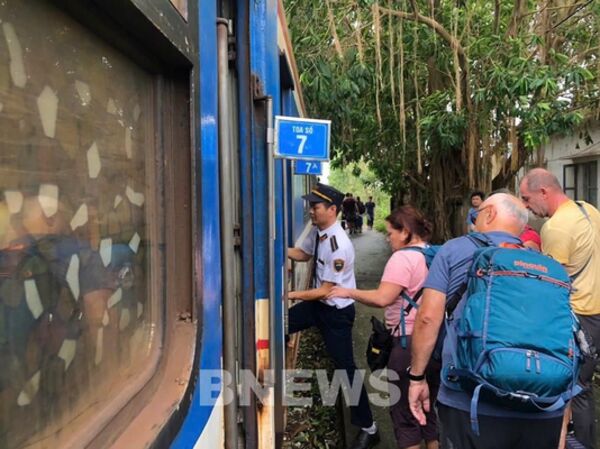
Vietnam rolls out 13-car high-quality train for Hanoi-Da Nang route

Vietnam Railway Equipment Development Co., Ltd., a subsidiary of Jinxin Group (Jinxin Vietnam), has officially launched a 13-car high-quality train on the Hanoi–Da Nang railway line, operating under codes JSE17/JSE18 in both directions, to meet the rising travel demand of local residents and tourists. This is a new-generation passenger train applying advanced technology, and the first of its kind to be manufactured and assembled in Vietnam.

Key economic policies taking effect in January 2026

A wide range of new economic policies and legal provisions will come into force in January 2026, covering taxation, advertising, land use, minimum wages, public finance, railways, technology transfer and statistics, among others.

More trains added to serve Lunar New Year demand

The railway sector will add more Thong Nhat (reunification) trains and regional services to meet the sharply rising travel demand of people and tourists during the 2026 Lunar New Year (Tet), Vietnam’s largest traditional festival.

See Also

PM urges shift towards deeper, more effective international integration

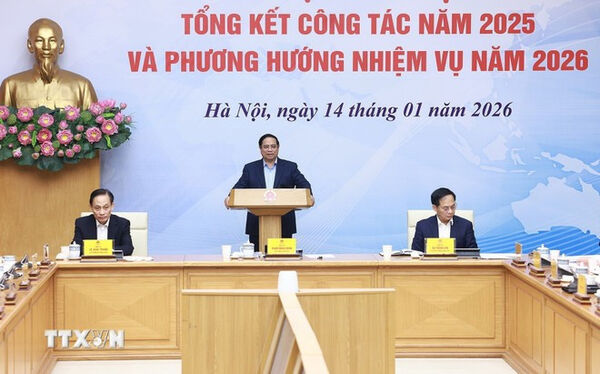
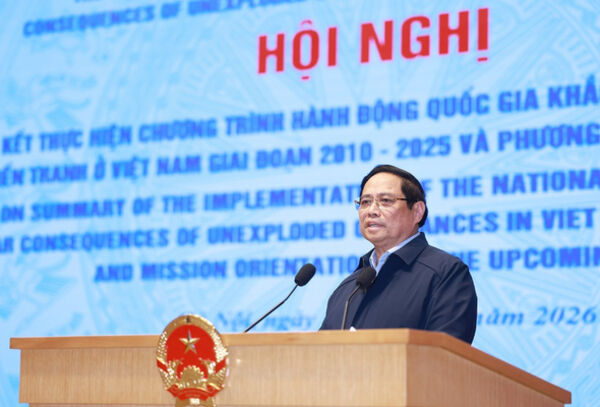
Addressing a national conference reviewing the National Steering Committee for International Integration's international integration work in 2025 and outlining tasks for 2026 on January 14, PM Chinh, who is also head of the committee, emphasised integration serves three key goals: enhancing Vietnam’s stature, capacity, position and credibility on the global stage; strengthening strategic proactiveness in international relations; and improving the material and spiritual well-being of the people.

Vietnam’s foreign affairs: 40 years of historic achievements under Party's leadership

Vietnam has obtained historic achievements in foreign affairs over 40 years of "Doi moi" (renewal) under the leadership of the Communist Party of Vietnam (CPV), which is set to continue to build on these successes to proactively seize opportunities and surmount challenges to further strengthen diplomatic efforts, thereby safeguarding national interests and affirming Vietnam’s role as a responsible and active member of the international community in an ever-changing world.

Hanoi’s AI-powered camera system shows initial positive results

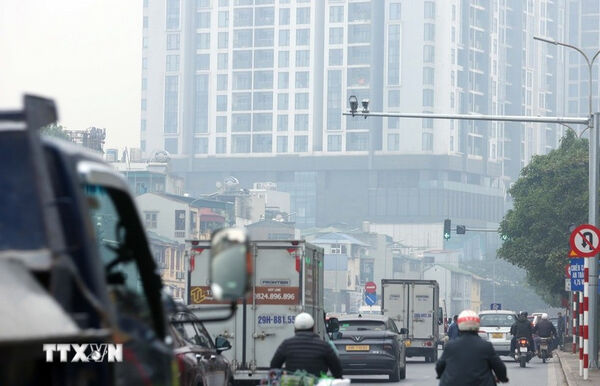
From December 13, 2025 to January 12, 2026, the system recorded 6,351 cases eligible for automated traffic enforcement, with red-light violations accounting for 66.36% and helmet violations 32.32%. Captured images and video clips provided clear legal evidence for enforcement.

Vietnam emerges as typical case of Asia’s FDI success

Vietnam stands out as a representative example. The article cites US technology group Intel as a case in point. Since establishing its testing and assembly facility at the Saigon Hi-Tech Park in 2010, Intel has expanded operations through total investments of 1.5 billion USD.

Vietnam seeks stronger partnership with Singapore

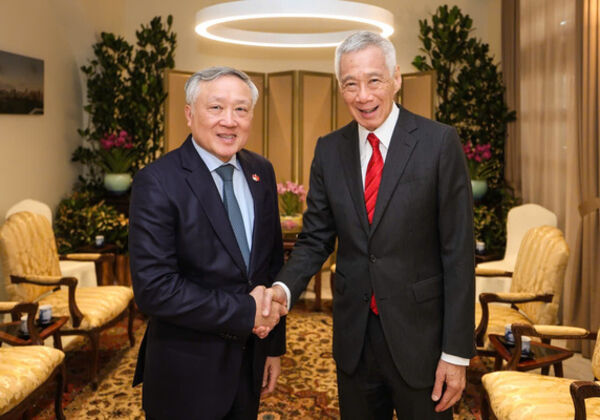
The Deputy PM expressed his hope that Lee will continue to support efforts to further advance Vietnam–Singapore relations in a more practical and effective manner, as well as provide advice and share experience in developing financial centres and promoting connectivity between the two countries’ international financial centres.

International cooperation: Key to global semiconductor supply chain for Vietnam

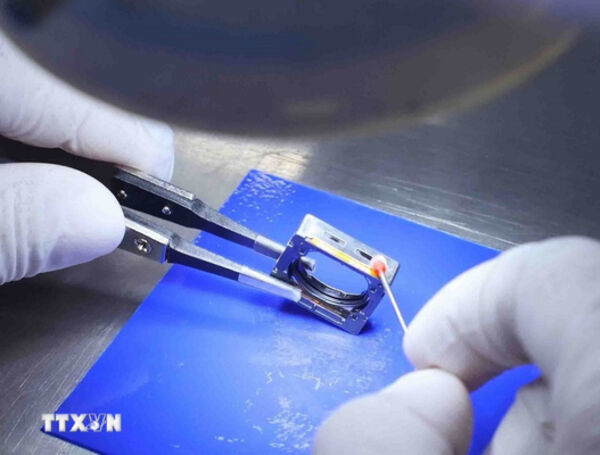
In today’s modern world, countless major technological breakthroughs begin with silicon fragments smaller than a grain of rice called semiconductor. As these chips have become strategic assets, intense geopolitical competition among major powers has triggered an unprecedented shift in global semiconductor supply chains. Against this backdrop, domestic and international analysts see Vietnam as a strong contender in global semiconductor companies’ de-risking strategy.

Vietnam emerges as bright spot of growth, trusted and responsible partner

Despite a volatile global environment, Vietnam recorded solid gains in 2025. With flexible and proactive policies under the leadership of the Communist Party of Vietnam and the Government, all 15 key socio-economic targets were met or exceeded, while GDP expanded by about 8.02%, surpassing expectations.