 |
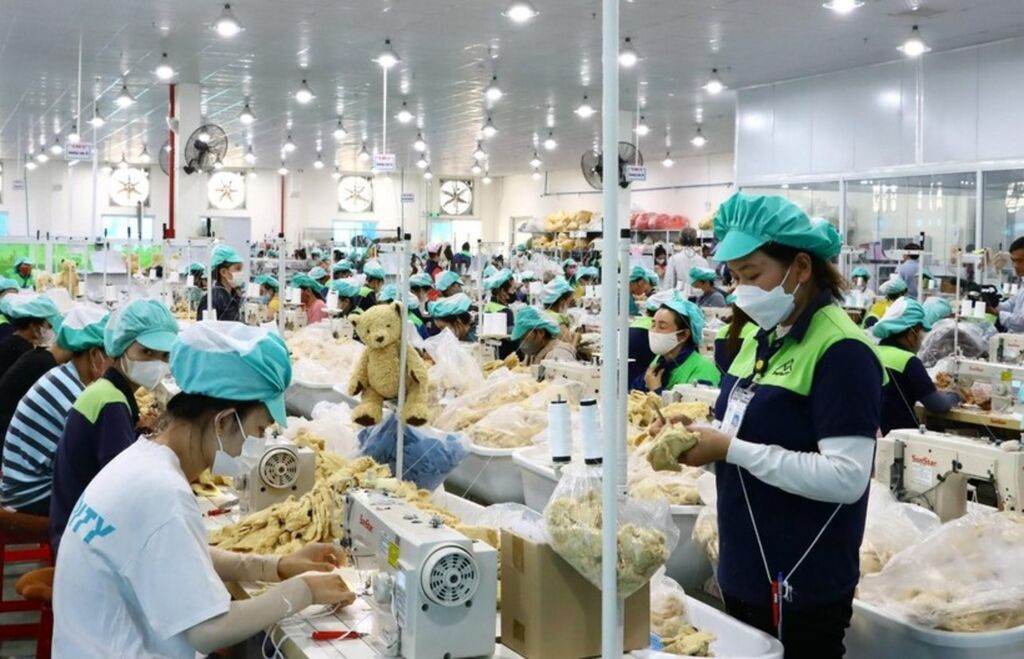
| Workers in the Du Long Industrial Park, Khanh Hoa province. (Photo: VNA) |
Hanoi (VNA) - A wide range of new economic policies and legal provisions will come into force in January 2026, covering taxation, advertising, land use, minimum wages, public finance, railways, technology transfer and statistics, among others.
The revised Law on Special Consumption Tax clearly defines taxable goods and services, including tobacco, alcohol, petrol, passenger vehicles with fewer than 24 seats, sugar-sweetened beverages, and services such as casinos, betting, golf and karaoke. The law applies both ad valorem tax rates and specific taxes to certain items, while clarifying taxable prices, tax payment timing and tax-exempt entities. These provisions are expected to help stabilise fiscal policy and support macroeconomic management.
The Law on amendments and supplements to a number of articles of the Law on Advertising focuses on administrative reform and greater decentralisation, reducing compliance costs and shortening licensing procedures for businesses. Notably, regulations on online advertising and cross-border services have been refined to promote a transparent and level playing field between domestic and foreign enterprises, in line with the digital economy and international integration.
For the first time, the National Assembly has passed a law on specialised courts at the International Financial Centre, defining their functions, organisational structure, jurisdiction, procedures, enforcement of judgments, and safeguards for their operations.
The amended Law on Public Debt Management introduces new mechanisms for on-lending ODA and concessional foreign loans. The Ministry of Finance will directly on-lend to localities for socio-economic development programmes, while policy and commercial banks may be authorised to on-lend with varying risk-sharing arrangements. The changes aim to improve flexibility, expand access to preferential capital and support development investment, while maintaining public debt control.
The Law on amendments and supplements to the Law on Prices centres on three priorities: expanding its scope to better protect consumers; increasing decentralisation by granting commune-level authorities greater powers to stabilise prices; and reforming valuation procedures to reduce compliance costs for businesses.
Under the State Budget Law, budget balance principles are clarified, requiring total revenue to exceed recurrent expenditure, with deficits used only for development investment and a gradual move towards a balanced budget. The law reinforces the central role of the state budget, while strengthening transparency and community oversight to improve the investment environment and investor confidence.
The revised Railway Law identifies rail transport as a priority investment sector, with incentives for enterprises to participate in infrastructure development, transport services and railway industry. In addition to state funding for key routes, the law encourages non-budget investment, particularly public–private partnerships and transit-oriented development (TOD), alongside incentives related to land, credit, taxation and technology.
The Law on amendments and supplements to the Law on Statistics aims to reduce compliance costs and administrative reporting burdens, limit data duplication, and improve efficiency through greater use of administrative data and digital transformation, supporting more timely and accurate economic policymaking.
Resolution No. 254/2025/QH15 of the National Assembly allows reductions in land-use fees when converting certain types of land to residential use, easing financial burdens for households and individuals. From January 1, 2026, provincial land price tables will be issued annually, with adjustment coefficients set by provincial authorities to better align prices with market levels and enhance transparency.
Under the Government's Decree No. 292/2025/ND-CP, agricultural land-use tax exemptions are extended from January 1, 2026 to December 31, 2030, covering a wide range of land users and purposes, helping reduce input costs and improve agricultural competitiveness.
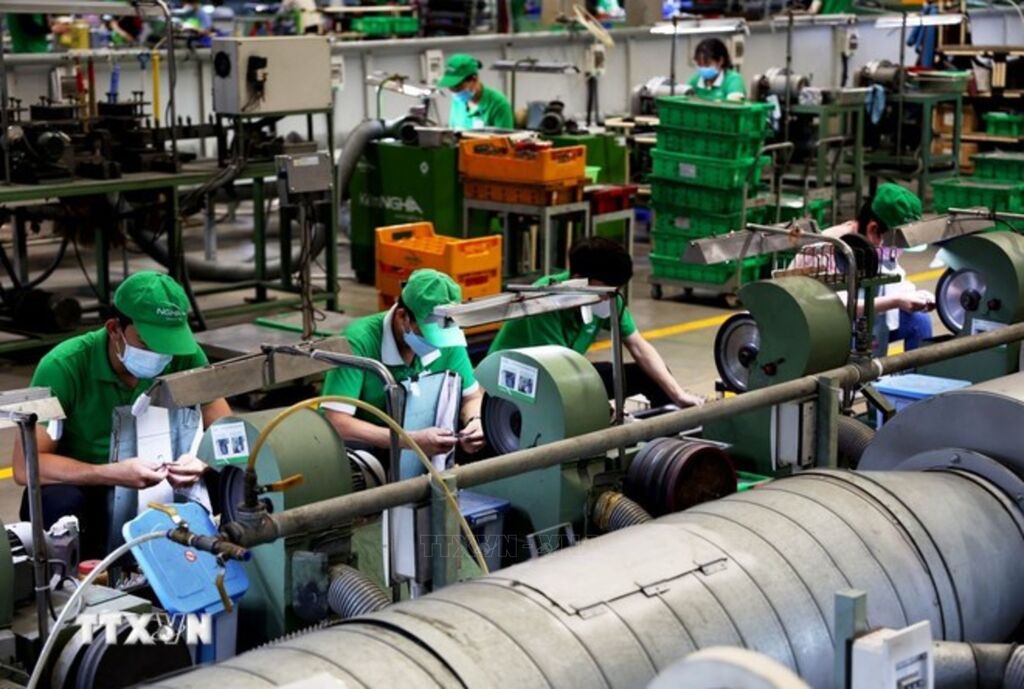 |
| Employees in the Tan Phu Trung Industrial Park, Ho Chi Minh City. (Photo: VNA) |
Minimum wages for labourers working under contracts will also rise under Decree No. 293/2025/ND-CP, with monthly minimum wages ranging from 3.7 million to 5.31 million VND (140.78 - 202.04 USD), and hourly wages from 17,800 to 25,500 VND, depending on the region.
Decree No. 319/2025/ND-CP sets out special mechanisms for science, technology, research and technology transfer for nationally important railway projects, including the North–South high-speed railway, the Lao Cai–Hanoi–Hai Phong line, and urban railways in Hanoi and Ho Chi Minh City.
Meanwhile, Circular No. 99/2025/TT-BTC of the Ministry of Finance revises corporate accounting regimes to better align with international standards, while Circular No. 33/2025/TT-BKHCN of the Ministry of Science and Technology introduces criteria for corporate income tax incentives for electronic equipment manufacturers.
All of the above economic policies will take effect from January 1, 2026./.