HCM City moves to build multi-tier elderly care ecosystem
Ho Chi Minh City is entering a period of rapid population ageing, creating an urgent need to strengthen and expand its long-term care system for the elderly.
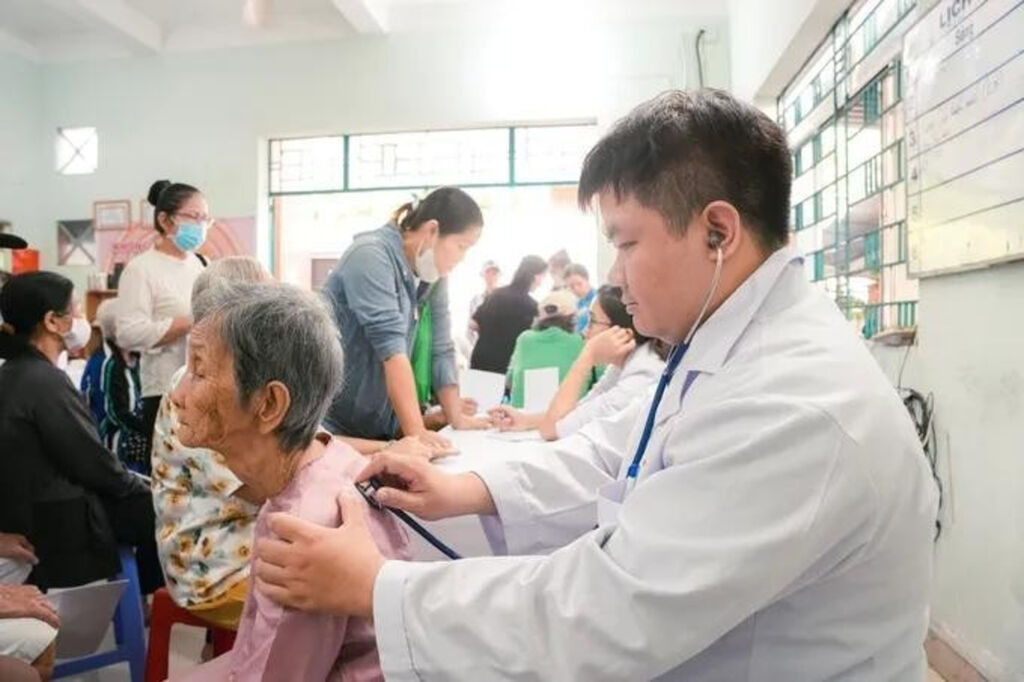
HCM City moves to build multi-tier elderly care ecosystem - Illustrative image (Photo: sggp.org.vn)

HCM City (VNS/VNA) - Ho Chi Minh City is entering a period of rapid population ageing, creating an urgent need to strengthen and expand its long-term care system for the elderly.

The issue was highlighted by experts and policymakers at a consultation workshop on developing the city’s elderly care network, organised by the city’s Department of Health on December 26.

According to Nguyen Tang Minh, Deputy Director of the Department of Health, HCM City officially entered the ageing phase in 2017, when the proportion of residents aged 60 and above exceeded the threshold that defines an ageing society under national criteria.

As of November 30, the city had around 1.6 million residents aged 60 and above, accounting for 11% of its population — the highest number of elderly nationwide.

The pace of ageing has been faster than projected, placing growing pressure on the healthcare system and social welfare services.

Associate Professor Tang Chi Thuong, Director of the Department of Health, said that demand of long-term care for the elderly is rising sharply, but the city currently has only 36 elderly care facilities, providing services to over 3,500 people.

He noted that the existing care system remains limited in both scale and diversity, unable to meet the market's demand.

Services are largely concentrated in residential nursing homes, while flexible models such as home-based care, day-care centres, assisted living, palliative care and end-of-life services are still underdeveloped.

Uneven distribution of facilities, high service costs and a lack of support mechanisms have also made access difficult, particularly for elderly people on low and middle incomes.

Human resources pose another major challenge. According to the Vietnam Nursing Association, around 70% of older people suffer from two or more illinesses. While life expectancy is increasing, many elderly citizens spend their later years living with illness, driving up demand for long-term care.

Meanwhile, community- and home-based caregivers remain in short supply and often lack formal training.

Experts therefore agreed that the city should adopt a multi-tier long-term care ecosystem, rather than rely on fragmented solutions.

Such a system would be planned across multiple service levels, from home and community care to nursing homes and end-of-life care, ensuring that elderly people receive appropriate support at the right time.

They also stressed the need to standardise service quality, develop clear standards for each type of care, and recognise elderly care as a specialised profession.

Closer integration between healthcare and social welfare, greater use of technology, a focus on home-based care and age-friendly infrastructure planning were among the key recommendations.

The Department of Health said it will work with relevant agencies to advise the municipal People’s Committee on developing a master plan for the city’s elderly care system for the 2025–2030 period and beyond.

The plan aims to build a connected, multi-tier long-term care ecosystem centred on the needs of older people in response to rapid population ageing and in support of the city’s sustainable development goals./.


Related News

NA discusses improving people’s quality of life

The 15th National Assembly is discussing a draft Resolution on several breakthrough mechanisms and policies for protecting, caring for, and improving public health; and the investment policy for the National Target Programme on healthcare, population, and development in the 2026-2035 period during its 10th session on December 2.

Incentives in Population Law expected to reverse birth rate decline

Vietnam’s population has already topped 100 million, but the 2025 population report reveals trends accelerating well beyond earlier forecasts. Fertility has nosedived to all-time lows: the total fertility rate slipped from 2.01 children per woman in 2022 to 1.96 in 2023, then plunged to a record 1.91 in 2024.

See Also

Culture must be Vietnam’s strength, people’s spiritual foundation: PM

He emphasised that the sector must cultivate an advanced Vietnamese culture rich in national identity, promote well-rounded human development, and foster a humane, civilised, and modern cultural environment, ensuring that culture permeates society and serves as both a strong spiritual foundation and an internal driver of development.

Hanoi strengthens efforts to curb sex imbalance at birth

Alongside changing mindsets, the capital has implemented a wide range of coordinated solutions to address sex imbalance at birth. Communication campaigns have been intensified at the grassroots level, targeting residential communities, youth, couples preparing for marriage and women of reproductive age.

11th National Patriotic Emulation Congress successfully wraps up

Patriotic emulation movements across the country have produced landmark achievements in the Ho Chi Minh era, including defeating the COVID-19 pandemic, completing the elimination of substandard housing four months ahead of schedule, building more than 3,000 kilometres of expressways, and advancing science – technology, innovation, and digital transformation.

11th National Patriotic Emulation Congress officially opens in Hanoi

The 11th National Congress of Patriotic Emulation is an extremely important political and social event of the country, aiming to summarise the patriotic emulation movement and commendation work in the 2021-2025 period, and to propose and launch the patriotic emulation movement for the 2026-2030 stage.

Combating IUU fishing begins with fishermen’s awareness

As the whole country intensifies efforts to remove the European Commission’s (EC) “yellow card”, Dak Lak province is demonstrating strong determination. Notably, clear changes in fishermen’s awareness and actions have become a crucial and prerequisite foundation in the process of building a sustainable, modern and responsible marine fishing industry.

Vietnam’s trade turnover tops 900 billion USD for first time

Vietnam's total trade in 2025 reached about 920 billion USD, up 16.9% year on year. Of the total, exports were valued at 470.59 billion USD, a year-on-year increase of 15.9%, while imports amounted to 449.41 billion USD, up 18%, resulting in a trade surplus of around 21.2 billion USD.

Vietnam makes strides in sustainable agricultural development

Two years after the Prime Minister approved Decision 150 on the Sustainable Agriculture and Rural Development Strategy for the 2021–2030 period, in 2023, Vietnam issued a National Action Plan to transform food systems in a transparent, responsible and sustainable manner through 2030. This marked a breakthrough step, demonstrating Vietnam’s responsibility to the international community following the United Nations Food Systems Summit in 2021.

Incentives in Population Law expected to reverse birth rate decline

Vietnam’s population has already topped 100 million, but the 2025 population report reveals trends accelerating well beyond earlier forecasts. Fertility has nosedived to all-time lows: the total fertility rate slipped from 2.01 children per woman in 2022 to 1.96 in 2023, then plunged to a record 1.91 in 2024.