 |
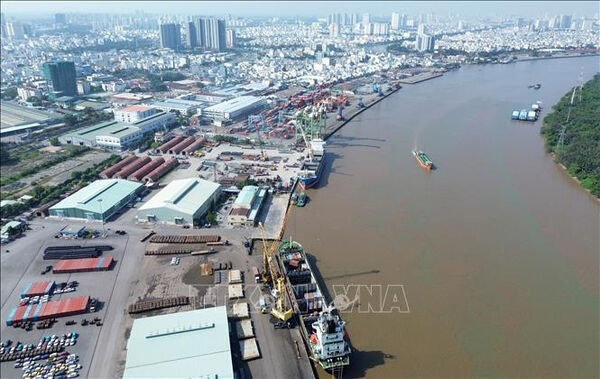
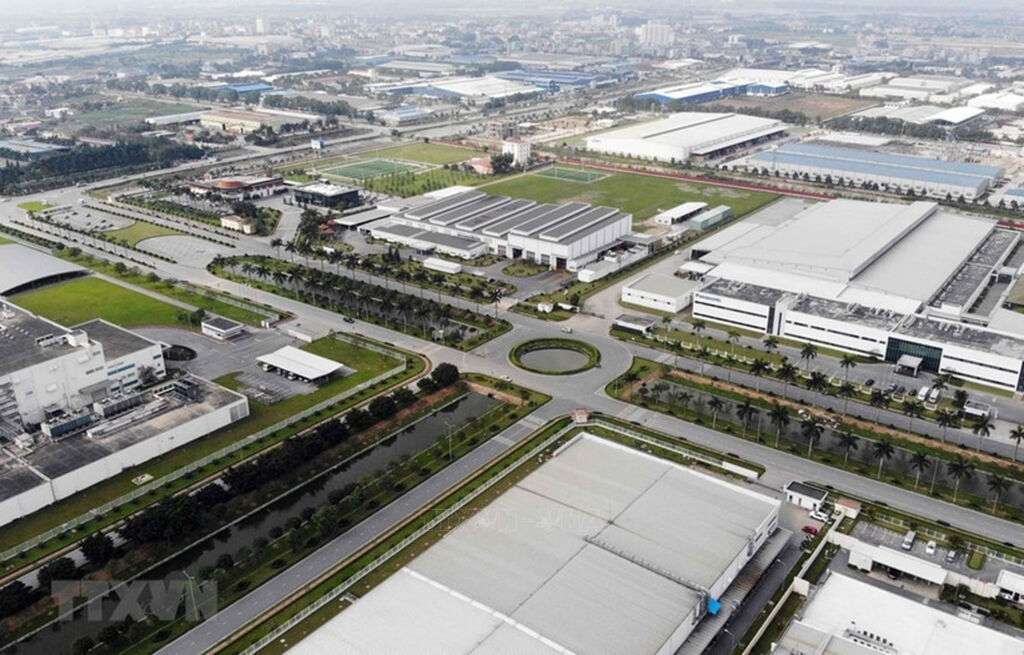
| Thang Long II Industrial Park in Hung Yen province. (Photo: VNA) |
Hanoi (VNA) – From 2026, the industrial real estate market in the northern region is forecast to enter a new growth phase as strategic infrastructure projects near completion, supply expands, and green industrial parks become a decisive factor for foreign direct investment (FDI).
FDI prioritises green standards
Between 2026 and 2029, the region is expected to add about 5,050 hectares of industrial land, nearly 1 million sq.m of ready-built factories (RBF) and over 656,000 sq m of ready-built warehouses (RBW). In 2026 alone, RBF supply is projected to increase by more than 643,000 sq.m, creating room for expansion in electronics, semiconductors and high-tech manufacturing.
Major infrastructure projects, including Gia Binh International Airport, the North–South Expressway expansion and plans for a free trade zone linked to deep-sea ports, are set to reposition the North as a green manufacturing and logistics hub.
According to experts from Cushman & Wakefield Vietnam, FDI firms are becoming more selective. Beyond rental costs, investors increasingly value long-term expansion potential, synchronised infrastructure and transparent legal frameworks. ESG (environmental, social and governance) standards and carbon-reduction commitments are now prerequisites for many multinational corporations, prompting industrial park developers to adopt renewable energy, water recycling, and smart management systems.
Data from the firm’s Marketbeat report for Q4/2025 show that the total industrial land supply in the region reached nearly 23,990 hectares, up 42.8% year-on-year, with average rent at 135 USD per sq.m for the lease term. Despite rising supply, occupancy remained solid at 65.74%. RBF occupancy climbed to 86%, while RBW reached over 83%, reflecting strong logistics demand.
Forming a green production belt
Investment is gradually shifting from core hubs to satellite localities such as Hung Yen, Ninh Binh, Hai Phong and Phu Tho, forming an interconnected production–logistics belt.
Hai Phong and Bac Ninh remain key anchors thanks to deep-sea ports and established high-tech ecosystems, while neighbouring provinces offer strategic land reserves for large-scale projects at competitive costs.
This emerging belt emphasises green planning from the outset. New-generation industrial parks integrate rooftop solar systems, centralised wastewater treatment, eco-friendly materials and smart energy management. Enhanced technical standards for factories and warehouses also support automation and digitalised production, critical for semiconductor and electronics supply chains.
Experts believe this green production belt will strengthen the North’s long-term competitiveness. As global supply chains restructure and ESG requirements tighten, locations that combine connectivity, scalable land banks and sustainable development commitments will have a clear edge in attracting high-quality FDI./.