 |
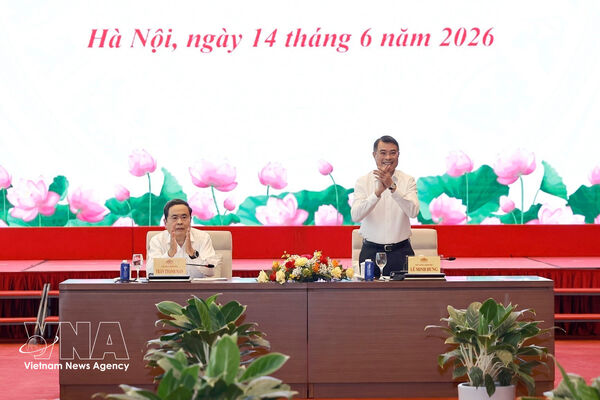
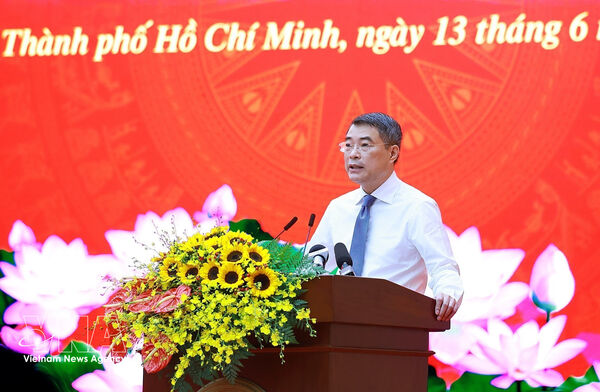
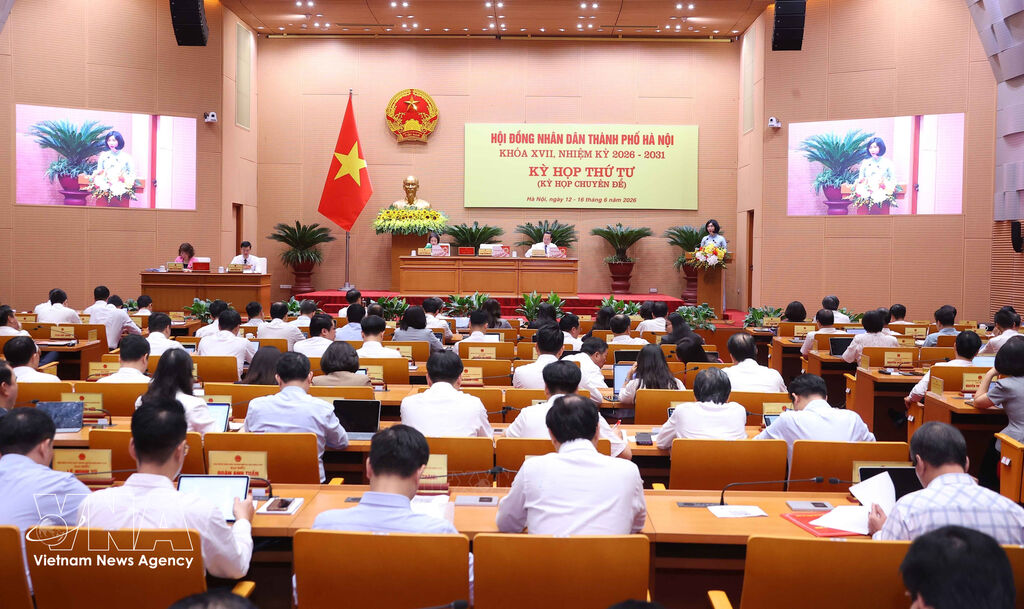
| An overview of the fourth specialised session of the Hanoi People's Council (Photo: VNA) |
Hanoi (VNA) – The Hanoi People's Council approved a resolution on the low-emission zone (LEZ) within Ring Road 1 plan at its fourth specialised session on June 15, marking a significant step toward controlling vehicle emissions, improving air quality and promoting the transition to greener transportation in the capital.
Under the approved resolution, the LEZ will cover the area within Hanoi’s Ring Road 1, encompassing nine wards: Hoan Kiem, Cua Nam, Ba Dinh, Giang Vo, Ngoc Ha, Tay Ho, O Cho Dua, Hai Ba Trung, and Van Mieu – Quoc Tu Giam. The area is the city’s urban core, characterised by high population density, heavy traffic volumes and persistent air pollution pressures.
The municipal People’s Committee reported that transportation activities are a major contributor to Hanoi’s air pollution. Studies conducted during the 2023–2025 period found that traffic emissions accounted for approximately 25% of PM2.5 concentrations across the city. When considering only pollution sources generated within Hanoi, the contribution of transportation rises to as much as 59%.
Under the resolution, the municipal People's Council assigns the People’s Committee to implement the plan in accordance with relevant regulations, ensuring effectiveness, cost efficiency, avoidance of overlap and wastefulness, and consistency with practical conditions. During implementation, the committee will review and assess progress, make necessary adjustments within its authority and report results to the council at the nearest session.
The establishment of LEZs is in line with the 2026 Capital Law and existing environmental protection regulations. The pilot implementation beginning on July 1 in selected areas within Ring Road 1 is a necessary step to achieving emission reduction targets, improving air quality, and protecting public health, according to a verification report by the council's board of science, technology and the environment.
The plan will be implemented according to a phased roadmap, including the expansion of public transport services, development of green transport infrastructure, installation of electric vehicle charging stations, construction of park-and-ride facilities, application of monitoring technologies and support programmes to help residents transition from fossil fuel-powered vehicles to clean-energy alternatives.
The city will mobilise both public and private resources while integrating the plan with existing programmes and initiatives related to transportation, environmental protection, green transition and digital transformation./.