 |
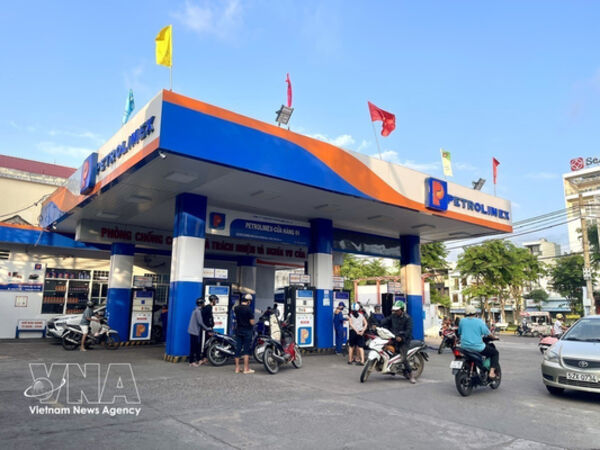
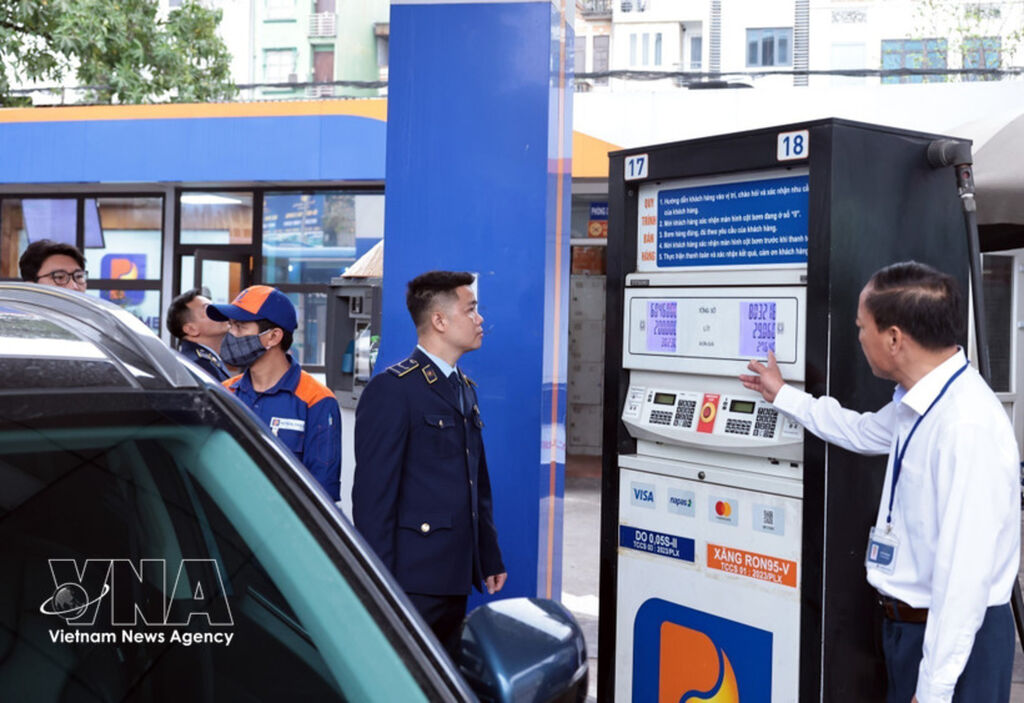
| Team 2 of the Hanoi Market Surveillance Sub-department inspects operations of a Petrolimex petrol station on Tran Quang Khai street (Photo: VNA) |
Hanoi (VNA) – The Hanoi Market Surveillance Sub-department said on March 11 that petrol and liquefied petroleum gas (LPG) trading across the capital has generally remained stable, with supplies at many outlets replenished to meet residents’ demand.
According to the sub-department, the global energy market is fluctuating due to complex international events, and authorities have introduced various measures to keep an eye on petrol and LPG trading across the city. The goal is to strengthen market control and quickly address problems like speculation, hoarding, unfair price hikes, or restricted sales that might disrupt supply.
Twenty-five market surveillance teams under the sub-department have been deployed to inspect petrol retail outlets while monitoring supply–demand conditions and market developments in each locality. At the same time, authorities have intensified communications and guidance for fuel traders to comply with legal regulations, ensure sufficient supply, and stabilise the market.
Residents have also been advised not to panic-buy or store petrol in cans, bottles, or other unsafe containers, as such practices may pose fire and explosion risks.
Statistics from the Hanoi Department of Industry and Trade show that the city currently has 453 petrol trading points. Market surveillance forces have not recorded unusual price increases, hoarding, or restricted sales.
Compared with March 10, fuel supply at many outlets has improved. Fourteen petrol stations that had run out of fuel have been restocked and resumed normal operations.
However, as of the morning of March 11, five outlets remained temporarily closed due to depleted supplies and they were awaiting additional deliveries from distributors. Another station was selling only petrol after running out of diesel, while one more had received new supplies but temporarily suspended operations due to a power incident.
Regarding retail prices, from 11:45 pm on March 10, the Ministries of Industry and Trade, and Finance adjusted domestic fuel prices in line with Resolution No. 36/NQ-CP issued by the Government on measures to respond to the situation related to the conflict in the Middle East.
Under the adjustment, the price of E5 RON92 rose by 1,344 VND per litre to a maximum of 26,570 VND (1.01 USD) per litre, while RON95-III increased by 2,073 VND per litre to 29,120 VND per litre. Diesel rose by 478 VND per litre to 30,717 VND per litre, while kerosene fell by 2,706 VND per litre to 32,385 VND per litre.
The Ministry of Industry and Trade said domestic fuel price movements in recent times have been affected by complex developments in the global energy market.
As for LPG, the Hanoi market surveillance force reported that LPG trading activities in the city have remained normal, with no violations detected so far and supply staying stable.
Domestic retail gas prices are on an upward trend due to rising global energy prices and higher transportation costs. Gas traders said retail prices have increased by about 2,500 VND per kilogramme, equivalent to around 30,000 VND per 12kg cylinder and 112,500 VND per 45kg cylinder compared with the previous level.
Overall, the Hanoi Market Surveillance Sub-department said petrol and LPG trading activities across the city remain stable, with supply largely meeting demand despite volatility in global energy prices./.