 |
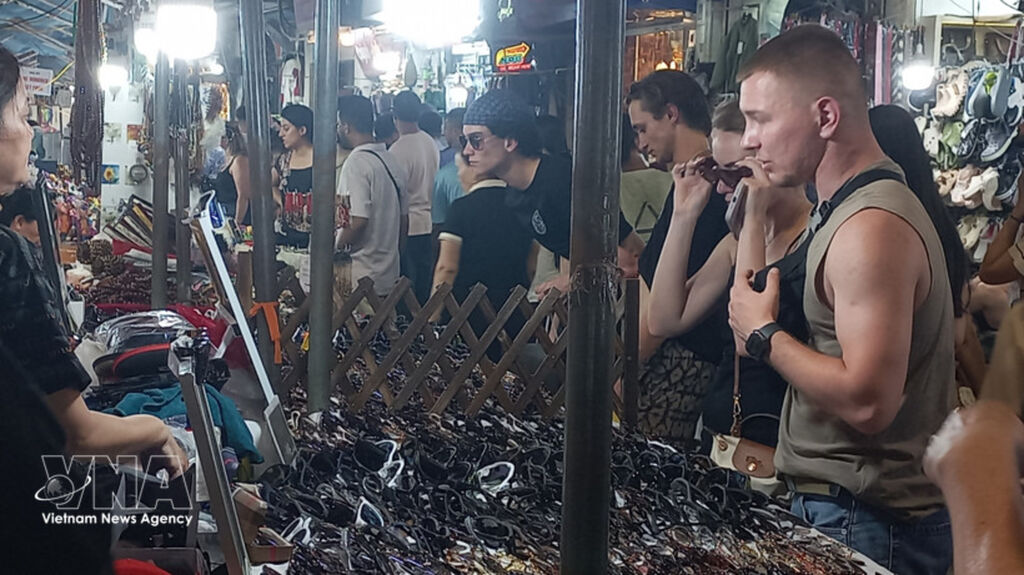
| International tourists love shopping for souvenirs at Hanoi's Old Quarter night market (Photo: VNA) |
Hanoi (VNA) – As Vietnam’s political, cultural and tourism hub, Hanoi welcomes tens of millions of domestic and international visitors each year and has gained global recognition for its rich heritage, distinctive cuisine and strong cultural identity. However, tourism experts say the city’s night-time economy and visitor experiences have yet to fully match its potential.
Beyond Hoan Kiem Lake (Sword Lake), the Old Quarter and several weekend pedestrian streets, evening entertainment and cultural offerings remain limited. Many visitors end their exploration of Hanoi early, despite the fact that night-time activities are a major driver of tourism spending in many global destinations.
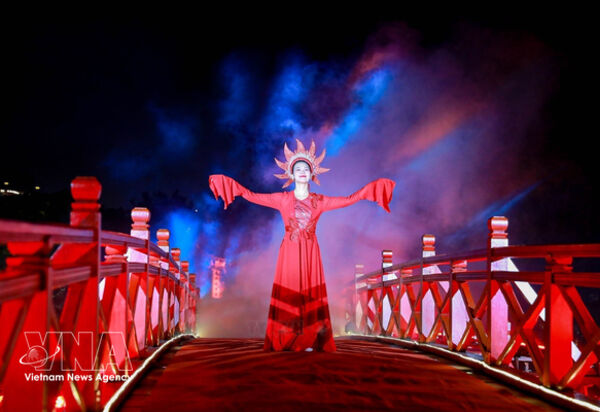
Existing products have already demonstrated Hanoi’s potential. Night tours at the Imperial Citadel of Thang Long and Hoa Lo Prison Relic Site, cultural performances and pedestrian spaces have shown that the city can create compelling after-dark experiences.
As the tourism sector seeks to increase visitor spending and extend stays, the development of the night-time economy is increasingly seen as a way to create new tourism products, enhance destination appeal and support sustainable urban growth.
Culture and heritage at the core
Assoc. Prof. Dr. Bui Hoai Son, a full-time member of the National Assembly’s Committee for Culture and Social Affairs, Hanoi possesses unique resources to tell its story at night, including its extensive heritage, cultural layers and historic architecture.
When developed systematically, cuisine, arts and cultural activities can enrich visitor experiences and turn the night-time economy into a form of “soft power” that helps lengthen stays, increase spending and strengthen the capital’s competitiveness, he said.
Vu Van Tuyen, CEO of Travelogy Vietnam, said Hanoi’s greatest advantage lies not in vibrancy but in cultural depth.
“Hanoi’s night-time economy should be built on its thousand-year heritage rather than competing solely through sound and lighting effects,” he said, stressing that visitors need memorable experiences that encourage them to stay longer.
“If daytime allows visitors to see Hanoi, then nighttime should allow them to feel its soul,” he added.
Visitors have also expressed a desire for more diverse evening activities. Simon, a tourist from Germany, said more programmes encouraging interaction among travellers would help create a stronger sense of community. Meanwhile, Hanoi resident Hoang Minh Chien suggested expanding night-time entertainment options while ensuring activities remain closely linked to Vietnamese cultural identity and public security.
Removing bottlenecks for growth
Experts share the view that Hanoi needs more than additional late-night services. What is required is a comprehensive strategy with culture and heritage at its centre.
According to Tuyen, the city’s ongoing administrative restructuring presents an opportunity to redesign night-time tourism spaces. For years, activities have been concentrated around Hoan Kiem Lake, the Old Quarter and Ta Hien Street, creating localised overcrowding while leaving other areas underutilised.
He proposed developing functional clusters across the city. Hoan Kiem Lake and the Old Quarter could serve as heritage and cultural hubs; West Lake as a centre for festivals, arts and entertainment; and the Red River area as a new night-time economic corridor featuring outdoor events and tourism services. Outlying areas such as Son Tay, Ba Vi and Duong Lam could focus on agricultural and suburban tourism experiences.
Tuyen said Hanoi’s long-term goal should be to create a 24-hour urban experience ecosystem rather than simply extending opening hours. In today’s tourism market, destinations compete not only for visitor numbers but also for length of stay and spending per tourist.
Under a resolution recently adopted by the Hanoi People’s Council, the night-time economy is expected to contribute 7–8% of the city’s gross regional domestic product (GRDP) by 2035. Experts view the policy as not only an economic initiative but also a long-term cultural strategy, helping Hanoi tell a more compelling story and encouraging visitors to stay longer and explore more of the capital’s unique identity./.