Hanoi’s GRDP up 7.87% in Q1
Hanoi’s gross regional domestic product (GRDP) in the first quarter of 2026 is estimated to have grown by 7.87% year-on-year, one of the highest rates in recent years, according to the municipal Statistics Office.
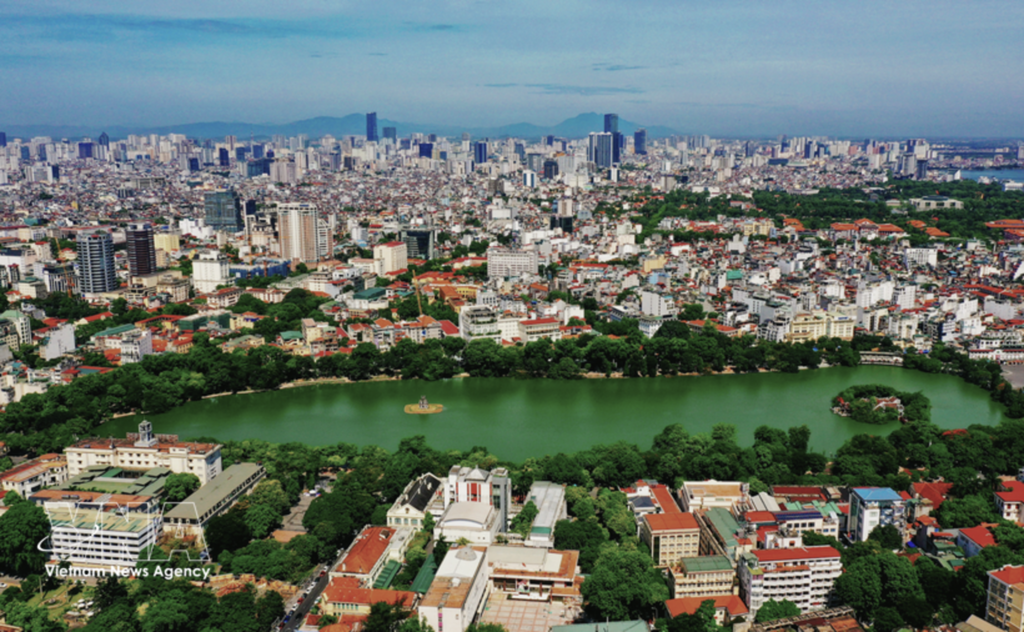
anoramic view of Hoan Kiem Lake from above (Photo: VNA)

Hanoi (VNA) – Hanoi’s gross regional domestic product (GRDP) in the first quarter of 2026 is estimated to have grown by 7.87% year-on-year, one of the highest rates in recent years, according to the municipal Statistics Office.

The agro-forestry-fishery sector expanded by 3.73% in the reviewed period, contributing 0.09 percentage points to overall growth.

The industry and construction sector rose by 7.55%, contributing 1.33 percentage points. Industrial production maintained positive momentum from the start of the year, with enterprises resuming operations quickly after the Lunar New Year (Tet) holiday to fulfil domestic and export orders.

The industrial sector’s added value increased by 7.52%, contributing 0.97 percentage points to GRDP growth. Of this, manufacturing and processing grew by 7.08%; electricity production and distribution surged by 15.85%; and water supply, waste and wastewater treatment rose by 7.98%.

Meanwhile, the construction sector expanded by 7.62% year-on-year, contributing 0.36 percentage points. The city has accelerated the implementation of its 2026 public investment plan, focusing on key infrastructure and transport projects to drive growth. Public investment disbursement and site clearance have helped attract private investment along major transport corridors, forming an important short-term growth driver.

As of March 31, development investment expenditure had reached about 24 trillion VND (911 million USD), equivalent to 19.07% of the annual plan, triple the figure recorded in the same period last year.

The service sector posted strong growth of 8.21%, contributing 5.74 percentage points, the largest share to overall expansion. Authorities and businesses have stepped up measures to stimulate consumption, while retail systems and e-commerce platforms launched promotions and incentives to boost demand.

Taxes less subsidies on products increased by 7.12%, contributing 0.71 percentage points.

In Q1, the GRDP structure saw agriculture, forestry and fisheries accounting for 2.16%; industry and construction 17.77%; services 70.07%; and taxes less subsidies on products 10%. The respective figures for the same period last year were 2.05%, 17.83%, 69.99% and 10.13%./.
See Also

Da Nang strengthens compliance with IUU fishing regulations

Da Nang’s efforts against IUU fishing in recent years have delivered tangible results, contributing to Vietnam’s goal of having the European Commission’s (EC) “yellow card” lifted. The city also stresses that these efforts must be sustained alongside investment and policies for a modern and sustainable fisheries sector.

Heritage development enters new phase in Ho Chi Minh City

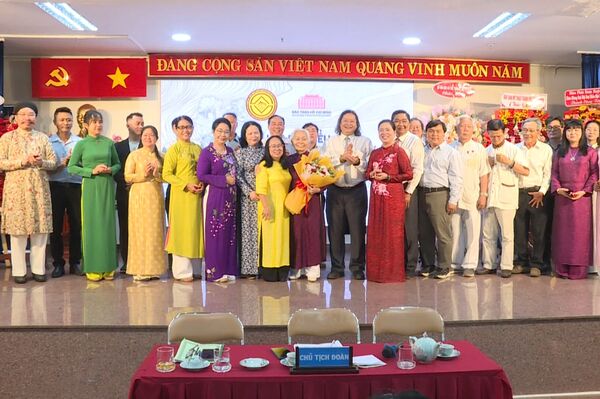
The Ho Chi Minh City Heritage Association has successfully held its first congress for the 2026–2031 term, marking a significant milestone as the city enters a new phase following its administrative expansion into a major economic and cultural hub with a rich and diverse heritage.

Plan issued to implement Vietnam–France agreement on science-technology cooperation

Under the plan, the Ministry of Science and Technology will take the lead, in coordination with relevant ministries and agencies, in directing, guiding, monitoring and inspecting the implementation of the agreement. The ministry will also prepare reports on the signing and implementation progress for submission to the Ministry of Foreign Affairs for consolidation and reporting to competent authorities as required.

Vietnam launches programme to attract foreign, overseas Vietnamese scholars

The programme aims to develop and effectively implement breakthrough mechanisms and policies to recruit, utilise and retain high-caliber international and OV talent. It is expected to strengthen the country’s science and technology capacity, foster a high-quality workforce, enhance innovation capabilities and promote international integration in education and research. The initiative also contributes to Vietnam’s goal of bringing its education system to an advanced regional and global level by 2035.

Vietnam’s fisheries move toward high-tech, green and sustainable development

Vietnam ranks third globally in seafood exports, with products present in more than 170 markets. In 2025, the sector produced nearly 10 million tonnes and earned over 11 billion USD from exports, remaining a key pillar of the economy. Aquaculture, especially shrimp and tra fish, continues to drive growth, accounting for over 60% of output, alongside efforts to curb capture fishing, strictly comply with IUU regulations, and transition to high-tech, green and sustainable practices.