 |
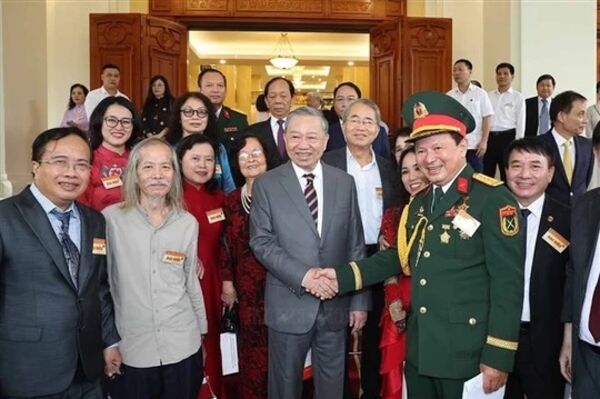
| Over 60 overseas Vietnamese from 24 nations and territories visit Truong Sa and DK1 platform (Illustrative image: VNA) |
Hanoi (VNA) – The Prime Minister has signed Decision No. 530/QD-TTg approving a national programme to attract foreign experts and overseas Vietnamese (OV) scholars to teach, conduct research and work at Vietnam’s higher education and vocational training institutions.
The programme aims to develop and effectively implement breakthrough mechanisms and policies to recruit, utilise and retain high-caliber international and OV talent. It is expected to strengthen the country’s science and technology capacity, foster a high-quality workforce, enhance innovation capabilities and promote international integration in education and research. The initiative also contributes to Vietnam’s goal of bringing its education system to an advanced regional and global level by 2035.
By 2035, Vietnam targets the recruitment of at least 30 outstanding experts and scientists capable of leading and spearheading key tasks that generate breakthroughs in education, training, scientific research and technology transfer, particularly in strategic and core technologies.
In addition, the country aims to attract 500 more experts for full-time positions at universities and vocational institutions. These individuals are expected to take on roles such as research group leaders, laboratory heads and programme directors in priority and cutting-edge technological fields.
A further 1,500 experts and scientists are expected to engage in teaching, research and collaboration - either in person or remotely - on a regular basis with Vietnamese institutions.
To achieve these targets, the decision outlines a range of key tasks and solutions, including improving institutional frameworks and policy mechanisms, building a robust ecosystem and database to connect global experts, and enhancing communications to promote Vietnam as a reputable academic and research destination. It also emphasises mobilising diverse resources, developing modern and professional research environments, accelerating digital transformation and the application of science, technology and artificial intelligence, as well as strengthening monitoring and evaluation.
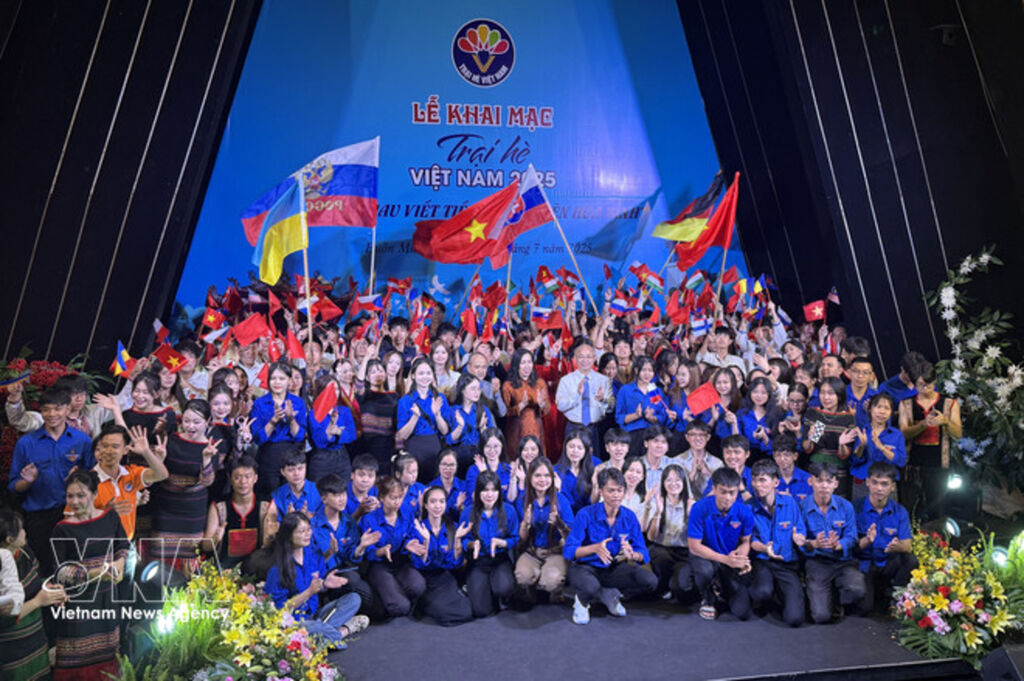 |
| Vietnam Summer Camp 2025 brings together 110 young overseas Vietnamese from 31 countries and territories (Illustrative image: VNA) |
Notably, the decision calls for the development of clear standards and conditions for foreign and overseas Vietnamese experts participating in academic and research activities in Vietnam, with priority given to strategic scientific and technological sectors and key economic industries. It also proposes tailored recruitment and appointment mechanisms aligned with international practices, ensuring consistency, transparency and efficiency.
Preferential policies on salaries, bonuses and personal income tax will be reviewed and introduced, alongside regulations recognising equivalent academic titles awarded abroad. Efforts will also be made to ensure favourable working conditions and academic environments.
Further reforms will focus on financial mechanisms and institutional autonomy, allowing public institutions greater flexibility in resource allocation and performance-based remuneration. Administrative procedures will be streamlined, including work permits, visas and residency processes, while supportive policies on housing, living conditions and essential public services will be introduced to help experts and their families settle in Vietnam./.