 |
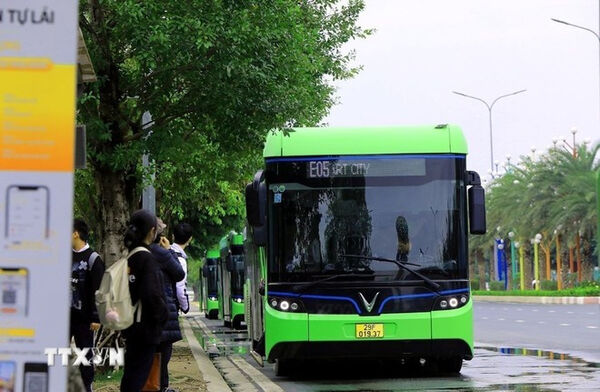
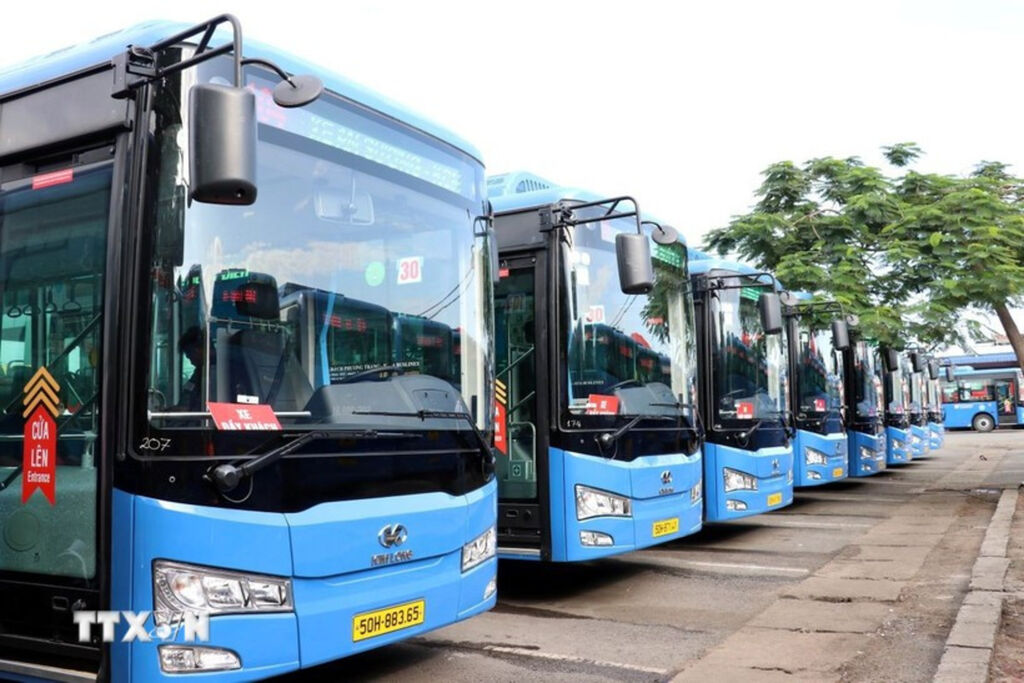
| Electrical buses in Ho Chi Minh City. (Photo: VNA) |
Hanoi (VNA) – As Vietnam’s economic hub, Ho Chi Minh City has been identified as a frontrunner in the national drive to “green” urban transport, with public transport placed first in the transition.
Alongside the determination to replace fossil-fuel vehicles, the city is also working to comprehensively develop infrastructure and roll out support policies for businesses, aiming to ensure a realistic and sustainable transition.
Raising electric bus share to 45.3%
HCM City is implementing a project to convert its bus fleet to electric vehicles, underscoring its commitment to environmentally friendly public transport.
Under the roadmap, from 2025, all newly invested or replaced buses must meet green standards, while from 2030 onward, 100% of buses in operation must be electric. If the plan is carried out as scheduled, the city will run around 3,200 electric and green-energy buses within the next five years.
In preparation, the municipal Department of Construction has taken early steps to replace fossil-fuel vehicles with cleaner alternatives.
In 2024–2025, the department organised open bidding for 108 subsidised bus routes. Priority was given to operators deploying new and electric buses. As a result, 627 electric buses have been put into service, accounting for 26.3% of the city’s bus fleet.
In early 2026, an additional 454 electric buses are expected to enter operation, lifting the proportion of such vehicles to 45.3%. Further tenders will be rolled out from late 2026 onwards, with the goal of fully converting the city’s bus system into a clean and green energy-powered one by 2030.
Le Hoan, Deputy Director of the Public Transport Management Centre under the Department of Construction, said international experience shows that public transport such as metro lines and buses is typically prioritised in emission-control strategies, followed by commercial transport and then private vehicles. Beyond buses, the city is also targeting the greening of ride-hailing, delivery vehicles and fleets used by state agencies.
From December 19, the centre will coordinate with transport operators to launch six electric bus routes serving Con Dao special zone, marking another step in expanding green transport solutions.
In parallel, HCM City plans to establish low-emission zones in central areas and Can Gio from 2026, as part of efforts to curb pollution and move towards net-zero emissions before 2050, in line with the Prime Minister’s direction.
Charging infrastructure gap
At present, there are only five charging stations for electric buses in the city, with 56 charging points – barely sufficient for current demand. Most have been invested by transport operators themselves, while a comprehensive public charging network has yet to take shape.
The municipal Department of Construction has proposed selecting 19 depots and parking sites to install charging facilities, creating a new revenue source through the leasing of public assets while easing infrastructure bottlenecks. Estimated annual revenue of over 22 billion VND (nearly 834,700 USD) would be channelled back into road transport infrastructure.
Looking ahead, the city estimates it will need more than 2.2 trillion VND to support the transition, including interest-rate subsidies for vehicle and charging station investments.
Deputy Director of the Department of Construction Bui Hoa An stressed that strong and practical incentive policies—covering finance, taxes and risk-sharing mechanisms—will be decisive in making green transport a reality in HCM City./.