 |
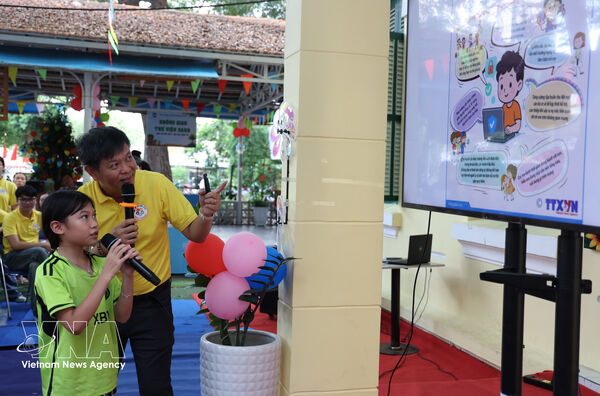
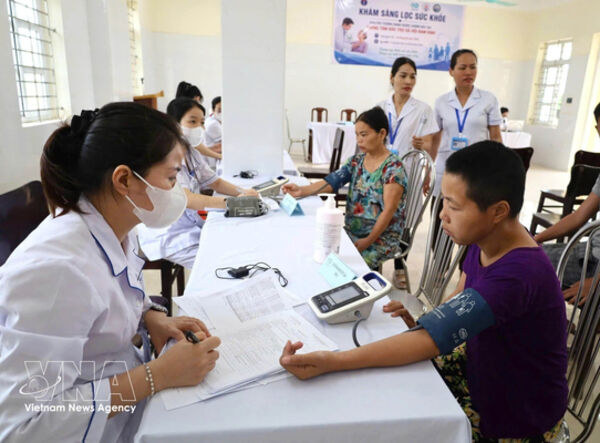
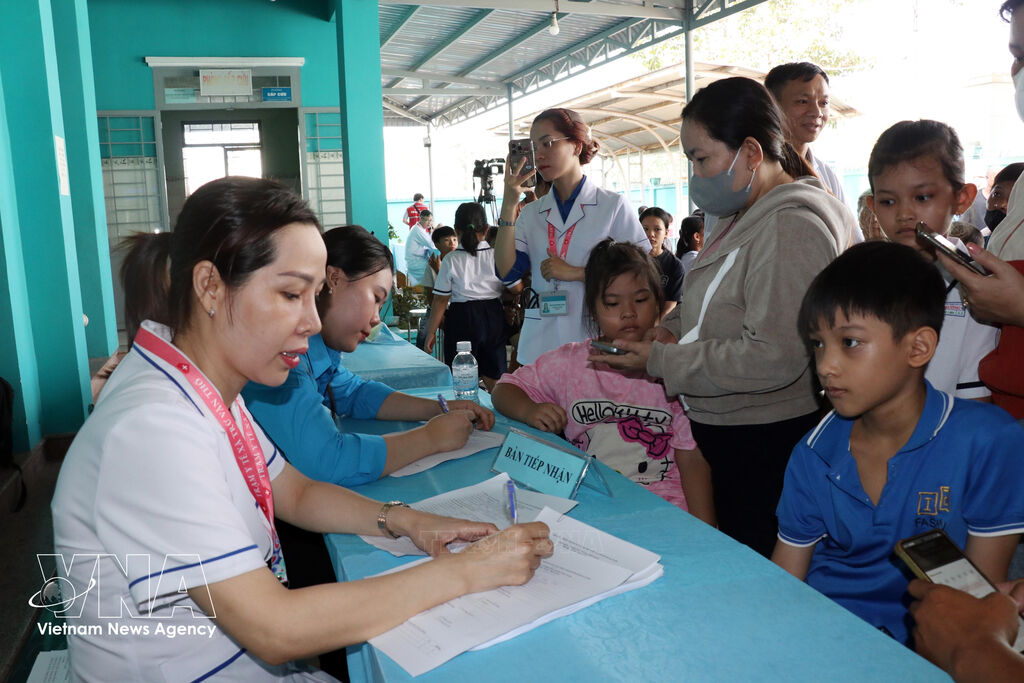
| Doctors conduct health screenings for children in Tru Van Tho commune, Ho Chi Minh City. (Photo :VNA) |
Ho Chi Minh City (VNA) – One month after launching Plan No. 228/KH-UBND on routine health check-ups for all residents, Ho Chi Minh City has made encouraging progress, with the programme gaining traction across localities as it works towards providing universal health screenings and continuous health management from 2026.
Data from the city's community health platform showed that as of June 24, a total of 108,895 residents had received health check-ups during the programme's first 31 days, averaging about 3,380 screenings a day. The pace has picked up steadily week by week, culminating in a record 7,725 examinations on June 24, the highest daily figure since the programme began.
An Nhon Tay commune led the city with 8,100 residents screened, followed by Ba Diem commune with 7,887 beneficiaries. More than 1,000 people also received health check-ups in each of such localities as Ho Tram, Con Dao special zone and Thu Duc.
The municipal Department of Health said the programme is being rolled out in a coordinated manner across areas with different population sizes and organisation conditions.
Despite the encouraging progress, the department noted significant disparities among localities, with some communes and wards reporting relatively low participation.
To achieve universal health check-ups, the department said screening services must be expanded beyond commune health stations and hospitals to enterprises, schools, residential communities and home visits for vulnerable groups. Local authorities have also been urged to develop detailed implementation roadmaps, regularly review progress and mobilise additional resources where needed.
Director of the municipal Department of Health Tang Chi Thuong said providing health check-ups for the city's more than 14 million residents in 2026 is an unprecedented undertaking that requires strong commitment from the health sector, close coordination among the entire political system and active public participation.
Beyond organising health screening campaigns, the city aims to build a healthcare delivery system that provides all residents with convenient, equitable and high-quality care, he added.
To support the target, the department has introduced seven groups of measures, mobilising the entire healthcare network from commune health stations to specialised hospitals. Mobile screening services will also be expanded to workplaces, schools, residential communities, social welfare centres and nursing homes, while community healthcare teams will continue providing home visits for elderly people, persons with disabilities and others unable to travel.
The city is also rolling out a borderless healthcare model, allowing residents to receive health check-ups at any participating medical facility regardless of where they are registered. At the same time, it is accelerating digital transformation to monitor implementation, verify residents' information and ensure no one is left behind, while encouraging businesses to provide routine health screenings for employees.
Achieving universal health check-ups in 2026 will lay the foundation for a new healthcare model in which every resident has an electronic health record, receives regular screenings, benefits from lifelong health management and gains access to early intervention through primary healthcare services.
The initiative marks a shift from a treatment-oriented healthcare system to a proactive, people-centred model focused on prevention and long-term health, helping build a healthier community and a more liveable city./.