 |
| Khanh Hoa spreads sustainability awareness among young students (Photo: VNA) |
Hanoi (VNA) – Distortions, no matter how polished, can’t compete with the facts on the ground or the policies for the next generation. Vietnam’s annual Month of Action for Children, which runs from June 1-30, underscores a nationwide push to deliver tangible care, education, and protection.
The campaign has been running nationwide since 2015 under a circular issued set by the former Ministry of Labour, Invalids and Social Affairs, now the Ministry of Home Affairs.
Contrary to claims by hostile forces that child protection in Vietnam is merely symbolic or superficial, each annual campaign adopts a specific theme closely aligned with practical realities and long-term goals.
In 2025, the campaign focused on directing resources to achieve child-focused goals. For 2026, the theme is “Happy, Safe and Confident Children in the Digital Era”, with three core goals: safety, happiness, and resilience.
While safety, happiness, and resilience have always been essential for children, the digital shift gives those concepts new weight.
In the past, child safety once meant physical environments and visible risks. Children now inhabit cyberspace, where threats are far less visible.
Happiness, too, no longer hinges solely on family, friends, and outdoor play; it increasingly depends on access to digital spaces for learning, communication, and entertainment.
In the past, to “move forward confidently” in life, children only needed to acquire knowledge through traditional methods. Today, however, beyond knowledge, they also need to be equipped with soft skills such as critical thinking, self-discipline, and the ability to navigate the lures and pitfalls of social media.
Adults and legal systems must also evolve to safeguard children’s rights in the digital realm.
The digital environment delivers clear gains: online birth registration, broader access to educational resources beyond classrooms and borders, and deeper integration into social life via national databases on law, education, health care, and population data. But it also introduces hazards such as harmful content, cyberbullying, online sexual harassment, personal data breaches, privacy violations, and potential psychological fallout from excessive screen time.
Vietnam’s efforts to protect children online are governed by both the 2018 Cybersecurity Law and the 2016 Law on Children. Article 29 of the Cybersecurity Law gives children the right to protection, access to information, social participation, recreation, and privacy when they go online. System operators and internet and telecom providers must monitor content to shield children from harm and take down materials that violate their rights.
Article 54 of the Law on Children charges agencies and entities with educating and protecting children in online settings, while parents, teachers, and caregivers are responsible for equipping children with the knowledge and skills necessary to protect themselves.
On March 23, 2026, the Prime Minister signed Decision No. 468/QD-TTg approving a 2026–2030 scheme to protect and support children’s development in the online environment.
The scheme sets a dual mandate: stronger protection paired with support for healthy growth and digital literacy, all embedded in the country’s broader digital transformation. It aims to shape a new generation of Vietnamese digital citizens. It calls for a fundamental shift from reactive responses to proactive prevention and risk reduction.
It also builds a comprehensive framework through tougher legal safeguards, cybersecurity tools, digital skills education, smart counseling and support services, and resilience building through online safety training.
Professional and social organisations are also putting child online safety at the top of their agenda.
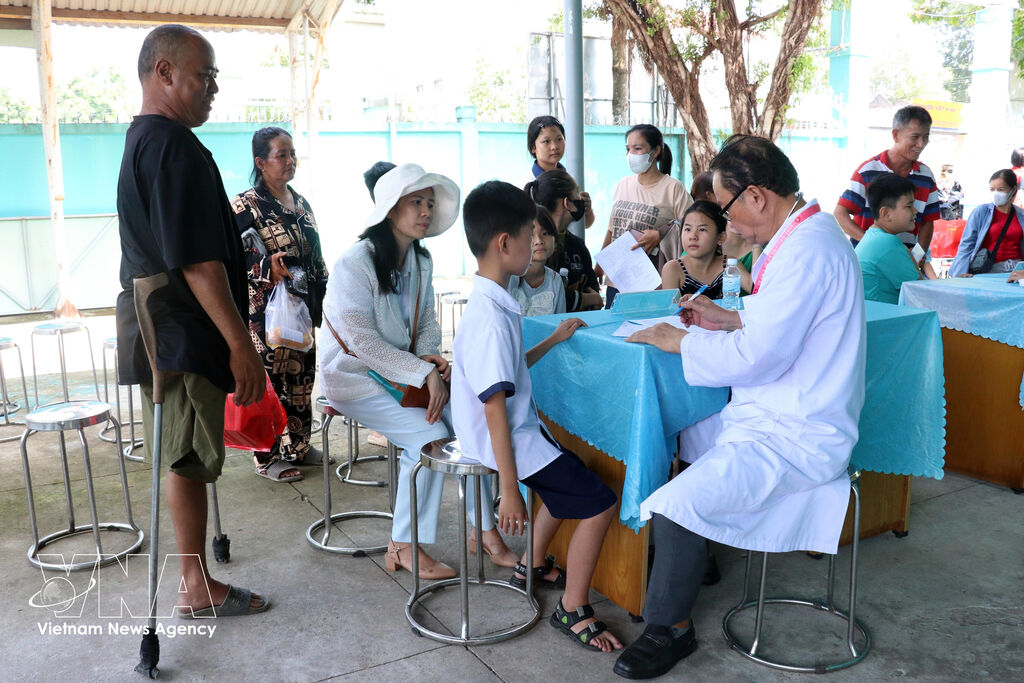 |
| Ho Chi Minh City offers free medical check-up to children (Photo: VNA) |
On May 16 in Hanoi, the National Cybersecurity Association teamed up with TikTok and the Institute for Management and Sustainable Development to hold “Teens Talk 2026: Online Safety and Digital Well-being”. Participants committed to awareness campaigns aimed at communities, parents, and young people, while helping prevent, detect, and curb risks and harmful behaviours in digital spaces.
Col. Ha Van Bac, Deputy Director of the Department of Cybersecurity and High-Tech Crime Prevention at the Ministry of Public Security, stressed that protecting children online demands a whole-of-society approach. “Families need to accompany and listen to children. Schools must step up digital skills education. Tech platforms must take greater responsibility for young users. Social organisations, experts, and the media should work together to spread knowledge, skills, and a culture of safe online conduct. Most importantly, young people themselves should be empowered to share experiences, report problems, and help shape solutions”, he said.
At the event, the MSD released preliminary findings from the “Voice of Vietnamese Children 2026” survey of 2,500 participants aged 12 to 15. About nine out of 10 adolescents said they had received some forms of online safety education.
Claims that Vietnam lacks adequate legal protections for children online, or that young people are left exposed to social media risks, ignore the realities of the country’s broad-based drive to make child safety a digital-age priority./.