 |
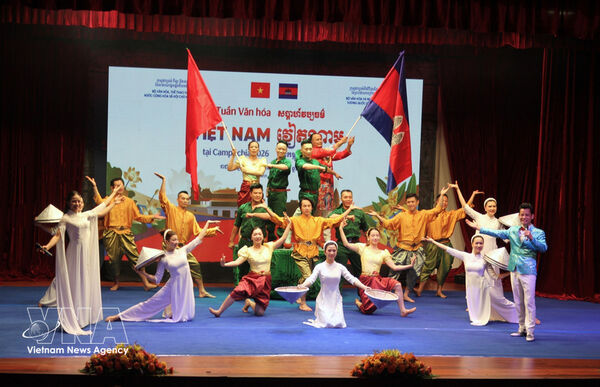
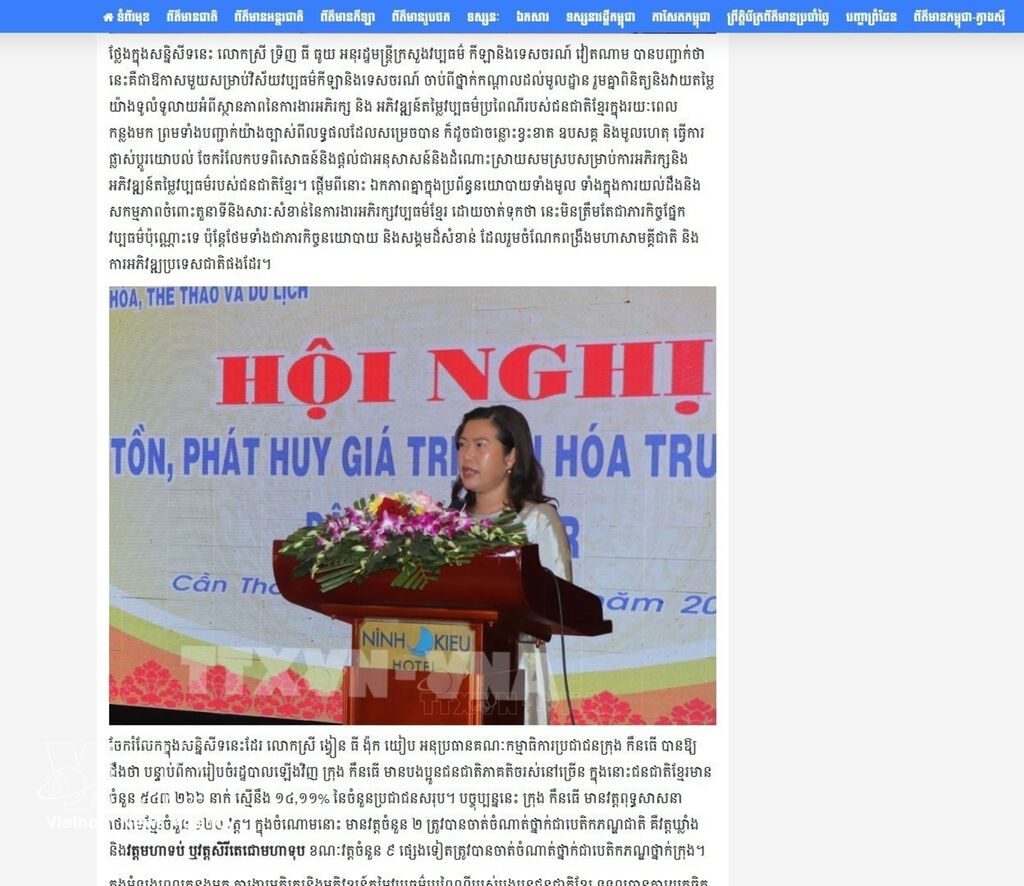
| AKP article published on June 6 highlights Vietnam's efforts to preserve, promote Khmer cultural heritage (Photo: VNA) |
Phnom Penh (VNA) - The Cambodian News Agency (AKP) and several Cambodian media outlets have published articles highlighting efforts to preserve and promote the traditional cultural values of the Khmer ethnic community in Vietnam.
An AKP article published on June 6 noted that the Khmer are among Vietnam’s largest ethnic minority groups, with more than 1.3 million people living mainly in southern localities such as An Giang, Ca Mau, Can Tho, Dong Nai, Dong Thap, Tay Ninh, Vinh Long and Ho Chi Minh City.
The article emphasised that throughout the country’s development, the Vietnamese Party and State have consistently regarded ethnic minority cultures as an integral part of the national cultural heritage and an important endogenous resource contributing to the richness, diversity and unity of Vietnam’s culture.
Referring to the conference on preserving and promoting Khmer traditional cultural values held in Can Tho in May 2026, AKP quoted Deputy Minister of Culture, Sports and Tourism Trinh Thi Thuy as saying that the event provided an opportunity to comprehensively assess preservation efforts, identify challenges, exchange experience and propose appropriate solutions.
At the conference, Nguyen Thi Ngoc Diep, Vice Chairwoman of the Can Tho People’s Committee, noted that after administrative restructuring, the city is home to 543,266 Khmer people, accounting for 14.11% of its population.
Can Tho currently has 120 Khmer Theravada Buddhist pagodas, including two national heritage sites and nine city-level heritage sites.
She stressed that significant progress has been made in preserving Khmer cultural values, with religious dignitaries, artisans and respected community members playing an increasingly important role in passing on traditions to younger generations.
AKP also cited Dr Ngo So Phe, Rector of the College of Southern Khmer Language – Culture – Arts and Humanities (CLASKA) under Tra Vinh University, who highlighted the institution’s efforts to train human resources in Khmer language, culture and traditional arts, while expanding international cooperation and attracting highly qualified researchers specialising in Khmer studies.
Conference participants proposed a range of measures, including promoting cultural values through traditional festivals and strengthening the role of Khmer pagodas as both spiritual and community cultural centres.
AKP noted that traditional festivals such as Chol Chnam Thmay, Sen Dolta, the Moon Worship Festival, Ngo Boat Racing and Ooc Om Boc continue to be maintained in areas with large Khmer populations.
Khmer cultural practices have also been included in Vietnam’s National Intangible Cultural Heritage List, providing an important basis for preservation and promotion efforts.
Earlier, on June 5, Cambodia’s Koh Santepheap newspaper published an article highlighting cultural preservation activities among Khmer communities in southern Vietnam, focusing on Vinh Long, the Bay Nui area of An Giang and Can Tho city.
The paper reported that following administrative restructuring, Vinh Long successfully organised a large-scale Culture, Sports and Tourism Week in celebration of the Ooc Om Boc Festival in 2025, featuring traditional dance, music, handicraft exhibitions, Ngo boat racing and youth sports competitions.
According to Koh Santepheap, Vinh Long has attached great importance to preserving Khmer cultural identity alongside socio-economic development policies. Over the past five years, the province has organised seven cultural festivals and 55 training and heritage transmission programmes.
The newspaper also highlighted the preservation of traditional Khmer art forms, including Chomrieng Chapei singing, Robam dance, folk songs, folk dances and Ngu Am music, as well as traditional crafts. Vinh Long currently has five items recognised as national intangible cultural heritage.
Cambodian media concluded that thanks to the attention of authorities at all levels and the proactive participation of local communities, efforts to preserve and promote the cultural heritage of ethnic minorities, particularly the Khmer community in southern Vietnam, are becoming increasingly effective, while also supporting sustainable tourism development and local economic growth./.