Ho Chi Minh City sets 9.5 bln USD infrastructure push for National Day
The drive is expected to bolster growth in Vietnam’s economic hub through year-end while expanding urban space and improving living standards.
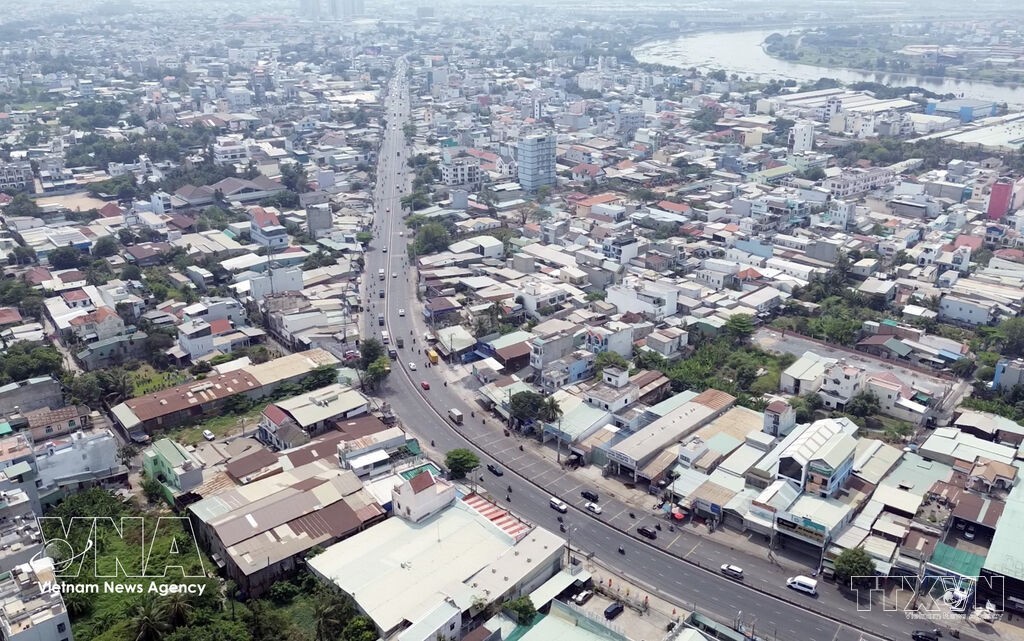
National Highway 13 section through Ho Chi Minh City has suffered chronic traffic congestion for decades (Photo: VNA)

Hanoi (VNA) - Ho Chi Minh City is set to kick off 16 major infrastructure projects on September 2, with a total investment of around 249 trillion VND (9.5 billion USD). This adds to a lineup that already features 14 mega-projects launched earlier this year.

The drive is expected to bolster growth in Vietnam’s economic hub through year-end while expanding urban space and improving living standards.

Long-awaited roads to break ground

The municipal People’s Committee has approved an upgrade and expansion of National Highway 1 from Kinh Duong Vuong street to the former Long An province boundary.

The corridor, now 20-25m wide, will receive more than 6.67 trillion VND to triple to 60m with 10-12 lanes. New flyovers and underpasses at the Kinh Duong Vuong and Binh Thuan intersections will target chronic congestion choking the city’s southwestern gateway.

The September 2 package also includes two Ring Road No. 4 components, particularly a section from the Toc Tien-Chau Pha intersection to Chau Duc bridge worth more than 4.77 trillion VND, and a stretch from the Saigon River to Thay Cai Canal, including Phu Thuan and Thay Cai bridges costing more than 7.05 trillion VND.

The projects are designed to tackle gateway congestion and improve seamless links between the expressway network and inter-regional ring roads.

When it’s up and running, the Ring Road No. 4 will form a smooth transport corridor, providing a solid infrastructure backbone to boost cargo movement and drive economic growth throughout the Ho Chi Minh City metro area.

The Thu Thiem-Long Thanh metro line is the only railway project and the largest, and among the most anticipated, on the National Day 2026 list.

With an investment of roughly 134 trillion VND, the line will be developed by Dai Quang Minh Real Estate Investment JSC and serve as the first metro artery directly linking downtown Ho Chi Minh City with Long Thanh International Airport, set to open in December.

The 47.7km line will cross seven wards and communes in Ho Chi Minh City and Dong Nai city and comprise 18 stations, including two underground and 16 elevated.

The early start is expected to spur a transit-oriented development corridor along the route, unlocking new growth across the southern key economic region.

Housing and urban renewal

Beyond transport links, many of the projects target housing needs, living conditions, and urban upgrading.
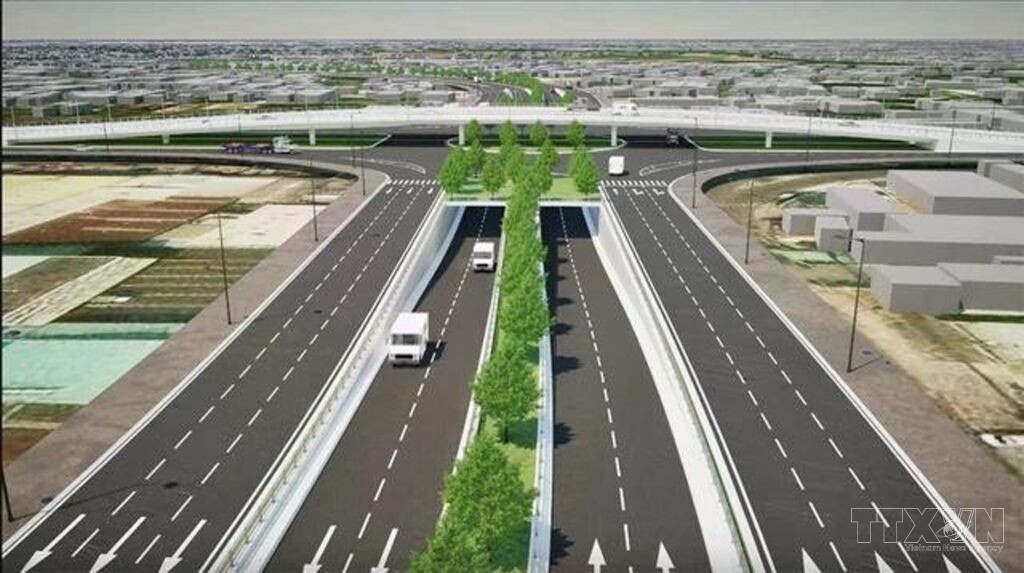
Perspective rendering of the expanded National Highway 13, including an underpass at the Binh Loi intersection (Photo: Ho Chi Minh City Department of Construction)

Specifically, the city is accelerating five social housing projects with about 10,000 apartments, targeting workers, public employees and low-income earners.

The developments also prioritise units for conversion into rental housing, directly supporting vulnerable groups that cannot afford to buy and building a sustainable social welfare base.

Key among them are social housing projects combined with urban renewal in the Cho Ga - Gao and Ma Lang areas of the former District 1.

Another model is in Ba Diem commune, where enterprises acquired land through private negotiations and then invested systematically in infrastructure.

Ho Chi Minh City and neighbouring areas are also rolling out environmental and cultural infrastructure projects, including the 7.211 trillion VND Binh Duong water environment improvement and a nearly 69 billion VND renovation of the Ho Chi Minh Museum’s city branch, set to open on September 2./.
See Also

The Party’s wise and clear-sighted leadership

In August 1945, under the leadership of the Party and President Ho Chi Minh, the Vietnamese people rose up in a General Uprising, seizing power nationwide and ushering in a new era for the country. The victory of the August Revolution, the first great triumph of the Vietnamese people under the Party’s leadership, demonstrated the Party’s wisdom and leadership in charting the right revolutionary path.

Eighty-one years on: Vietnam advances toward a strong and prosperous future

In the autumn of 1945, under the leadership of the Communist Party of Vietnam (CPV) and President Ho Chi Minh, the Vietnamese people made a historic turning point. The success of the August Revolution culminated when President Ho Chi Minh read the Declaration of Independence at historic Ba Dinh Square in Hanoi on September 2, 1945, giving birth to the Democratic Republic of Vietnam and opening an era of independence and freedom for the nation.

Four decades of reform transform Vietnam

After 40 years of reform, Vietnam has undergone a remarkable transformation from an economy facing severe difficulties, food shortages and the impact of an embargo into a dynamic economy increasingly integrated into the global economy.

Vietnamese language brings Vietnam, Thailand closer

For the first time, a Vietnamese-language public speaking contest for Thai school and university students has been organised by Udon Thani Rajabhat University in cooperation with the Consulate General of Vietnam in Khon Kaen to mark the 81st anniversary of Vietnam’s National Day and the 50th anniversary of Vietnam-Thailand diplomatic relations.

Environmental protection and climate change response: Vision to 2045

Party General Secretary and State President To Lam has signed Conclusion No. 75-KL/TW of the third meeting of the 14th Party Central Committee. By 2045, Vietnam aims to ensure a clean and healthy living environment in harmony with nature, pursue sustainable development, establish a modern environmental governance system, and adapt effectively to climate change.

Digitalisation boosts Vietnamese goods

For many years, the campaign “Vietnamese people prioritise using Vietnamese goods” has played an important role in promoting domestic consumption and supporting local businesses. Today, alongside traditional trade fairs and distribution channels, digital platforms are creating new opportunities for Vietnamese products to increase their competitiveness.

Environmental protection and climate change response: Targets for 2030

Party General Secretary and State President To Lam has signed Conclusion No. 75-KL/TW of the third meeting of the 14th Party Central Committee, setting a 2030 target of strengthening environmental governance, climate change response and disaster prevention and control to better protect people’s lives, health, property and livelihoods.

Party’s viewpoints on environmental protection, climate change response (part 2)

General Secretary and State President To Lam has signed Conclusion No. 75-KL/TW of the third meeting of the 14th Party Central Committee, stressing that environmental protection and climate change response must be central to development decisions and serve as a foundation for green transition, stronger growth quality, productivity, competitiveness and sustainable economic development.

Party’s viewpoints on environmental protection, climate change response (part 1)

General Secretary and State President To Lam has signed Conclusion No. 75-KL/TW of the third meeting of the 14th Party Central Committee, stressing that environmental protection and climate change response must be central to development decisions and serve as a foundation for green transition, stronger growth quality, productivity, competitiveness and sustainable economic development.