 |
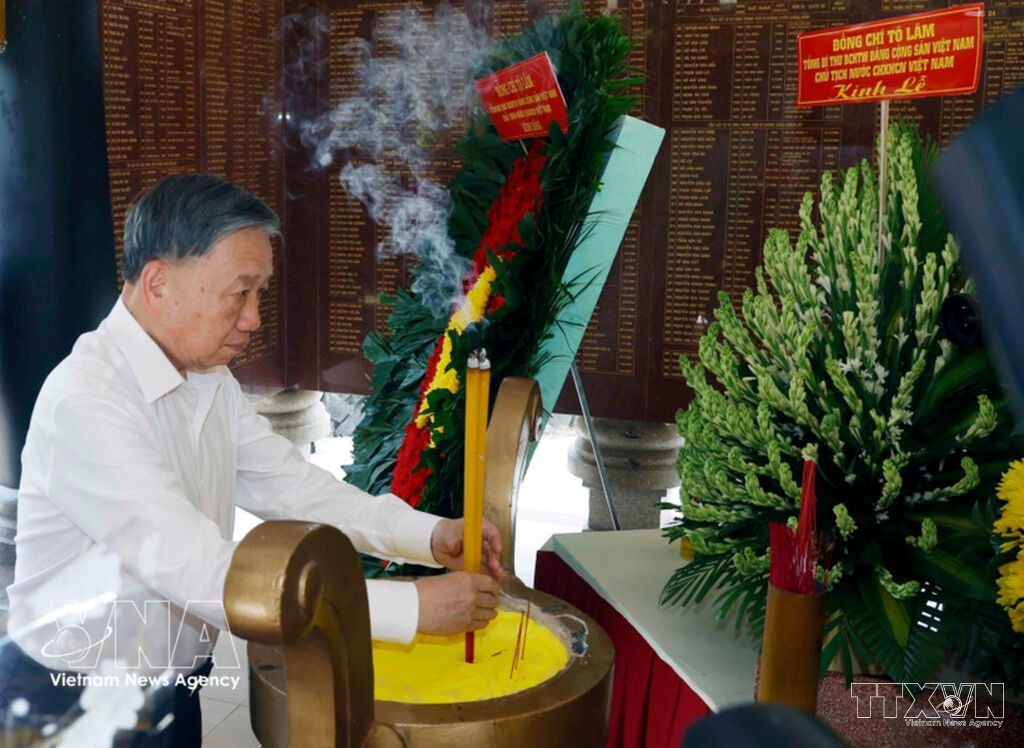
| Party General Secretary and State President To Lam offers incense at the memorial stele dedicated to heroic martyrs. (Photo: VNA) |
Ho Chi Minh City (VNA) – Party General Secretary and State President To Lam on July 17 reaffirmed that searching for, recovering, and identifying the remains of fallen soldiers is a sacred responsibility of the Party, State and people of Vietnam towards the Fatherland, describing the mission as both a moral obligation and an expression of the nation's tradition of gratitude.
The remarks were made during his visit to Le Thi Rieng Park in Ho Chi Minh City, where a large-scale operation is underway to search for the remains of soldiers who fell during the 1968 Spring General Offensive and Uprising. The visit took place ahead of the 79th anniversary of the War Invalids and Martyrs Day (July 27, 1947–2026).
The Party and State leader offered flowers and incense at the monument to late Party General Secretary Tran Phu, the memorial dedicated to heroes and soldiers who sacrificed their lives during the 1968 Spring General Offensive and Uprising, the memorial house for fallen soldiers' remains, and the shrine honouring heroic martyrs Le Thi Rieng and Tran Van Kieu. He also met and offered encouragement to personnel participating in the ongoing search and recovery efforts at Le Thi Rieng Park.
General Secretary and President Lam expressed his profound respect for and gratitude to those who laid down their lives for national liberation, reunification and territorial integrity.
He said the fallen soldiers had not lived to witness the country's reunification, peace, development and integration, but it was precisely their sacrifices that made those achievements possible. Their devotion, he stressed, helped lay the foundation for a bright future of Vietnam.
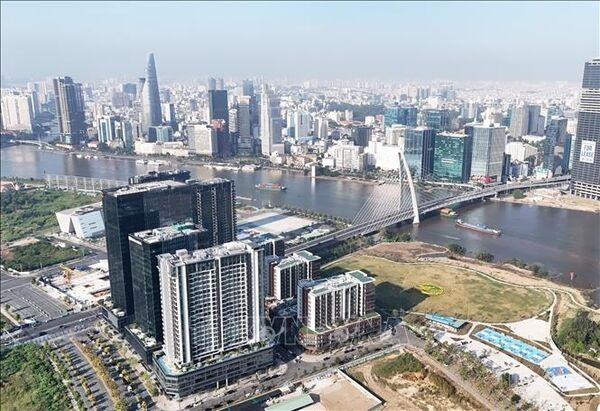
Reflecting on the transformation of Ho Chi Minh City over the past 51 years since national reunification, the top leader said the city has become a vibrant symbol of Vietnam's resilience, creativity and aspirations for development. Behind every achievement, he noted, lies the silent contribution by those who made the ultimate sacrifice.
He stressed that every set of remains recovered represents far more than a technical achievement. It marks the return of a son or daughter to the Fatherland and to his/her family, the restoration of a missing chapter of history, and a reaffirmation of the country's enduring tradition of remembering those who served the nation.
The leader highly commended the National Steering Committee, the Ministry of National Defence, the municipal Party Committee and People’s Council, Military Region 7, relevant agencies, scientists, historical witnesses, and members of the public for joining forces to carry out the meaningful mission.
He noted that the integration of domestic and international archival materials, modern science and technology, historical records, eyewitness testimonies and field surveys has opened a new approach to locating and repatriating fallen soldiers' remains.
For the coming period, General Secretary and President Lam called on Ho Chi Minh City to continue treating the search for, recovery and identification of martyrs' remains as a task of special political importance. He urged authorities to mobilise the entire political system, scientists, veterans, witnesses and local communities, and expand investigations to all potential burial sites across the city, not only at Le Thi Rieng Park but also at former battlefields from different periods of the resistance wars.
He assigned Military Region 7, the Ho Chi Minh City Military Command and the municipal People's Committee to strengthen coordination, establish a shared database, improve information sharing and work closely with other localities to accelerate recovery and identification efforts throughout the military region.
The leader also called on ministries and central agencies to continue improving policies, increasing the application of digital transformation, artificial intelligence, DNA analysis, geophysical technologies, and capitalising on domestic and overseas archival resources in support of the mission.
He highlighted the importance of expanding international cooperation to access wartime records, maps, photographs, archives and witnesses from countries involved in the wars, promoting public education on revolutionary traditions, and sharing inspiring stories about the search for fallen soldiers to foster patriotism among younger generations.
General Secretary and President Lam urged the continued implementation of the 500-day campaign with stronger determination, broader scope and greater effectiveness, with a view to developing it into a model that can be expanded nationwide. The ultimate goal, he said, is to locate as many fallen soldiers as possible, identify their remains and reunite them with their hometowns and families, while preserving significant burial sites as places of remembrance and revolution education.
Expressing confidence in the campaign's success, the top leader said its outcomes will contribute to implementing policies for people who rendered service to the nation, strengthening the great national solidarity and reinforcing the spiritual foundation needed for Vietnam's continued development in the new era.
On the occasion, he presented gifts to personnel participating in the search-and-recovery operation at Le Thi Rieng Park./.