 |
| A medical worker gives guidance to a mother on how to care for a newborn in Ta Ca commune, Nghe An province. (Photo: VNA) |
Hanoi (VNA) – Party General Secretary and State President To Lam has set major orientations for a resolution on overhauling Vietnam’s growth model, directing that people must be the goal, engine, and primary stakeholders of development.
Speaking at a recent working session with the Party Central Committee's Commission for Policies and Strategies, he said every policy must raise material and spiritual living standards, unlock creativity, uphold human dignity, widen advancement pathways, and guarantee fair access to the gains of expansion. In the new era, Vietnamese citizens need digital skills, creative thinking, lifelong learning capacity, the ability to rapidly adapt to changes, cross-border collaboration skills, digital ethics, and a strong sense of digital citizenship.
Citizens as core stakeholders
Prof. Dr. Mac Quoc Anh, Vice Chairman and General Secretary of the Hanoi Association of Small and Medium Enterprises and Director of the Institute for Economics and Enterprise Development, said the country must look beyond headline growth rates and prioritise job quality, real incomes, and access to education, health care, housing, culture, a healthy living environment, social welfare, online security, and public satisfaction.
Every major policy, Anh noted, should have to clear three litmus tests: How will people benefit? How will it sharpen their capabilities? Will any social group be left behind? Those questions should become mandatory criteria in assessing impacts of policies on investment, finance, sci-tech, education, health, labour, and social welfare.
He pushed for a new human development strategy that equips citizens with digital skills, creative thinking, lifelong learning, foreign language proficiency, teamwork, legal awareness, professional ethics, and responsible digital citizenship. Education and training must pivot from delivering knowledge to cultivating critical thinking, creativity, problem solving, and the ability to adapt to emerging occupations.
Simultaneously, the social welfare system must be built to absorb fast labour market shocks. Artificial intelligence (AI), automation, and digitisation are creating new roles but also disrupt or erase traditional ones. The State, he said, should roll out retraining and upskilling courses, support career transitions, and make sure no one is shut out of digital transformation because of limited access to technology.
Putting people at the centre also demands wider public involvement in policymaking, enforcement, and oversight. Citizens should be active contributors to national progress, not passive recipients. Policies that are closer to the ground, responsive to needs, and rooted in reality will be easier to enforce and enjoy broader consensus, he added.
Ensuring equal opportunities and social welfare
Dr. Bui Thanh Minh, Deputy Director of the Office of the Private Economic Development Research Board (Board IV) under the Prime Minister's Advisory Council for Administrative Procedure Reform, said Vietnam's growth model, long fueled by low-cost labour, resource extraction, contract manufacturing, expanded investment, and capital accumulation, has run out of road.
The country now needs a sweeping reform agenda to shift from extensive growth to a model driven by productivity, knowledge, science and technology, innovation, and digital transformation, he argued.
Land, capital, labour, technology, data, and business opportunities should be allocated increasingly through market mechanisms, rather than administrative intervention or "ask-and-grant" practices. At the same time, the State must play an active redistributive role and build a modern social welfare system to ensure all citizens can engage in and benefit from growth.
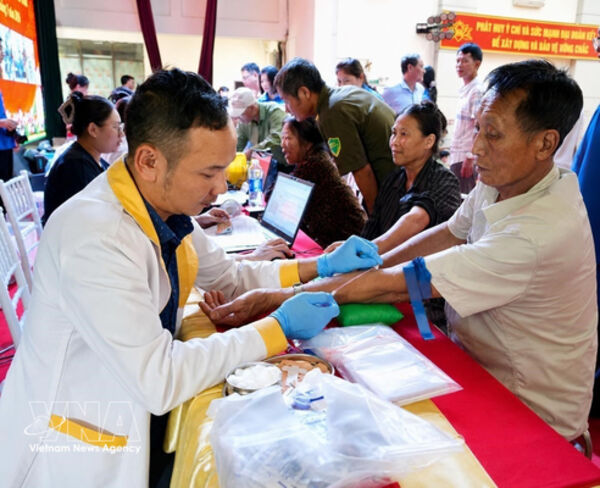
Recent initiatives, including housing, public health checkups, and tuition-free education for students, have meaningfully lifted public confidence. Going forward, Vietnam should build a multi-tiered welfare system covering formal and informal workers, the self-employed, and gig-economy participants. Spending on education, health care, reskilling, social insurance, and career transition support should be treated as an investment in national competitiveness.
Dang Thi Hoai, a lecturer at the Institute of State and Law under the Ho Chi Minh National Academy of Politics, stressed that development policies must be fully reviewed for their impact on demographic groups, especially the vulnerable.
Policymakers should ensure equitable access to resources, unlock the potential, brainpower, and creativity of the Vietnamese people, refuse to trade the environment, cultural values, or social welfare for short-term economic wins, and broaden the involvement of citizens, businesses, and experts throughout the policy formulation, enforcement, and oversight, Hoai added./.