 |
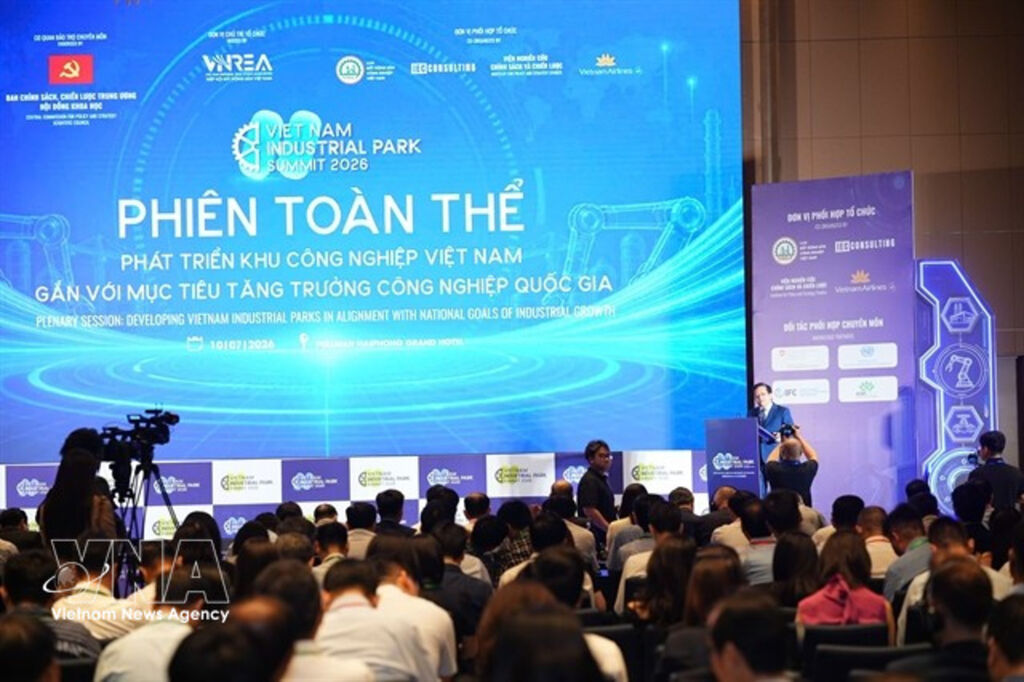
| Participants at the Vietnam Industrial Park Summit 2026. (Photo: VNA) |
Hanoi (VNS/VNA) - Vietnam needs to develop new-generation industrial parks with ecosystems that integrate modern technology, innovation and sustainable development standards to attract high-quality investors, experts said at a summit on July 10.
Speaking at the Vietnam Industrial Park Summit 2026, Dr Nguyen Van Khoi, Chairman of the Vietnam Real Estate Association and a member of the Prime Minister’s Advisory Council, noted that the competition in attracting foreign direct investment (FDI) among countries is becoming increasingly fiercer.
Investors today are not only concerned with land lease prices, but also with infrastructure quality, human resources, investment environment, speed of administrative procedure processing, ESG standards and sustainable development potential.
"In the new phase, we need to shift strongly from the model of ‘industrial parks provide production space’ to the model of a ‘modern industrial ecosystem’," Khoi said.
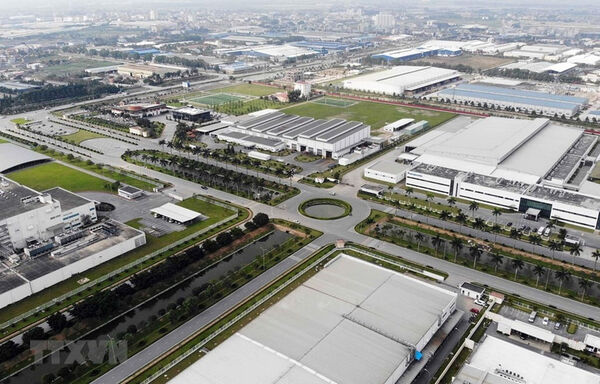
He said successful industrial parks should go beyond manufacturing facilities and develop into integrated ecosystems that combine logistics, digital infrastructure, innovation, housing and essential services with a green and sustainable living environment.
He said this would require a shift from standalone industrial park development towards a broader regional approach, with planning linked to economic corridors, value chains, urban development, logistics, energy and human resources.
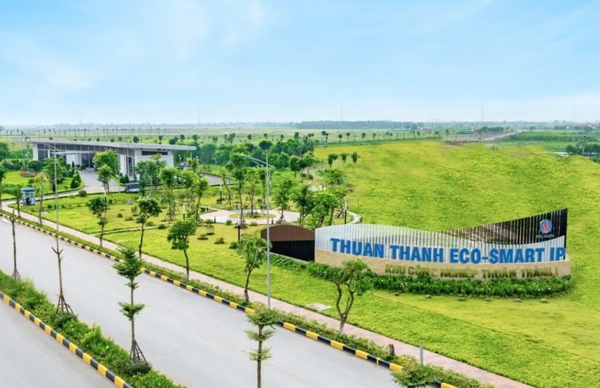
“Priority should be given to developing eco-industrial parks that utilise clean energy, reuse water, reduce emissions, build a circular economy model, and meet international environmental standards,” he said.
According to Khoi, the next generation of industrial parks must use digital data, AI, IoT, big data and intelligent operating platforms to improve management efficiency, save energy, reduce costs and increase competitiveness.
“Industrial parks must not only be technologically smart, but also smart in governance, in serving investors, and in connecting with local authorities,” he said.
Nguyen Duc Hien, Vice Chairman of the Communist Party of Vietnam Central Committee's Commission for Policies and Strategies, said Vietnam needs to balance industrial park expansion with quality improvements, while strengthening infrastructure and smart governance.
Developing new-generation industrial parks would provide a foundation for modern industrial growth, innovation and deeper integration into global value chains, he said.
Hien said further institutional reforms and better organisation of industrial development space were needed to support the growth of new-generation industrial parks with greater scale, competitiveness and innovation capacity.
He added that Vietnam should accelerate the transition towards ecological, smart, green and low-carbon industrial park models to meet new development requirements.
Hien said the transition was essential not only for Vietnam to achieve its net-zero emissions target by 2050, but also to improve industrial competitiveness as green standards and sustainability requirements increasingly shape global trade and investment.
International experience showed that the success of new-generation industrial parks depends less on land scale and investment incentives, and more on institutional quality, technological capacity, business linkages and efficient resource management under circular economy models, he said.
“Vietnam has laid important groundwork to realise this direction through pilot projects of several models, such as Hiep Phuoc and Dinh Vu," Hien said.
Sibylle Bachmann, Chargé d'Affaires of the Embassy of Switzerland in Vietnam, said future industrial parks must move beyond providing land and infrastructure to become platforms for innovation, resource efficiency, low-carbon growth and industrial cooperation.
She said global investors were increasingly considering factors such as renewable energy, carbon performance, circular economy solutions and ESG standards when selecting investment locations, making sustainable industrial parks crucial to attracting high-quality capital.
Bachmann added that Vietnam is already developing industrial ecosystems that meet international standards and are well positioned to attract high-quality investors. The country is also among the few countries in the region to have incorporated Eco-Industrial Park principles into its legal framework.
She said the transition had already delivered practical results, with participating industrial parks and enterprises reducing energy and water consumption, cutting greenhouse gas emissions and improving resource efficiency.
These efforts not only bring environmental benefits but also strengthen competitiveness, resilience and Vietnam’s appeal as a destination for sustainable, high-quality investment, she added.
The summit was held by the Communist Party of Vietnam Central Committee's Commission for Policies and Strategies, the Vietnam Industrial Real Estate Association and IEC Consulting./.