Khanh Hoa collects DNA samples from relatives of unidentified fallen martyrs
The DNA collection drive, organised by the provincial Department of Public Security in coordination with local authorities, took place in Dong Hai ward and covered relatives from Dong Hai, Phan Rang, Do Vinh, My Son and Bao An wards and communes.
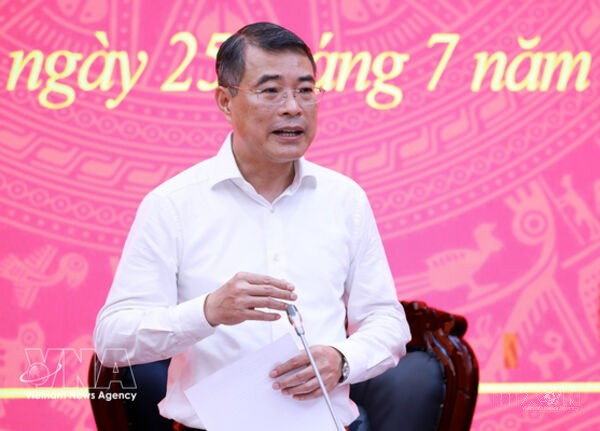
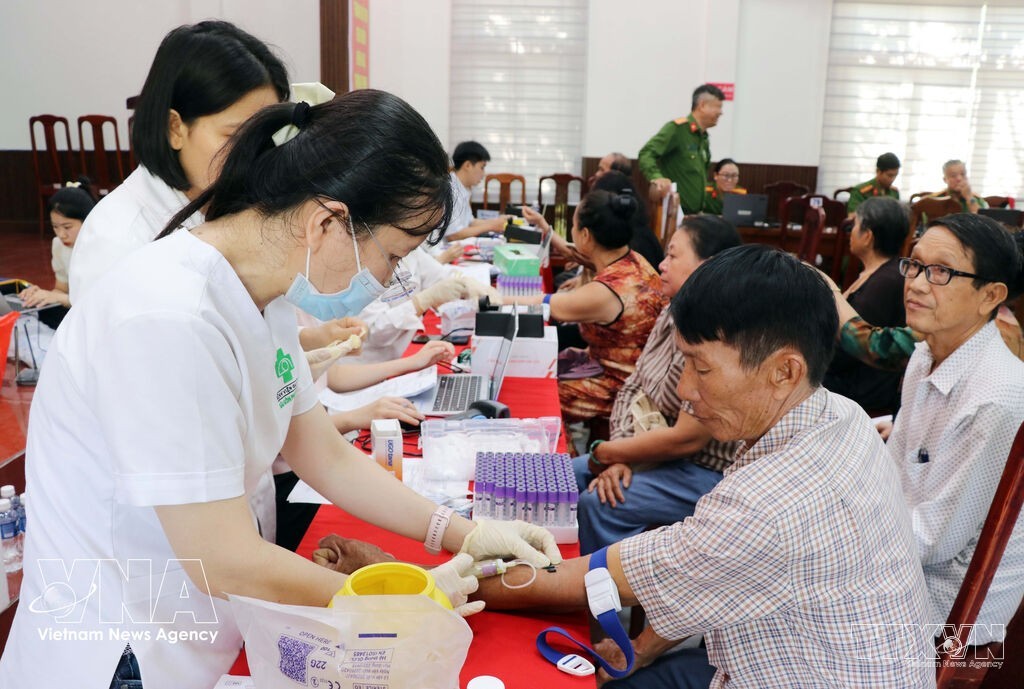
DNA samples collected from relatives will be used to build a database to help identify the remains of fallen soldiers. (Photo: VNA)

Khanh Hoa (VNA) – Police in the south-central province of Khanh Hoa on July 25 began collecting DNA samples from relatives of more than 200 fallen martyrs whose remains have yet to be identified, as part of a nationwide effort to reunite martyrs with their families.

The DNA collection drive, organised by the provincial Department of Public Security in coordination with local authorities, took place in Dong Hai ward and covered relatives from Dong Hai, Phan Rang, Do Vinh, My Son and Bao An wards and communes.

From early morning, many family members arrived at the collection site with hope that DNA testing would help identify the remains of their loved ones who died during the wars.

Participants were guided through identity verification, document completion and DNA sample collection in line with standard procedures. Police officers, local authorities and community organisations worked together to ensure the process was smooth and accurate, while medical staff were on hand to assist elderly participants and those with underlying health conditions.

Pham Thi Quy, whose sister Pham Thi Tam died during the resistance war against the US, expressed gratitude for the Party and State's continued support for families of fallen soldiers.

She said the initiative brings comfort to martyrs' relatives and expressed hope that the identities of those who made the ultimate sacrifice would soon be confirmed so they could be laid to rest near their families and comrades.

According to Colonel Tran Minh Truc, Deputy Director of the Khanh Hoa Department of Public Security, the province has selected the headquarters of 12 commune- and ward-level People's Committees as DNA collection stations based on the number of registered participants and local conditions.

The campaign aims to build a DNA database of martyrs' relatives and enrich the national gene bank to support the identification of unidentified remains./.
Related News

Command from the heart: Journey to give fallen soldiers back their names

The war has long ended, yet hundreds of thousands of fallen soldiers remain unidentified. Behind every unnamed grave is a family that has waited in anguish for decades. Determined to honour those who sacrificed their lives for the Fatherland, the Ministry of Public Security is conducting a nationwide campaign to collect DNA samples from relatives of fallen soldiers.

See Also

Vietnam strictly prohibits all forms of forced labour: Foreign Ministry

Vietnam will continue working with the US in a constructive and cooperative spirit, while urging the US side to fully take into account the measures Vietnam has adopted when adjusting tariffs on Vietnamese goods, consistent with the actual situation and Vietnam's ongoing legislative and enforcement push.

Quang Tri Citadel: A July journey of remembrance

July is a month of remembrance and gratitude. During these days, people from across Vietnam make their way to the Quang Tri Citadel, where the 81-day battle to defend the citadel took place in 1972, to offer incense in memory of the heroic martyrs who sacrificed their lives for the nation’s independence and freedom.

Key digital technology industry development targets by 2030

Decision No. 840/QD-TTg sets the goal of developing the digital technology industry into a modern, highly competitive economic and technical sector by 2030. The industry is expected to master core and strategic technologies, help address key national tasks, and contribute to double-digit economic growth.

ASEAN Regional Forum adopts Manila Plan of Action for 2026–2036

The 33rd ASEAN Regional Forum convened on July 23 as part of the 59th ASEAN Foreign Ministers' Meeting and Related Meetings in the Philippines, formally adopting the Manila Plan of Action for 2026–2036, which will serve as the guiding framework for the ASEAN Regional Forum 's activities over the coming decade.