 |
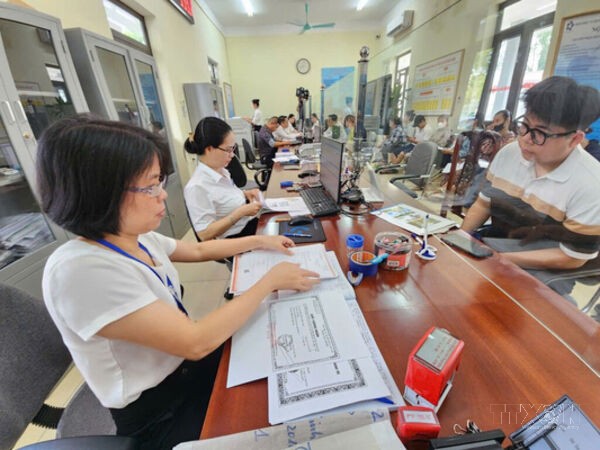
| A civil servant at the Chi Lang commune Public Service Centre in Lang Son province guides a resident in how to use an AI-supported public service kiosk. (Photo: VNA) |
Lang Son (VNA) – Digital transformation is becoming increasingly visible in the mountainous border areas of northern Lang Son province, where many ethnic minority communities are gradually embracing digital technologies in their daily lives.
At the Public Administration Service Centre in Quan Son commune, residents no longer need to carry stacks of documents or spend hours waiting to complete administrative procedures.
Instead, they just bring a smartphone, and officials help them log into their electronic identification (VNeID) accounts, submit applications through the National Public Service Portal, and track their application progress online.
For local officials, every administrative application is also an opportunity to teach digital skills. They provide step-by-step guidance on installing applications, verifying digital identities and completing online procedures so that residents can carry out future transactions independently.
Hoang Duc Binh, Vice Chairman of the Quan Son commune People's Committee, said digital transformation has significantly improved both government operations and public awareness.
As local people become more familiar with digital skills, they save time and travel costs while administrative agencies can provide services more efficiently and transparently, he said.
All administrative records in Quan Son are now digitised and processed electronically, with online submissions accounting for 100% of applications. Every application has been processed on or ahead of schedule.
Nguyen Van Tuan, a resident of Suoi Ma village, said completing land-related procedures used to require multiple trips because documents often needed revisions.
"Now many procedures can be completed online, which has saved me a great deal of time," he said, adding that people in the commune have also become accustomed to using online public services, making administrative procedures much faster and more convenient.
Recognising that access to technology remains uneven in mountainous areas, local authorities have mobilised community digital technology teams, youth volunteers and mass organisations to help residents install VNeID, use the National Public Service Portal, adopt cashless payment methods and access other digital platforms.
Local governments have also introduced more innovative communication methods. Artificial intelligence (AI) is being used to create infographics, visual materials and audio bulletins generated through text-to-speech technology, helping explain new Party and State policies in a more accessible way.
Ma Van Thien, a local official, said AI-generated content has made public information easier for rural residents to understand.
He added that information is now disseminated more quickly through the commune's Facebook page and village Zalo groups, enabling residents to receive timely updates on important policies and programmes.
Modern public services within easier reach
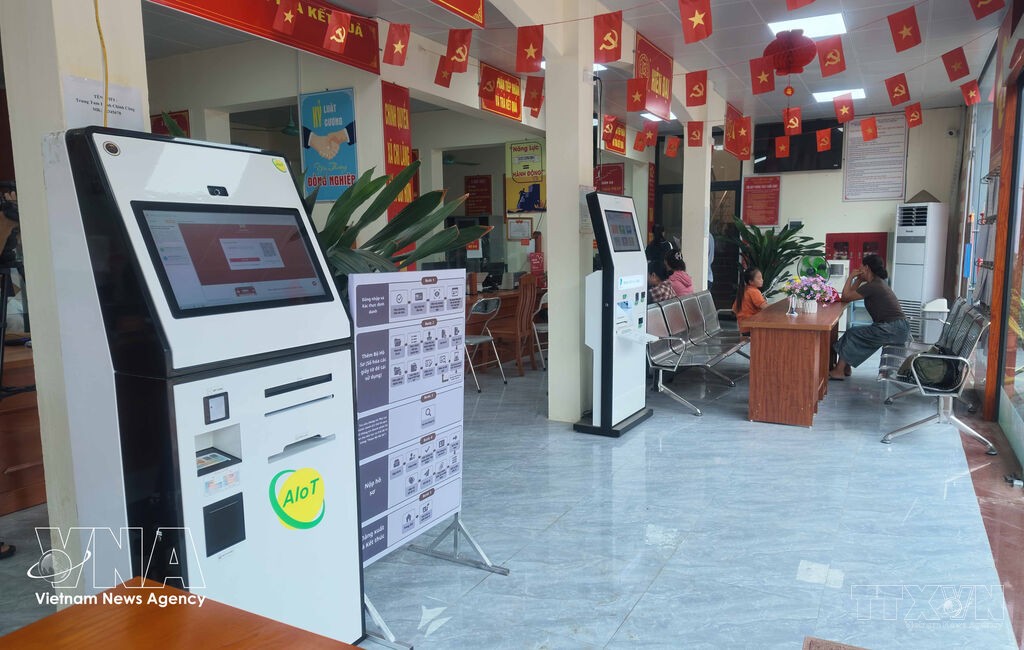 |
| AI-supported public service kiosks at the Chi Lang commune Public Service Centre. (Photo: VNA) |
In Chi Lang commune, newly established Digitalisation Stations and AI-powered Public Service Kiosks are making online administrative services more accessible.
Although many residents were initially unfamiliar with digital procedures, direct guidance from officials has helped them learn how to scan documents, complete online forms and submit applications electronically.
Instead of preparing multiple paper documents and waiting in line, residents can now digitise their records at the stations before completing procedures through the electronic system.
The model not only makes things more convenient for citizens but also eases the load on one-stop administrative service counters, while boosting transparency in how applications are processed.
Luong Trung Do, a resident of Chi Lang commune, said the system is still new but easy to use with staff assistance.
The digital stations currently support a range of essential public services, including marriage registration, birth registration, issuance of civil status extracts, certification of wills and copies of original documents.
Once digitised, these records are stored electronically and can be reused for future administrative procedures, reducing paperwork and simplifying subsequent applications.
According to Deputy Director of Chi Lang commune's Public Administration Service Centre Trieu Minh Hieu, the centre receives an average of 50-60 applications each day across various sectors.
Since the beginning of the year, it has processed more than 7,000 administrative applications, including over 3,700 submitted online.
Hieu said the centre will continue improving the digital skills of civil servants while updating applications and administrative procedures to help residents access public services more quickly and efficiently.
The rollout of Digitalisation Stations and AI-powered Public Service Kiosks reflects Lang Son's broader efforts to build a digital administration centred on citizens and businesses.
However, officials say technology infrastructure alone is not enough. Continued investment in digital literacy, particularly for older people, ethnic minority communities and residents in remote mountainous areas, along with better training for frontline public servants, will be essential to ensure that everyone can confidently access and benefit from online public services./.