 |
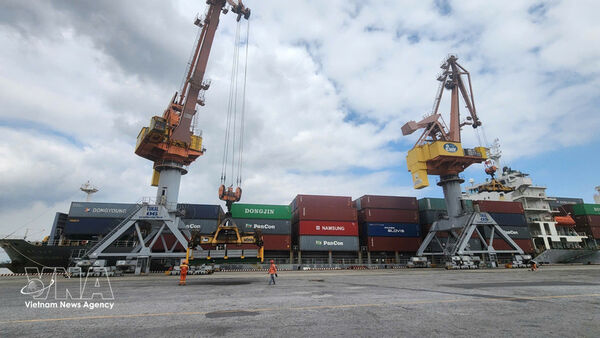
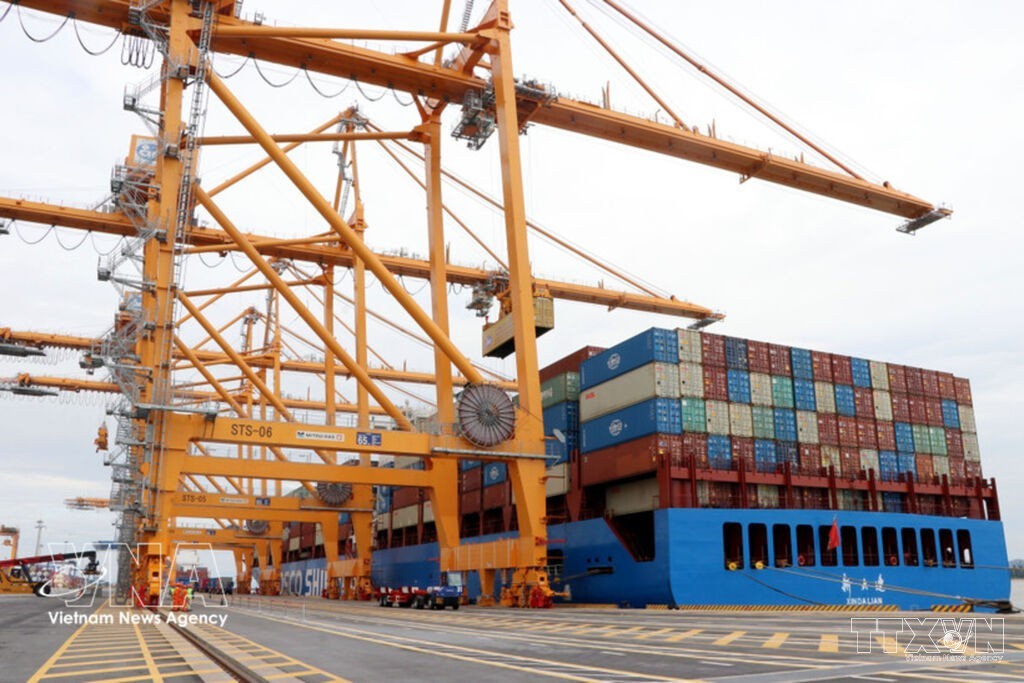
| Containers are loaded at Hai Phong Port TIL International Terminal (Photo: VNA) |
Hai Phong (VNA) – Guided by a spirit of bold experimentation and innovation, the northern port city of Hai Phong is unlocking new growth drivers as it seeks to become a regional hub for the maritime economy and logistics.
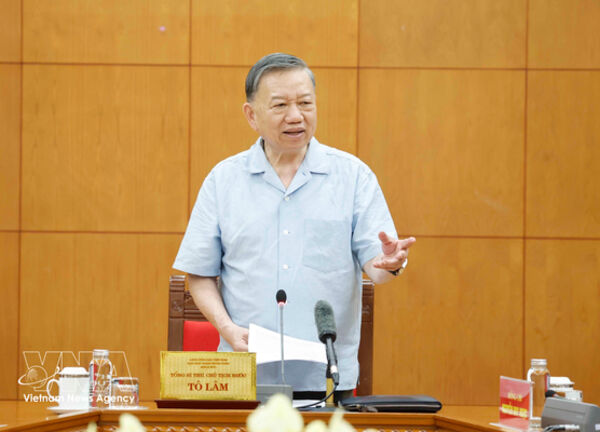
Speaking at the opening of the third plenum of the 14th Party Central Committee on July 20, Party General Secretary and State President To Lam stressed that the sea is "a space for survival, development and safeguarding sovereignty" and must be managed in an integrated manner linking it with the mainland, seaports, logistics, economic corridors and international cooperation.
He also emphasised that unlocking resources must go hand in hand with protecting rights and legitimate interests, while decentralisation must be accompanied by stronger oversight to prevent speculation, wastefulness and vested interests, and data systems must be unified and interconnected.
Hai Phong's development trajectory in recent years reflects that strategic vision.
Following its administrative merger, Hai Phong now covers 3,194.72 sq.km, has a population of 4.6 million and comprises 114 commune-level administrative units, including the special zones of Cat Hai and Bach Long Vi. Beyond serving as the economic centre of the Red River Delta, the city is northern Vietnam's principal maritime gateway, connecting the region to global markets by sea, air and rail.
Building on its internal strengths, Hai Phong has maintained strong momentum since the start of the 2025–2030 term, consolidating its position as Vietnam's third-largest city.
The city's record of 11 consecutive years of double-digit GRDP growth has reinforced its role as a regional growth engine, reflecting the convergence of favourable conditions, strategic guidance from the Party and the State, and strong local political commitment.
Secretary of the municipal Party Committee Le Ngoc Chau said Hai Phong has steadily shifted its growth model from extensive expansion to quality-driven development.
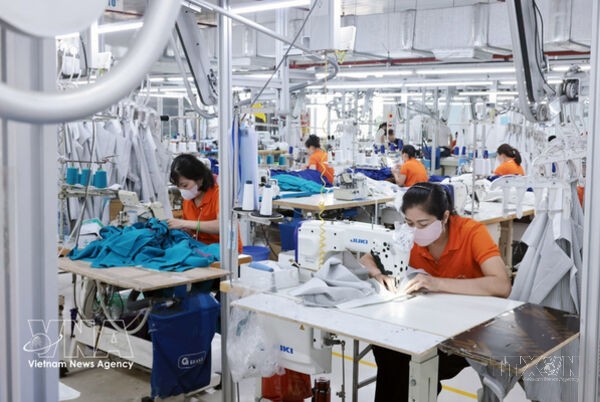
The city continues to identify industry, logistics and port services as the pillars of its economy while steering industrial development towards high technology, green production and sustainability. It is building an advanced industrial ecosystem by attracting high-quality investors, adopting cutting-edge technologies and integrating more deeply into global strategic supply chains, he noted.
Accelerating development
General Secretary and President Lam has stressed that all policy choices must place national interests, the rights and legitimate interests of the people, and the country's long-term development above all else.
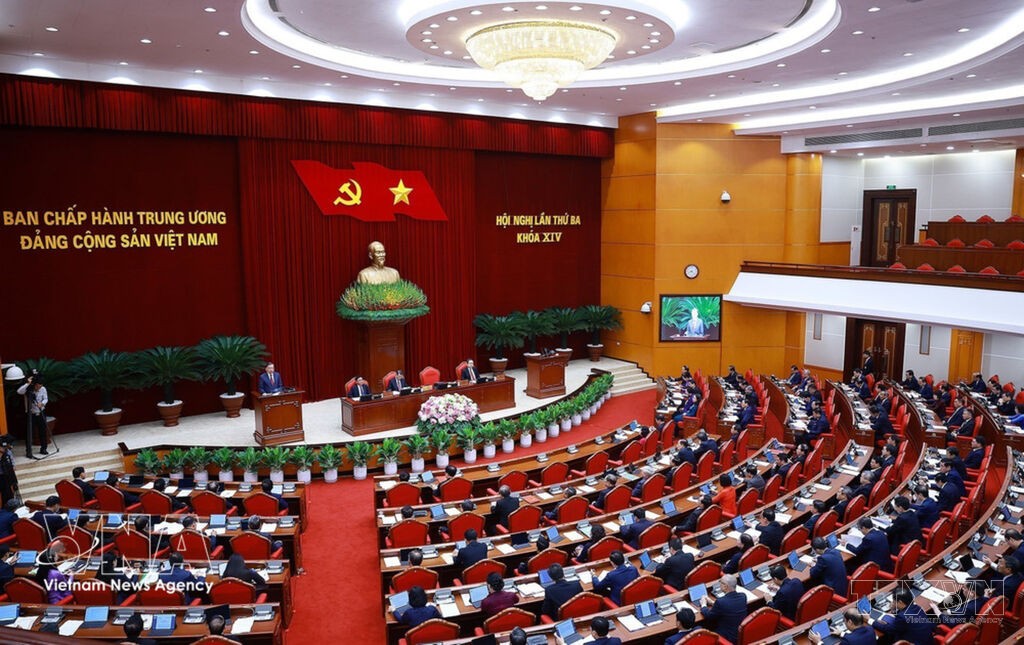 |
| An overview of the opening of the third plenum of the 14th Party Central Committee (Photo: VNA) |
At a recent working session with the Hai Phong Party Committee, he called on the city to upgrade its growth model based on productivity gains, science, technology, and innovation. He urged it to make breakthroughs in developing modern industry, with a focus on high-tech industry, processing – manufacturing, and supporting industries with high value added. Besides, it needs to shape an advanced industrial ecosystem centred on quality investment, technology, and strategic supply chains.
The city was also asked to develop a world-class maritime economy, logistics network and port system. Aside from developing a new-generation free trade zone, it should simultaneously step up strategic infrastructure projects include Lach Huyen Port, Nam Do Son Port, the Van Uc River port complex, the expansion of Cat Bi International Airport and multimodal transport links, with the ambition of becoming northern Vietnam's leading trade, logistics, and high-value services hub.
Chau said the municipal Party Committee has issued Action Plan No. 17 to implement the Resolution of the 14th National Party Congress, with 31 key targets covering the Party building, socio-economic development, and defence – security.
Major goals include annual GRDP growth of 13–14% during 2026–2030, per capita GRDP of about 11,247 USD by 2030, the digital economy contributing more than 35% of GRDP, exports reaching 75 billion USD, port cargo throughput of 380 million tonnes, and 25 million tourist arrivals annually.
The plan also identifies 48 flagship projects worth an estimated 500 trillion VND (19 billion USD) and 13 strategic planning initiatives, including the city's master plan, a green transition strategy, the Hanoi–Quang Ninh railway, a transport corridor linking Lach Huyen Port with Gia Binh Airport, a climate-resilient urban development project, a transit-oriented development (TOD) urban area, and a science and innovation park.
By 2030, Hai Phong aims to become a modern, civilised, ecological and highly liveable port city of regional standing in Southeast Asia, leading Vietnam in industrialisation, modernisation, digital and green transformation, innovation, and the development of the maritime economy, logistics, services, and marine science and technology./.