 |
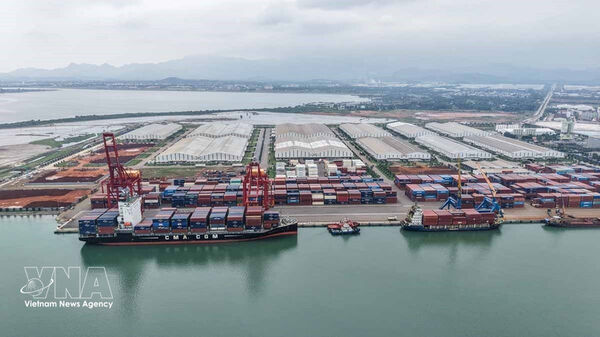
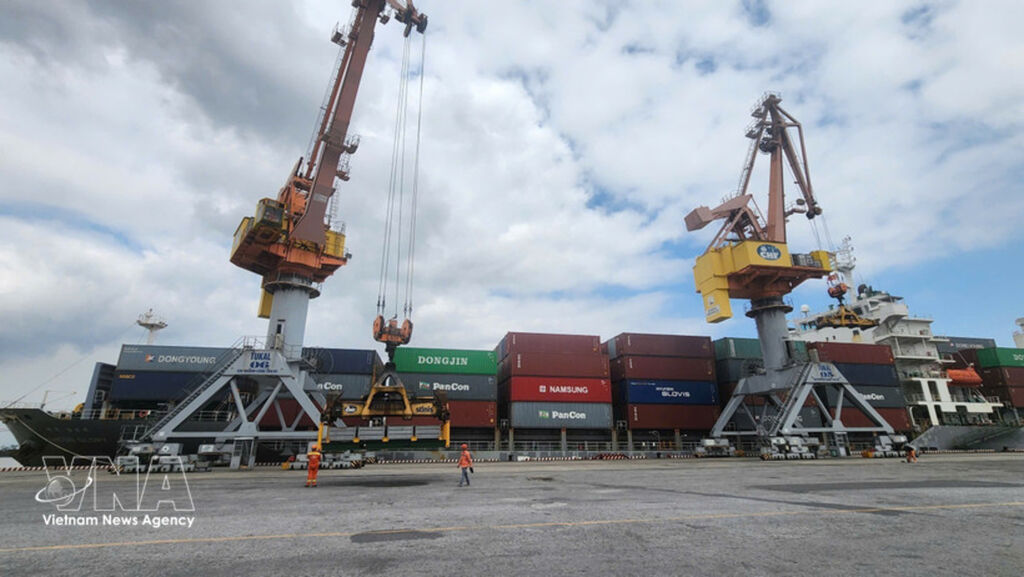
| Hai Phong Port ensures a smooth flow of goods (Photo: VNA) |
Hanoi (VNA) – Vietnam is accelerating the development of its seaport system and multimodal transport network as part of its strategy to become a strong maritime nation under the Party Central Committee’s Resolution No. 36-NQ/TW on the sustainable development of the marine economy to 2030, with a vision to 2045.
The country's growing maritime standing was highlighted in the Container Port Performance Index (CPPI) 2025, jointly released by the World Bank (WB) and S&P Global Market Intelligence. For the second consecutive year, Cai Mep Port and Hai Phong Port ranked among the world's 20 most efficient container ports, with Cai Mep placed 11th and Hai Phong 13th.
Hai Phong city has emerged as one of Vietnam's key logistics hubs thanks to an integrated transport network combining expressways, an international airport, a planned high-speed railway and a deep-water port capable of handling vessels of more than 200,000 deadweight tonnes (DWT) with direct connections to Europe and the Americas.
The city's port infrastructure expanded further in 2025 with the inauguration of the privately funded Hateco Hai Phong International Container Terminal (HHIT), which can simultaneously accommodate two container ships of up to 200,000 DWT. Hai Phong Port Joint Stock Company also commissioned Berths No. 3 and No. 4 at Lach Huyen Port, adding up to 1.5 million TEUs in annual handling capacity.
Director of the Vietnam Maritime and Waterways Administration Le Do Muoi said policies encouraging private investment have enabled Vietnam's seaport system to make significant strides, enhancing the country's position on the global maritime map.
In the first half of this year, cargo throughput via Vietnam's seaports and inland waterways reached an estimated 687.5 million tonnes, up 18% year-on-year, while container throughput rose 12% to around 18 million TEUs.
Under the adjusted master plan for the seaport system for 2021–2030 with a vision to 2050, Vietnam is expected to invest more than 359 trillion VND (nearly 13.7 billion USD) in its port network.
Deputy Minister of Construction Nguyen Xuan Sang said investments by leading global port operators, including APM Terminals, PSA International and SSA Marine, have helped build a modern port system capable of receiving some of the world's largest vessels, with capacities exceeding 200,000 DWT.
He said placing seaports at the centre of logistics connectivity, promoting digital and green transformation, and developing a national logistics database are key to building an efficient and sustainable multimodal transport system. The Ministry of Construction is also finalising transport plans covering all five transport modes, while a draft Vietnam Maritime and Waterways Code introduces policies to strengthen multimodal transport and encourage greater private-sector participation.
According to the UN Trade and Development (UNCTAD), 80–90% of global merchandise trade is transported by sea, making seaports the backbone of international logistics networks linking maritime, road, rail, inland waterway and air transport.
Vietnam now has 34 seaports with 320 berths, handling more than 960 million tonnes of cargo in 2025, placing the country among the region's fastest-growing maritime markets.
Despite the progress, challenges remain, including inadequate maritime infrastructure in some localities, fragmented transport links and relatively high logistics costs.
To address these issues, the maritime sector is prioritising the development of seaports into national transport hubs, expanding multimodal connectivity and adopting integrated, data-driven logistics management. Industry representatives have also called for greater investment in rail and inland waterway links, inland container depots, logistics centres and a national logistics data platform to improve connectivity and enhance the efficiency of Vietnam's transport network./.