 |
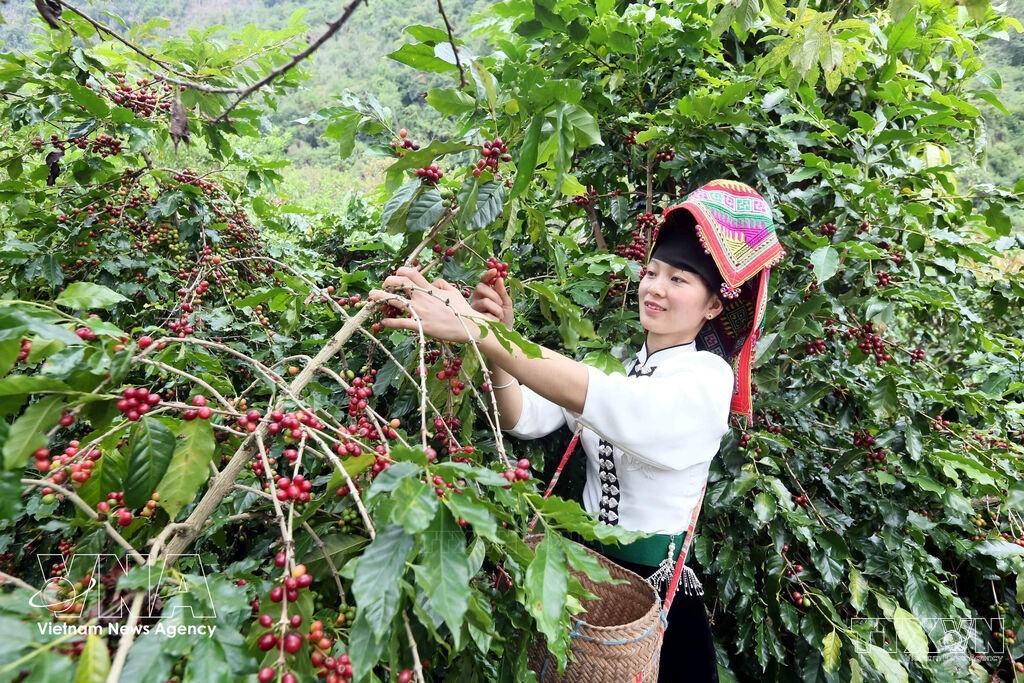
| Harvesting coffee in the northern province of Son La. (Photo: VNA) |
Hanoi (VNA) – As global coffee markets place growing emphasis on sustainability and traceability, experts say verified data on coffee-growing areas is becoming a critical competitive advantage for Vietnamese exporters, helping them secure market access, strengthen price negotiations and enhance the value of the country's coffee.
Although Vietnam's coffee exports continue to post solid shipment volumes, exporters are facing mounting pressure from lower global prices, tighter supply and increasingly stringent import regulations.
According to the Customs Department, Vietnam exported around 1.1 million tonnes of coffee worth nearly 4.8 billion USD in the first half of 2026. Export volume rose by 7-10% year-on-year, but export value declined by more than 14% as average prices fell.
The figures underscore a growing reality that higher output alone is no longer enough to increase export earnings. Instead, exporters are being required to demonstrate sustainable production practices and transparent supply chains to maintain access to premium markets.
The European Union (EU), which accounts for more than 40% of Vietnam's coffee export value, will fully enforce its Deforestation Regulation (EUDR) from January 1, 2027, following a transition period ending later this year.
Under the regulation, every coffee shipment entering the EU must be traceable to individual plots of land and prove it is not linked to deforestation. As a result, verified growing-area data is increasingly viewed as a "passport" for Vietnamese coffee to enter high-value markets.
Competitive advantage is shifting from production scale and processing capacity to the quality and reliability of production data.
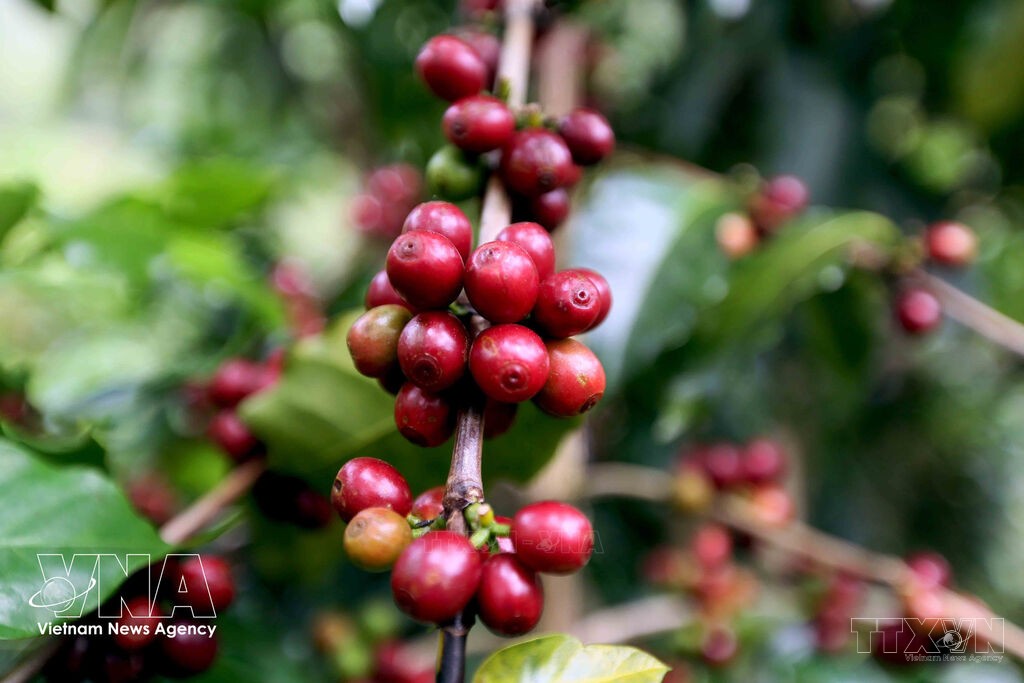 |
| Coffee exporters are being required to demonstrate sustainable production practices and transparent supply chains to maintain access to premium markets. (Photo: VNA) |
Nestlé Vietnam is among the companies investing heavily in digital mapping through its Nescafé Plan programme. According to Pham Phu Ngoc, Head of Agriculture and the Nescafé Plan in Vietnam, the company expects to complete the collection of more than 40,000 farm polygons – digital map coordinates that accurately define farm boundaries – by the end of 2026.
Beyond meeting international traceability requirements, the database will also support greenhouse gas emissions measurement at farm level, contributing to greener coffee production and adding value to Vietnamese coffee in global markets.
Meanwhile, Vinh Hiep Co. Ltd – one of biggest coffee exporters in Vietnam - has prioritised improving data quality rather than simply expanding its sourcing areas.
The company’s Chairman and General Director Thai Nhu Hiep said the company has conducted field surveys, verified individual production areas, removed duplicate records and updated its database ahead of the new regulations taking effect.
He noted that accurate information on farm locations, growing-area codes and transparent production processes enables exporters to negotiate more effectively with international buyers.
However, experts stressed that the value of production data depends on its accuracy rather than its scale. A single farm may participate in supply chains run by multiple companies, creating overlapping records that could raise compliance risks during import inspections or legal verification.
For that reason, businesses are placing greater emphasis on "cleaning" datasets before expanding them. A digital polygon is considered valuable only when it accurately represents a verified production area, providing trusted information that supports traceability, strengthens compliance and reinforces the long-term competitiveness of Vietnam's coffee exports./.