 |
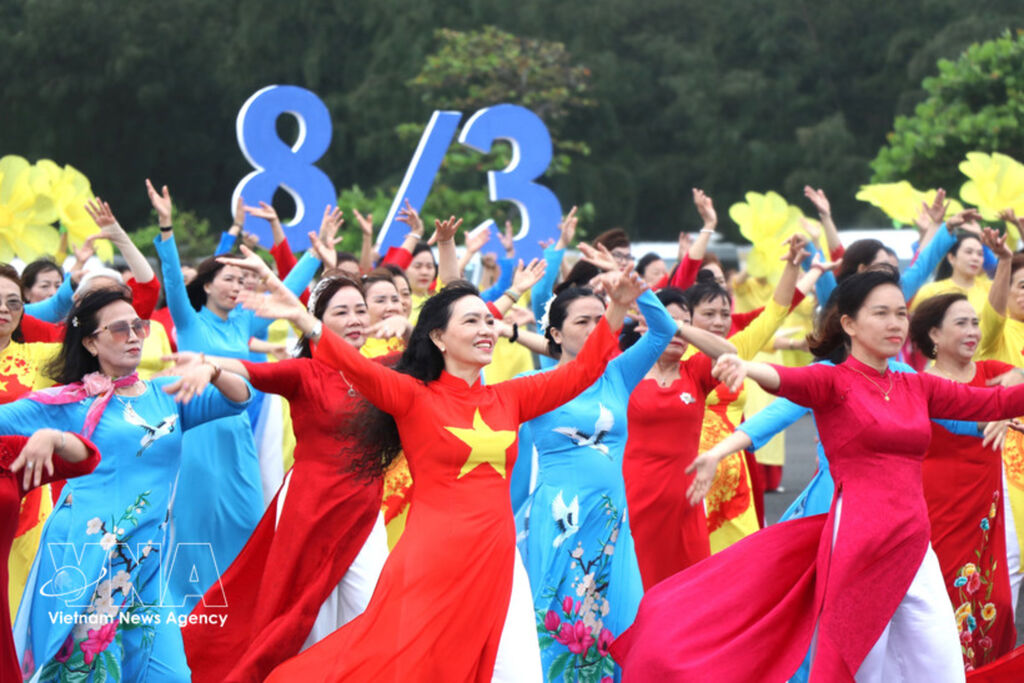
| Vietnamese women shine in the traditional Ao dai (Photo: VNA) |
Hanoi (VNA) – Every March, from bustling cities to quiet villages, the graceful colours of “Ao dai” (Vietnamese traditional long dress) return to streets, offices and schools across the country as part of the annual “Ao dai Week” launched by the Vietnam Women's Union ahead of International Women's Day on March 8.
The event celebrates the beauty of the traditional costume while promoting cultural values and strengthening community bonds nationwide.
In early March, scenes of women in flowing Ao dai taking spring photos by lakes, parks, offices, temples and historical sites have become a familiar sight on the streets of Hanoi. Social media is also filled with images and stories surrounding the elegant attire, which has become a symbolic signal of the season dedicated to honouring women.
In 2026, “Ao dai Week” runs from March 1 - 8 nationwide, marking the 116th anniversary of International Women’s Day, the 1,986th anniversary of the Trung Sisters' Uprising, and celebrating the upcoming election of deputies to the 16th National Assembly of Vietnam and People’s Councils at all levels for the 2026–2031 term.
In Hanoi, the campaign “Hanoi Ao dai Month” has inspired government agencies, schools and businesses to join activities such as wearing traditional ao dai at work, photography contests and fashion showcases.
On the morning of March 8, about 100,000 women in the capital are expected to take part in mass folk dance performances at public spaces linked to cultural heritage, with three main venues at Yen So Park, Cau Giay Park and the garden of Phung Khac Khoan Memorial Site in Thach That district. Accompanied by songs praising the homeland and national leaders, the performances aim to promote physical activity while creating a vibrant cultural atmosphere for residents and visitors.
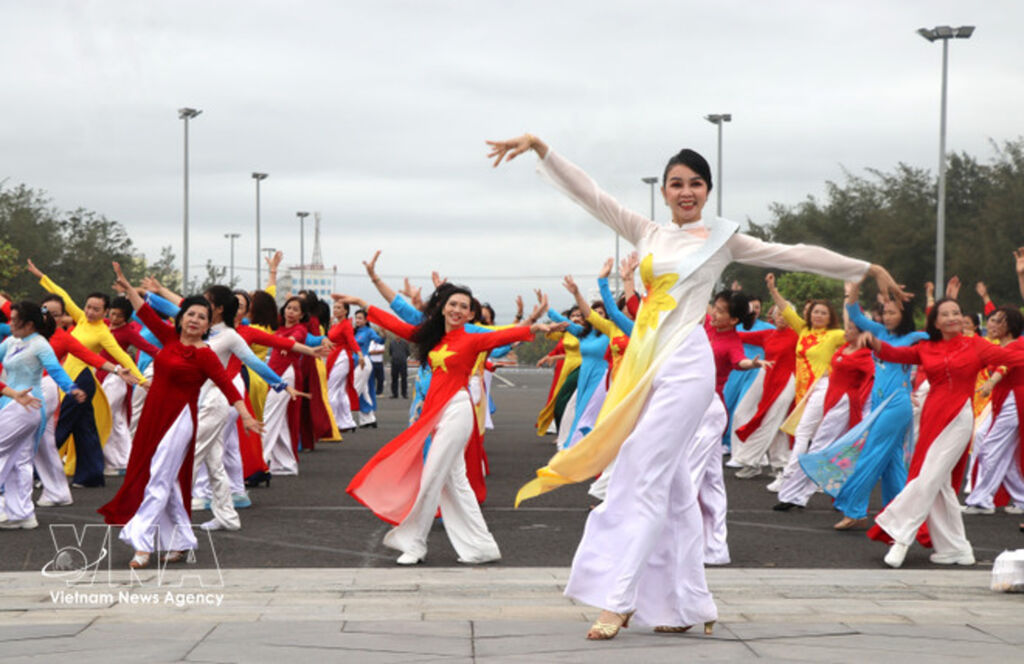 |
| Every March, from bustling cities to quiet villages, the graceful colours of “Ao dai” (Vietnamese traditional long dress) return to streets, offices and schools across the country. (Photo: VNA) |
In Ho Chi Minh City, the 12th Ao dai Festival, themed “Golden threads weaving aspirations,” adds further excitement to March celebrations. The festival features 17 events across the city, from the opening ceremony on March 6 at the Ho Chi Minh President Monument Park and Nguyen Hue Walking Street to parades and performances at tourist attractions, historical sites and parks.
This year’s festival gathers 37 designers, 600 performers and models, and 37 ambassadors from different fields, highlighting how the Ao dai continues to inspire creativity while preserving its traditional essence.
Meanwhile, in the northern province of Dien Bien, Ao dai Week coincides with the 2026 Hoa Ban (Bauhinia) Festival, where thousands of women from various professions parade through streets filled with the signature white ban blossoms, enriching the province’s cultural and tourism landscape.
In Hue - a central city striving to build its brand as the “Capital of Ao dai” - campaigns encouraging women to wear ao dai at workplaces and community events continue to gain traction. The programme “Ao dai of Love” has donated nearly 2,000 sets of ao dai to disadvantaged women, aiming to ensure that every member has one to wear on important occasions, including the upcoming election.
Despite the ever-changing tides of fashion, the Ao dai retains a special place in the wardrobes of most Vietnamese women. Wearing it during festivals, weddings and major events remains a cherished tradition passed down through generations.
Today, the Ao dai also serves as a cultural emblem representing Vietnam at international diplomatic events, artistic stages and beauty pageants around the world.
According to Dang Thi Bich Lien, chairwoman of the Vietnam Ao Dai Heritage Club, the Ao dai embodies the elegance and identity of the Vietnamese people and should be regarded as a “living heritage” that deserves continued preservation and promotion.
In recent years, the association has organised parades, exhibitions and cultural events in cities such as Hanoi and Thai Nguyen, while collaborating with the Ministry of Foreign Affairs of Vietnam on the “Ao dai Connection” programme, which has established ao dai heritage clubs across Asia and Europe to bring the costume closer to international audiences.
After years of implementation, Ao dai Week has become a widely embraced cultural event. Each flowing dress not only honours the graceful beauty of Vietnamese women but also conveys national pride to audiences at home and abroad.
More importantly, it represents a practical way for individuals to preserve and promote cultural heritage in an era of global integration, while paving the way for the Ao dai to be recognised as a national intangible cultural heritage, and ultimately as part of the world’s intangible cultural heritage./