 |
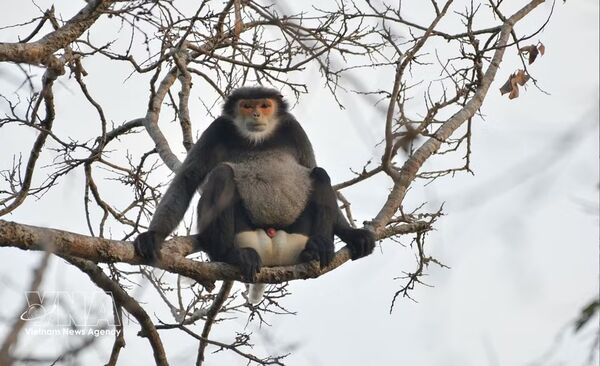
| The natural forest provides an essential habitat and rich food sources for black-shanked douc langurs. (Photo: VNA) |
Tay Ninh (VNA) – Recent findings from a survey of black-shanked douc langur (Pygathrix nigripes) groups on Ba Den Mountain in the southern province of Tay Ninh have provided an important scientific basis for developing a long-term conservation strategy for the critically endangered primate.
At a recent consultation workshop on the current status of and conservation measures for black-shanked douc langurs in Sub-zone 66 of the Ba Den Mountain cultural and historical forest, scientists, conservationists and local authorities reviewed the condition of the population inhabiting the area.
According to the Centre for Nature Conservation and Development (CCD), the black-shanked douc is one of Vietnam’s 25 primate species and primarily feeds on leaves. It is endemic to Vietnam and Cambodia. Vietnam is home to three douc species: the red-shanked douc, regarded as a symbolic species of Da Nang; the grey-shanked douc; and the black-shanked douc.
The International Union for Conservation of Nature (IUCN)’s 2025 Red List classified the black-shanked douc as critically endangered while Vietnam’s Red Data Book 2024 lists it as endangered. It is also included in Group IB – endangered, precious and rare forest animals subject to Vietnam’s strict protection.
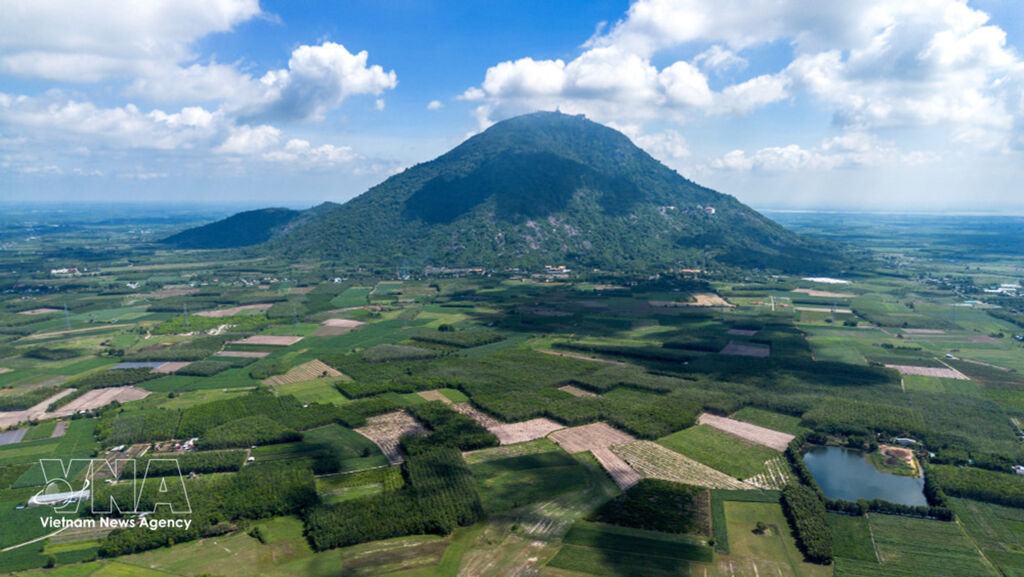 |
| A view of Ba Den Mountain in the southern province of Tay Ninh (Photo: VNA) |
Bui Thanh Tung, head of the CCD’s species conservation division, said the centre’s research team employed multiple survey methods simultaneously to assess the status of the langur population on Ba Den Mountain, including field surveys across 20 transects and 10 observation points, alongside camera traps and thermal drone technology.
“As doucs typically inhabit the forest canopy, the use of unmanned aerial vehicles proved highly effective, allowing researchers to observe from a distance without disturbing the animals or alerting them to human presence,” Tung said.
The survey documented the current status of the black-shanked douc population, mapped its distribution and identified key threats, forming the basis for proposing appropriate conservation measures.
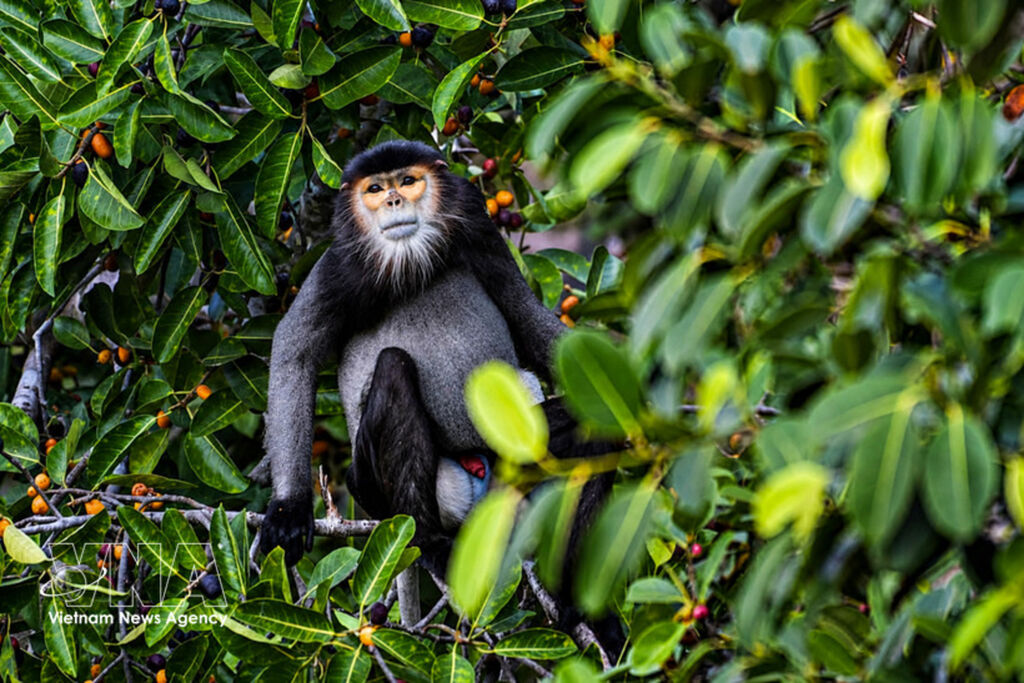
Researchers noted that the langurs are mainly found in natural forest at elevations between 300 and 900 metres on Ba Den Mountain. They are active between 6am and 5pm daily, with peak activity occurring in the early morning and late afternoon. The species typically selects large trees for resting and overnight shelter. Although different groups maintain separate home ranges, some overlap was observed, suggesting ecological characteristics distinct from highly territorial primate species.
The survey recorded six groups comprising a total of 118 black-shanked douc langurs living within the mountain’s natural forest.
Researchers also found that all six groups included infant individuals, indicating that breeding activity is occurring across the entire population rather than being concentrated in larger groups. The finding is considered biologically significant, suggesting that the langurs have maintained stable social structures and ecological conditions suitable for reproducing and raising offspring are in place.
In addition, sub-adult individuals accounted for 30.5% of the total recorded population while infants represented 15.3%. This shows that the population is not only reproducing successfully but also has the potential to recruit new breeding individuals in the future, supporting long-term population stability, according to the CCD.
Based on the findings, scientists proposed a range of measures to ensure the long-term protection of the black-shanked douc population on Ba Den Mountain.
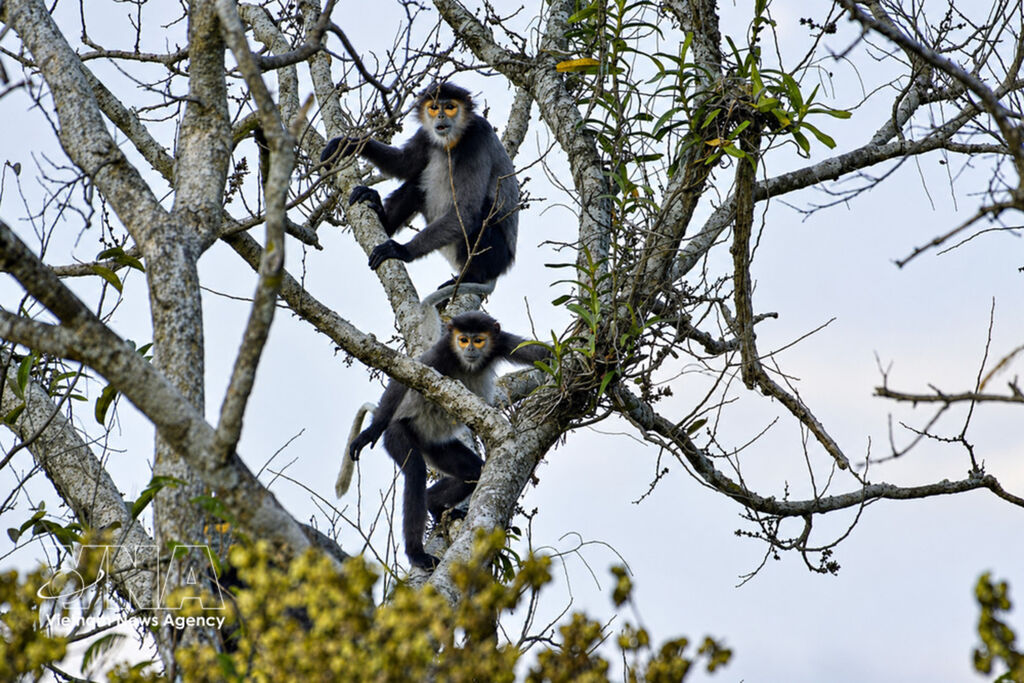 |
| Black-shanked douc langurs inhabit the forest canopy on Ba Den Mountain and are one of the rare primate populations being monitored and conserved in Tay Ninh province. (Photo: VNA) |
Tung said public communications and education to raise awareness are fundamental to reducing harmful human impacts on wildlife.
Additional recommendations included installing more educational and warning signage, strengthening forest patrols and monitoring, tightening controls over the release of rescued animals into the area, and expanding long-term research and monitoring.
Notably, the research team proposed gradually restoring habitat connectivity through a system of canopy bridges to enable movement between groups, facilitate genetic exchange, and support future expansion of the species’ range./.