 |
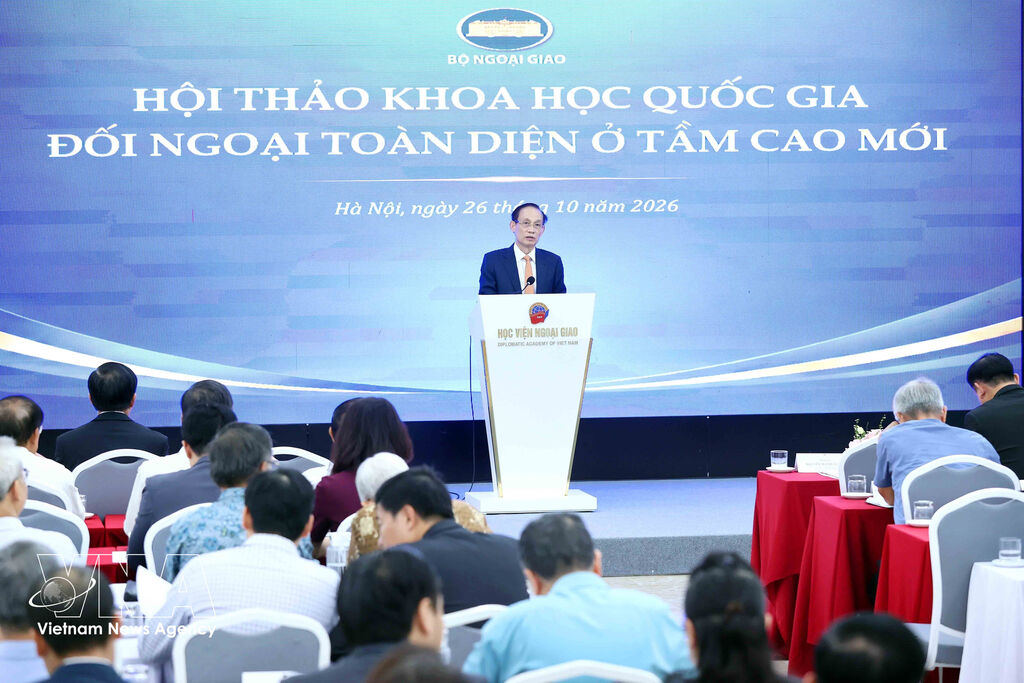
| Minister of Foreign Affairs Le Hoai Trung speaks at the conference. (Photo: VNA) |
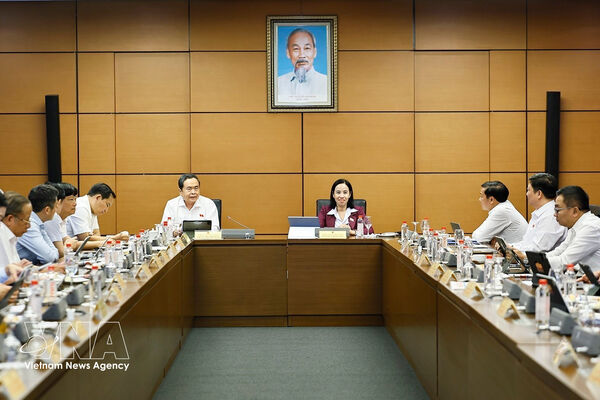
Hanoi (VNA) – The Ministry of Foreign Affairs convened a national conference in Hanoi on October 26 to work out new strategic requirements for diplomacy and put into practice the foreign policy set by the 14th National Party Congress and the guidance of General Secretary of the Communist Party of Vietnam (CPV) Central Committee and President To Lam.
More than 100 delegates attended the event, including members of the CPV Central Committee, officials from central and local agencies, veteran diplomats, experts, scientists and representatives of research institutes and businesses.
In his speech, Minister of Foreign Affairs Le Hoai Trung said the Party and State leader wants comprehensive diplomacy at a new height that matches Vietnam’s historical and cultural stature and standing. That is a task of the entire political system, not just the diplomatic sector, he said.
With the 14th National Party Congress naming diplomacy and international integration as essential, ongoing priorities, Trung emphasised that diplomacy at this higher level should be part of the wider strategy for national development and defence. It must put national interests first, link closely with defence-security, socio-economic progress, science and technology, culture, and the people, and transform strategic vision into concrete actions and real outcomes.
Trung set three strategic requirements for the coming time. Vietnam must raise its role and the quality of its international contribution, measured by real impacts, and make diplomacy more strategically effective, judged by the lasting capabilities and conditions it builds for the country. It also must sharpen strategic initiatives and unified action across the whole system, with tighter coordination among all forces involved in foreign affairs.
Deputy Minister of Foreign Affairs Nguyen Manh Cuong, in his address, called for building on and developing the mindset, vision and methods of diplomacy, shaping a favourable environment, from widening relations to raising the quality and effectiveness of cooperation with countries and partners, and tying diplomacy more closely to national development strategies. He said discussions should clarify strategic orientations and priorities and propose solutions with breakthrough potential.
Nguyen Van Phuong, Vice Chairman of the Party Central Committee’s Commission for Policy and Strategy, told the plenary session that international resources must be converted into homegrown capacity. Cooperation should be judged by how well Vietnam can absorb and master technology, and by gains in productivity and economic competitiveness.
Meanwhile, Deputy Minister of National Defence Nguyen Truong Thang said diplomacy must be more proactive in research and forecasting to defend the country early and from afar and firmly maintain the strategic initiative.
A representative of the Ministry of Public Security called for closer links between diplomacy and national security in the new development stage.
The four thematic sessions focused on enhancing Vietnam’s reputation and creating a favourable international environment, strengthening partnerships to boost autonomy and improve risk management, and adapting diplomacy to support the needs of businesses, localities, and economic sectors. The final session included harnessing the collective strength of all stakeholders while improving coordination, resource mobilisation, and execution.
Wrap-up discussions centred on turning orientations into action by spelling out tasks, assigning responsibility and securing conditions and resources. The event logged more than 30 presentations and contributions from ministries, agencies, experts, scientists, research institutes and companies./.