 |
| Hoang Thi Minh Hanh, Le Thi Tuyet Mai, Nguyen Thi Hang and Nguyen Thi Ngoc deliver an outstanding performance to win the gold medal in the women’s 4x400m relay. (Photo: VNA) |
Hanoi (VNA) – The 33rd Southeast Asian (SEA) Games, held earlier this month in Thailand, marked a historic milestone for Vietnamese sports, reflecting a comprehensive transformation in both strategy and competitive outlook.
Finishing third overall with 278 medals (87 gold, 81 silver and 110 bronze), Vietnam has many reasons to be proud, as a new generation of athletes has truly come of age and is ready to shoulder national aspirations.
A key highlight of this SEA Games was the strategic shift toward Olympic sports. Instead of chasing medal numbers in regional disciplines, Vietnam focused on core Olympic events, and it proved effective. In athletics, new talents made impressive breakthroughs, notably high jumper Bui Thi Kim Anh, born in 2006, who set a new SEA Games record at 1.86m. Meanwhile, runner Nguyen Thi Ngoc stunned regional rivals to claim gold in the women’s 400m with a time of 52.74 seconds.
 |
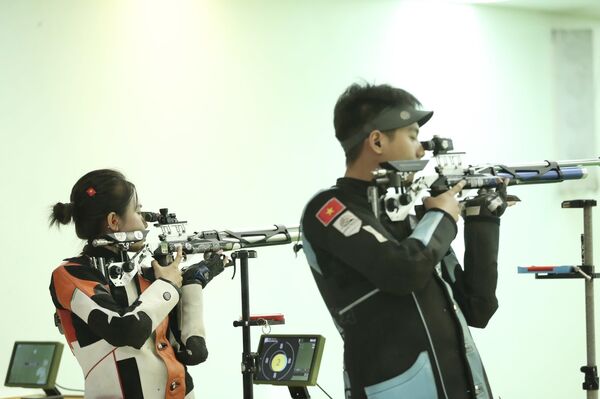
| Shooter Trinh Thi Thu Vinh is outstanding with four gold medals and three SEA Games records. (Photo: VNA) |
In swimming, rising star Nguyen Thuy Hien is emerging as a worthy successor to previous champions, while in precision and combat sports, “Gen Z” athletes also shone brightly. Shooter Trinh Thi Thu Vinh was outstanding with four gold medals and three SEA Games records, affirming Vietnam’s growing competitiveness in world-class disciplines. Young wushu athletes, including Dang Tran Phuong Nhi, demonstrated technical excellence and composure on the international stage.
The strong performance of these young athletes at the 33rd SEA Games demonstrates that Vietnamese sports possess a rich and capable next generation, ready to step in and replace senior athletes. It also reflects a new management mindset - one that dares to place trust in youth and is willing to provide them with the best possible conditions to compete, gain experience, and mature through major international tournaments.
Behind these successes lies the strong support of sports science. Vietnam has begun applying artificial intelligence (AI) in competitor data analysis, medical recovery and nutrition, and big-data performance monitoring to improve training efficiency, reduce injuries and extend athlete careers. This is a necessary step as regional rivals invest heavily in sports technology.
However, challenges remain. Transitioning to a new generation of athletes requires patience, careful planning and acceptance of temporary performance gaps in some traditional strengths. The 33rd SEA Games served as an important test, helping Vietnam refine long-term strategies toward targets for 2030–2045.
The Games also highlighted the growing maturity, professionalism and confidence of Vietnam’s young athletes, many just 17–18 years old, who proved that youth is not a barrier but an advantage. Their success lays the foundation for Vietnam’s ambitions at the Asian Games (ASIAD) and the Olympics.
With a strong pipeline of young talent, scientific training, stable investment and a forward-looking strategy, Vietnamese sports are confidently moving toward bigger arenas, ready to conquer new heights and shine on the world stage./.