 |
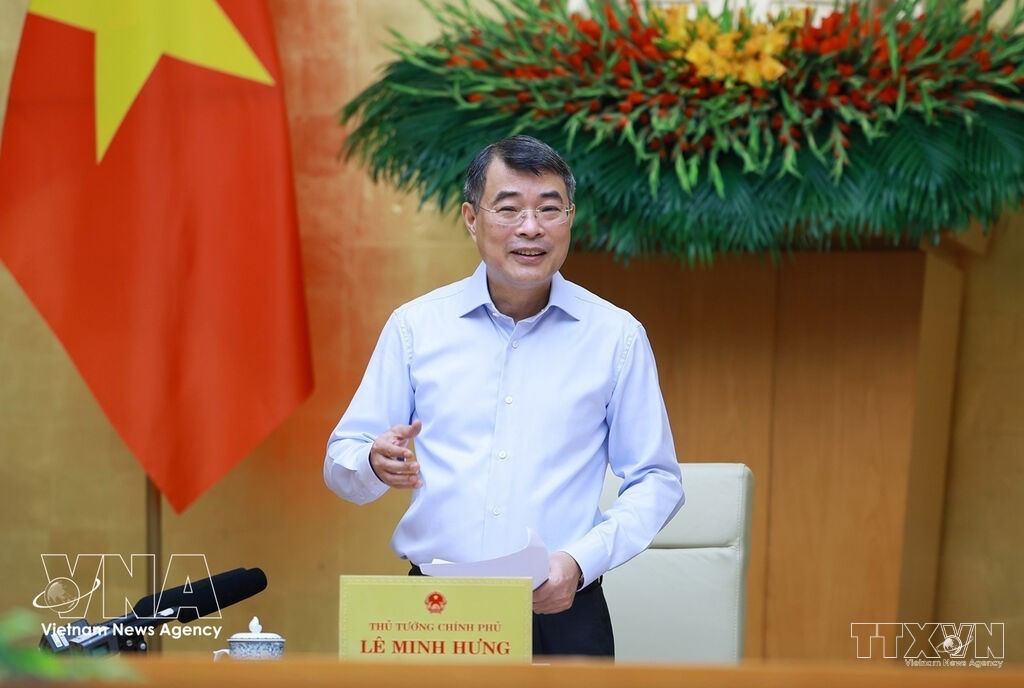
| Prime Minister Le Minh Hung speaks at the Government’s regular meeting on September 3. (Photo: VNA) |
Hanoi (VNA) – Prime Minister Le Minh Hung on September 3 called on ministries, sectors and localities to remain proactive, creative and flexible in implementing solutions to achieve the socio-economic development targets set for 2026, stressing that the remaining months of the year will be demanding while time is running short.
Speaking at the Government’s regular meeting for August to review the country’s socio-economic performance in the month and the first eight months of 2026, and discuss the 2026 plan and preparations for the 2027 plan, PM Hung requested ministries and agencies to continue improving the legal framework, first and foremost by completing overdue legal documents and urgently drafting detailed regulations for laws and resolutions recently adopted at the National Assembly (NA)’s first extraordinary session. Each law or resolution should be accompanied by a single document providing detailed regulations, he said.
He called for close coordination with NA agencies in preparing documents for the legislature’s second session, and completing the comprehensive review of the legal system, noting that priority should be given to reviewing and handling legal documents scheduled to expire before March 1, 2027.
Regarding macroeconomic stability and growth promotion, the PM required ministries, agencies and localities to regularly review and update growth scenarios on a monthly and quarterly basis, proactively identify bottlenecks affecting growth targets and promptly remove them.
Particular attention should be paid to sectors and localities that serve as growth drivers and still have substantial room for expansion, he said, calling for ensuring the “six clear” principle - clear people, clear tasks, clear timelines, clear responsibilities, clear outputs and clear authority - and the highest determination to achieve the targets.
He stressed the need for the Government to remain steadfast in its goal of controlling inflation, proactively managing prices of essential goods and services, and strengthening price and market management, with strict action taken against profiteering and unreasonable price increases.
PM Hung instructed the Ministry of Finance to strengthen forecasting and early-warning capacity, closely monitor international developments and domestic markets and prices, and flexibly manage prices to support production. Policies on tax, fee and charge exemptions, reductions and extensions should continue to be implemented effectively to support people and businesses.
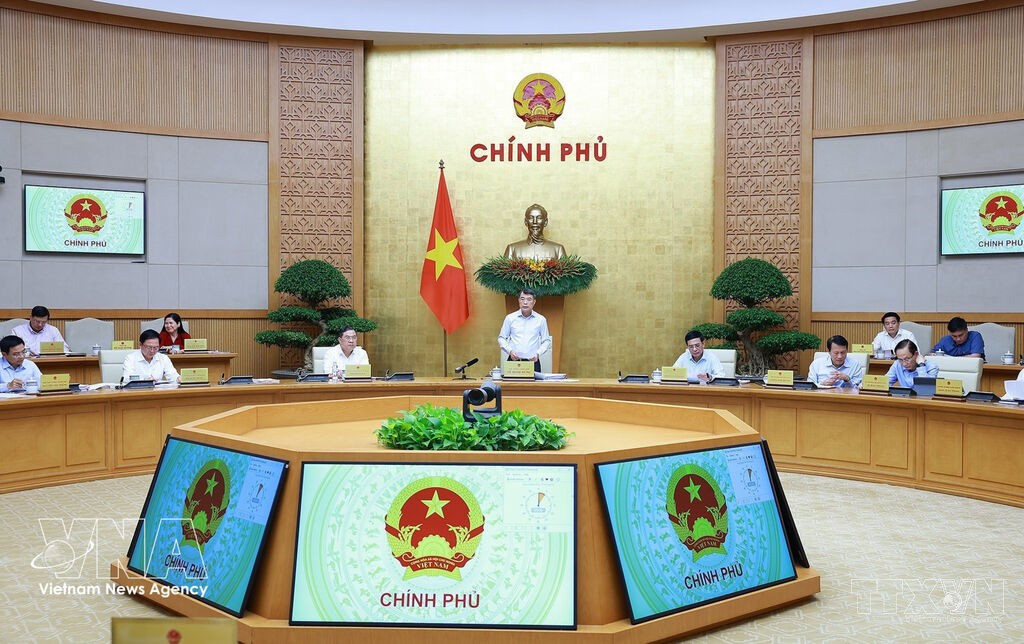 |
| Prime Minister Le Minh Hung speaks at the Government’s regular meeting on September 3. (Photo: VNA) |
The ministry was also asked to accelerate public investment disbursement and strive to complete 100% of the assigned plan, while developing capital, corporate bond and securities markets to mobilise additional resources for growth and reduce dependence on bank credit.
The State Bank of Vietnam was tasked with continuing to conduct proactive and flexible monetary policy in close coordination with fiscal and other macroeconomic policies. Credit should be directed towards priority sectors and key projects, while lending to potentially risky areas must be tightly controlled.
The Prime Minister called for regular assessment of the balance between inflation control and growth support, with appropriate warning thresholds identified. Monetary policy tools within the central bank’s authority should be used flexibly to maintain liquidity and strive to lower lending rates.
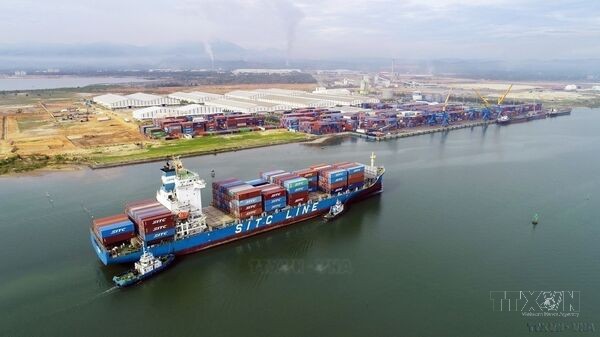
He also urged ministries, agencies and localities to implement coordinated measures to boost exports and production, control prices and trade deficit and ensure a balanced trade position in support of the two-digit growth target.
Emphasis should be placed on proposing solutions to remove difficulties and obstacles so as to definitively resolve long-standing projects and unlock resources for development and growth, he said.
The Ministry of Industry and Trade was asked to closely analyse declining exports and major sources of trade deficits, accelerate negotiations on trade agreements with new partners and intensify trade promotion, particularly for products in high demand in international markets such as electronics, machinery, agricultural and aquatic products.
PM Hung also emphasised the need to ensure sufficient and stable energy supplies, accelerate key power and oil and gas projects, and remove obstacles facing biofuel production plants.
On science and technology, innovation and digital transformation, the Government leader called for faster implementation of strategic technology tasks, completion and connection of databases, and resolution of bottlenecks in digital transformation.
In the social sector, he urged the national steering committee for the search for, collection and identification of martyrs’ remains to accelerate the implementation of the “500-day campaign” on these works, prioritising resources for collecting DNA samples from unidentified remains in martyrs’ cemeteries.
He also requested the Ministry of Education and Training to ensure thorough preparations for the 2026-2027 academic year, particularly the opening ceremonies and inauguration of inter-level boarding schools in border communes; pay due attention to disadvantaged students; and ensure adequate supplies of textbooks in remote and difficult areas.
The Ministry of Health should strengthen disease prevention and control, particularly in areas affected by natural disasters, storms and floods; continue to effectively implement periodic health check-ups and free health screening for the public; take the lead in coordinating with ministries, sectors, agencies and localities to carry out measures to enhance food safety in educational institutions; and urgently submit a project on completing the distribution system for pharmaceuticals and medical equipment, stated PM Hung.
In external relations, the Ministry of Foreign Affairs was tasked with carefully preparing external activities of Party and State leaders in the final months of the year and making active preparations for APEC Year 2027, thus contributing to enhancing Vietnam’s role, position and reputation at international forums.
Ministries, agencies and localities were also requested to continue taking measures to firmly safeguard national territorial sovereignty and maintain security, social order and safety; and further step up efforts to combat smuggling, trade fraud, origin fraud and intellectual property violations.
Regarding socio-economic development in August and the first eight months of 2026, participants at the meeting noted that the macro-economy remained basically stable, with major balances ensured. State budget revenue in the January-August period reached 2.03 quadrillion VND (77.8 billion USD), equivalent to 80.2% of the estimate, while total import-export turnover hit 770.14 billion USD, up 28.7%. Public investment disbursement through August reached nearly 510 trillion VND, equivalent to 49.8% of the annual plan.
Notably, foreign investment continued to be a bright spot, with record capital inflows. Total registered FDI reached 40.63 billion USD, up 55.4%, while disbursed FDI stood at 17.25 billion USD, up 12%.
Meanwhile, agricultural production remained stable and the industrial sector continued to grow. The processing and manufacturing industry was estimated to expand by 12.5% in the eight-month period. Tourism also recorded strong growth, attracting nearly 16 million international visitors in the period, up 14.4%./.