|
| The green spaces of Thong Nhat Park help purify and regulate the climate in Hanoi (Photo: VNA) |
Hanoi (VNA) - Prime Minister Pham Minh Chinh has issued Directive No. 04/CT-TTg to accelerate the implementation of the scheme on development of urban areas in Vietnam in response to climate change in the 2021-2030 period.
The directive notes that ministries, sectors and localities have actively implemented the scheme approved under Decision No. 438/QD-TTg, recording positive results in urban management and development, while promoting green growth and development of smart cities.
All provinces and cities nationwide have issued action plans, integrated climate change considerations into their own planning schemes, and rolled out adaptation projects. However, progress remains constrained by gaps in risk-warning data, greenhouse gas mitigation solutions, and implementation resources.
 |
| A view of Sai Gon river in Ho Chi Minh City (VNA) |
The PM assigned the Ministry of Construction to take the lead in completing a coherent framework of mechanisms, policies and laws for green and smart urban development, while strengthening supervision of climate change integration in urban planning and management, and investment for urban development.
The ministry was also tasked with developing standards and regulations for green-growth urban areas and green and energy-efficient buildings; formulating a master plan for the national urban–rural system to 2035 with a vision to 2050; promoting cooperation and policy dialogue; and supervising urban planning adjustments toward low-carbon and climate-resilient development.
The Ministry of Finance received a request to refine financial mechanisms, budget allocation and green finance for climate adaptation efforts in urban areas.
Meanwhile, the Ministry of Agriculture and Environment is responsible for updating national climate change scenarios, hydrometeorological data, and maps on flooding and sea-level rise to support urban management and development. It will also coordinate with relevant ministries and agencies to strengthen guidance for localities on urban land-use management in line with approved plans.
The directive instructs the provincial and municipal People’s Committees to proactively develop programmes and plans for land-use management in urban development in accordance with the law, and strengthen the supervision of urban development to ensure compliance with approved plans and planning frameworks. It also suggests reviewing climate change scenarios and prioritising integrated investment in modern technical and social infrastructure, promoting the development of green and smart cities.
Localities must minimise the allocation of coastal land to projects that do not serve the public interest, safeguard public spaces and protect natural landscapes, the directive said.
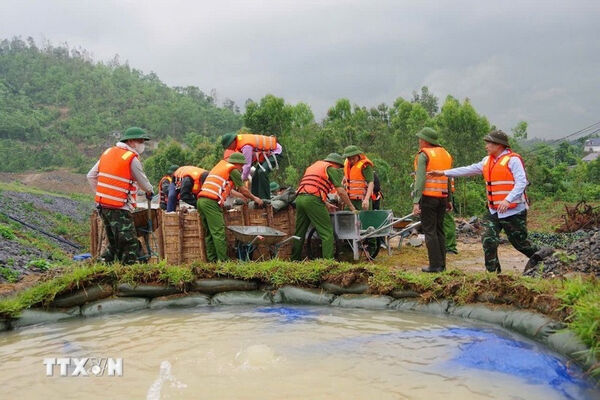
They were requested to review and compile data, proactively develop and manage urban flooding maps based on climate change scenarios, and maps forecasting at-risk areas and the scale and severity of flooding, landslides and flash floods; regularly update high-risk disaster-prone urban areas; review and address shortcomings in urban planning and technical infrastructure investment to ensure climate resilience, thus proposing solutions or adjusting plans as needed.
The PM also underlined the need for localities to ensure connectivity of transport and technical infrastructure within each area, across the entire urban system, and with surrounding regions.
He asked for clear assignment of responsibilities at all levels, stronger disaster prevention and recovery efforts, and intensified communication to raise public awareness and improve climate change response skills among urban communities./.