 |
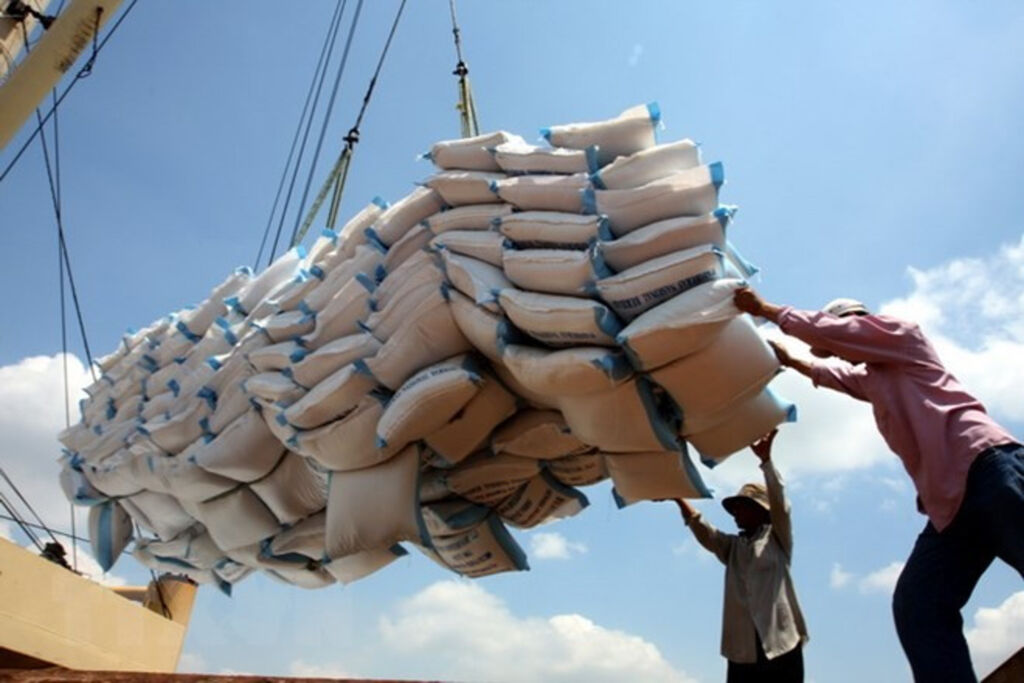
| Loading Vietnamese rice for export. (Photo: VNA) |
HCM City (VNA) - Restructuring Vietnam’s rice sector from production to trade has become an inevitable course of action as rice exports in early 2026 face a dual challenge from unfavorable market conditions and limited procurement and storage capacity, said insiders.
According to experts, the process requires not only active participation from enterprises, but also close coordination of the State and strong support from credit institutions.
Statistics from the Ministry of Agriculture and Environment show that Vietnam exported 7.9 million tonnes of rice in 2025, earning 4.02 billion USD, down 13.1% in volume and 29.1% in value year on year.
Do Ha Nam, Chairman of the Vietnam Food Association (VFA), said that despite falling global rice prices and export difficulties faced by most countries, Vietnam’s rice export turnover still surpassed 4 billion USD, a result he described as noteworthy. Despite the decline from 2024, Vietnam overtook Thailand to become the world’s second-largest rice exporter, trailing only India.
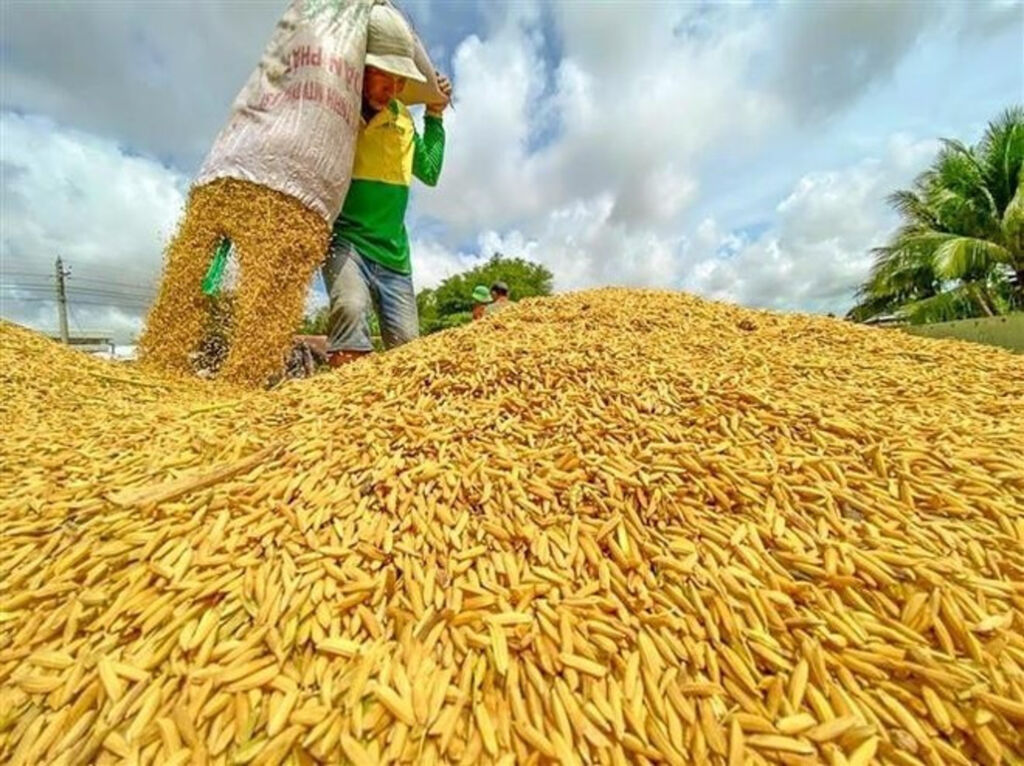 |
| A new harvest (Photo: VNA) |
Notably, while global white rice prices stood at just 350–400 USD per tonne, Vietnam’s average export price reached 510 USD per tonne, underscoring the gains from its shift toward fragrant and specialty rice.
However, Nam warned that Vietnam’s heavy dependence on the Philippines, which absorbs 40–50% of its rice exports, leaves exporters highly vulnerable to abrupt policy changes.
Nam said that after intensive negotiations, the Philippines has reopened its market to rice imports, but its government’s monthly import quota system has slowed market momentum. He noted that piecemeal quota allocations prevent enterprises from planning shipments, creating a chain reaction that puts pressure on procurement, paddy prices, and farmers’ incomes, especially as the Winter–Spring harvest enters its peak.
According to Nam, Vietnam’s long-term strategy in the rice sector is to shift decisively toward high-quality rice production, focusing on markets with strong purchasing power willing to pay premium prices. With rice markets expected to remain volatile in 2026, increasing the share of fragrant and specialty rice is seen a right direction, but market access and financing challenges must be addressed in tandem.
In the short term, to ensure timely procurement of the Winter–Spring crop, the VFA recommended banks flexibly raising credit limits for enterprises. Meanwhile, businesses have been encouraged to store dry rice, preserving quality for six months to a year, especially as many have already invested in silos and specialised storage facilities.
The association also called on the Government to boost national rice reserves to support prices while market levels remain low, particularly given the high quality of the Winter–Spring crop, and to expand government-to-government (G2G) contracts.
Recently, Vietnam has signed several G2G contracts with Singapore and Senegal, with the VFA authorising Vinafood 1 and Vinafood 2 to implement them. For traditional markets such as Iraq and Syria, where Thailand currently dominates, the VFA urges Vietnamese overseas missions to continue building connections to restore and expand Vietnam’s rice market share.
Huynh Van Thon, Chairman of Loc Troi Group, said Vietnam’s rice sector is on the right track, shifting to high-quality varieties and adopting modern cultivation techniques, which has enabled the country to meet the standards of even the most demanding markets. A case in point is Vietnamese Jasmine rice, which has successfully entered Japan and the Republic of Korea despite significant barriers.
However, Thon stressed that capital flows will only be unlocked if banks act as full members of the rice production-to-market chain, not just as support partners, requiring government mechanisms tailored to seasonal production. In line with this approach, Agribank, as a leading state-owned agricultural bank, has partnered with the Ministry of Agriculture and Environment to support the project on developing 1 million hectares of high-quality, low-emission rice linked with green growth in the Mekong Delta region.
Agribank has launched a linked lending programme for the production, processing, and sale of high-quality and low-emission rice in the Mekong Delta, with a total scale of up to 30,000 billion VND.
Deputy Minister of Agriculture and Environment Phung Duc Tien said the ministry will work with banks to expand agricultural credit for timely rice procurement.
Enterprises need to proactively plan capital use for each harvest, while industry associations and exporters must focus on building the Vietnam rice brand to enhance recognition and economic value along the supply chain, he added./.