 |
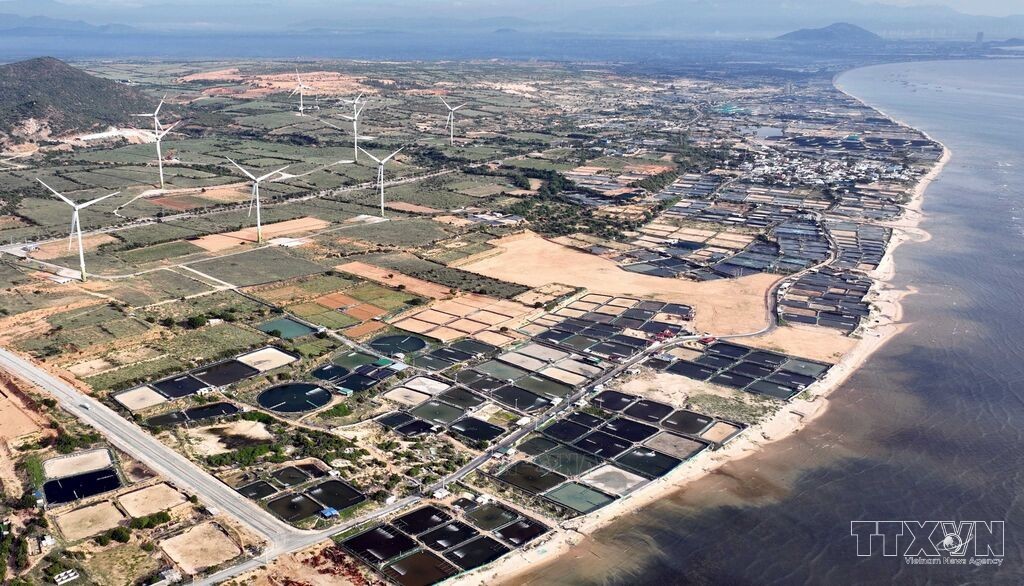
| Panoramic view of the site designated for the Ninh Thuan 1 nuclear power plant in Phuoc Dinh commune, Khanh Hoa province. (Photo published by VNA) |
Hanoi (VNA) – Developing a workforce capable of meeting the requirements of technology suppliers and the International Atomic Energy Agency (IAEA) is one of the key foundations for Vietnam to implement its nuclear power programme safely and effectively.
According to nuclear energy experts, building and operating a nuclear power plant is a process spanning many decades. Therefore, alongside personnel working directly at the plant, the off-site workforce also plays a particularly important role.
Training operational personnel requires stringent standards and a lengthy process, although the roadmap has the advantage of being closely linked to specific technologies and involving technology suppliers.
Taking initiative in developing specialised human resources
The long-term challenge Vietnam must proactively address is building a pool of personnel in management, regulation, research and development, and technical support. These are areas in which the country must take the initiative in training and building up its own capabilities so that it can independently conduct assessments, evaluate safety, verify technical calculations, carry out research, and provide support for the sustainable development of the nuclear programme.
The Government has so far issued development schemes for different groups of personnel.
Under Decision No. 1012/QD-TTg on training and developing human resources for nuclear power development through 2035, by 2030 the Ninh Thuan 1 nuclear power plant is expected to require around 1,920 workers, while Ninh Thuan 2 will need approximately 1,980.
Meanwhile, Decision No. 893/QD-TTg sets requirements for training and developing those in State management, research and development, applications and technical support in the sector. By 2030, the target is for all State management personnel involved at both central and local levels to receive adequate training and develop the necessary capabilities. At least 50% of personnel at the national radiation and nuclear safety agency are expected to have sufficient capacity to support the drafting of legislation, appraisal, safety assessment, inspection and supervision of safety and security at nuclear power plants and research reactors.
To date, investors in nuclear power plant projects have worked with the Ministry of Education and Training, technology partners and experienced organisations to develop comprehensive training plans, with their implementation already begun.
The Nuclear Training Centre under the Vietnam Atomic Energy Institute (VINATOM), which was established to provide short-term training for the Ninh Thuan nuclear power project in the past, is now stepping up its mission in line with new requirements. The centre has organised nuclear power courses for the Vietnam National Industry - Energy Group (Petrovietnam)’s officials and provided doctoral training in fields directly linked to nuclear power workforce needs. Its leaders said interest in the sector is growing again, with a higher number of new doctoral students being recruited.
As the focal agency responsible for implementing Decision No. 893/QD-TTg, the Vietnam Agency for Radiation and Nuclear Safety under the Ministry of Science and Technology is also working with relevant agencies to develop an overall plan and implement tasks according to the roadmap. Immediate priorities include reviewing workforce requirements and developing training plans, programmes and curricula for specialised fields. In the coming period, the agency will negotiate and sign agreements and send personnel for training and internships at reputable nuclear facilities overseas.
Mobilising resources for workforce training
As demand for training grows, specialised nuclear power training capacity is facing two major bottlenecks: a shortage of lecturers and inadequate facilities.
Dr Tran Chi Thanh, VINATOM Director, said the institute currently has only around 10 nuclear power and related experts who are able to participate in teaching, most of whom have already retired or are approaching retirement age. Universities involved in workforce training are also generally facing a shortage of lecturers with such specialised expertise.
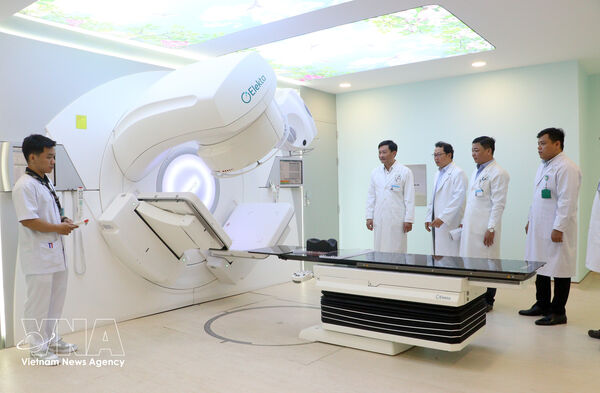
Dr Duong Thanh Tung, head of the office for training, research and development at the Nuclear Training Centre, said equipment for practical and experimental training remains inadequate. The centre’s laboratory currently has no radioactive sources, while practical models mainly use water and heat.
According to leading nuclear energy experts, university-level training should start with actual workforce requirements and the competency requirements of individual positions, rather than developing programmes and enrolling students first and only subsequently considering employment outcomes.
As an immediate priority, Vietnam needs to develop several core nuclear power training programmes meeting international standards, providing a foundation for graduates to receive further specialised training tailored to their specific positions.
Given the limited resources available domestically, international cooperation is one of the key solutions for gradually overcoming these challenges.
Nguyen Hoang Linh, Director of the Vietnam Agency for Radiation and Nuclear Safety, said a long-term investment roadmap and appropriate mechanisms are needed to develop and retain a pool of experts. At the same time, cooperation with the IAEA and countries with developed nuclear industries should continue to be strengthened.
In recent years, the Vietnam Nuclear Professional Network (VietNuc), a network of Vietnamese experts overseas, has supported training for related project managers and State officials working in technical safety and institutional matters.
Dr Pham Tuan Hiep, VietNuc Secretary General, said the network currently has around 200 members working in France, the UK, Italy, Vietnam, Belgium, Austria, the US and Canada, and is continuing to expand its expertise across fields ranging from research, materials and engineering to nuclear regulation and project management.
Many of these experts have direct experience working in the nuclear industries of countries with established nuclear power programmes. They can therefore help supplement the practical experience that is still lacking among Vietnam’s domestic workforce.
Prof. Dr Le Hong Khiem of the Institute of Physics under the Vietnam Academy of Science and Technology said one area of cooperation that should be promoted is that between Vietnam and the Joint Institute for Nuclear Research (JINR) in Dubna, Russia.
Vietnam was among the founding members of the institute and has made important contributions to its development.
Dubna currently boasts modern nuclear research infrastructure and equipment. It is therefore necessary to establish a long-term nuclear workforce training programme linked to research projects there, Khiem suggested. This would help address two major bottlenecks facing nuclear science in Vietnam: the shortage of experts capable of building and leading strong research teams, and limitations in large-scale research infrastructure and equipment./.