 |
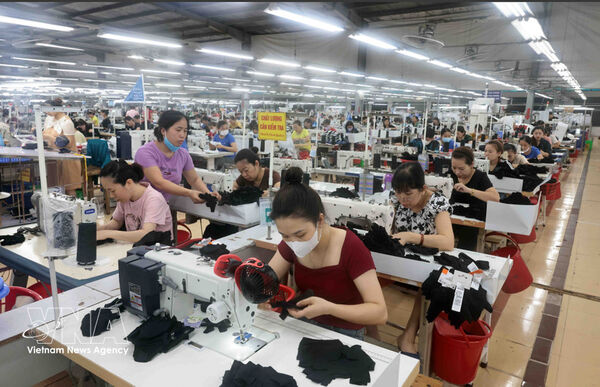
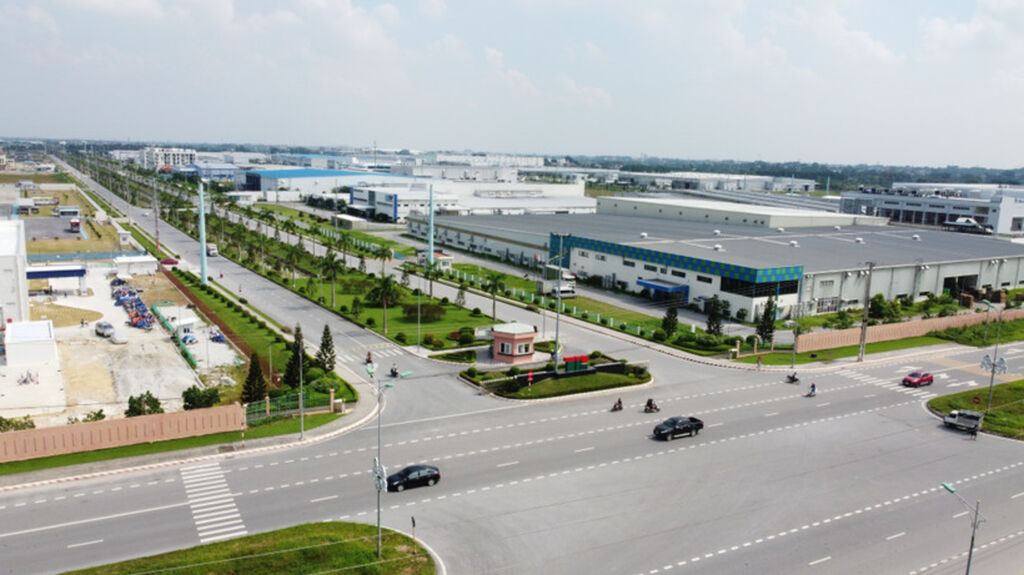
| The infrastructure of Thang Long 3 Industrial Park in Phu Tho province is comprehensive and modern, creating favourable conditions for businesses and investors. (Photo: VNA) |
Hanoi (VNA) – The Politburo’s Resolution No. 68-NQ/TW on the private economic sector development, issued in May 2025, targets 2 million enterprises by 2030, including at least 20 major corporations participating in global value chains.
Meanwhile, Resolution No. 79-NQ/TW on the State-owned economic sector development, issued in January 2026, aims to place 50 State-owned enterprises among Southeast Asia’s 500 largest companies by 2030, with one to three entering the world’s top 500 firms.
The resolution also calls for building several large and competitive state-owned corporations with modern technology and international competitiveness to lead domestic firms deeper into global production and supply chains, particularly in strategic sectors.
According to Dau Anh Tuan, Vice President of the Vietnam Chamber of Commerce and Industry, after 40 years of “Doi Moi” (Renewal) scheme from 1986 to 2026, Vietnam has seen the rise of major economic groups across many sectors.
In manufacturing, THACO has built one of Southeast Asia’s largest automobile and mechanical engineering ecosystems in Quang Nam province, while VinFast has become Vietnam’s first electric vehicle producer, establishing a major factory in Hai Phong, listing on Nasdaq and expanding into North America, Europe and Southeast Asia.
In heavy industry, Hoa Phat Group has grown from a small furniture workshop into one of Southeast Asia’s leading steelmakers, producing millions of tonnes annually and competing in export markets.
In technology, FPT Corporation has expanded into dozens of countries, providing digital transformation services to multinational corporations. In consumer goods, Vinamilk now exports to more than 50 countries, while Masan Group has built a consumer ecosystem spanning food, beverages and retail.
These companies, Tuan noted, prove Vietnamese private enterprises can build nationally recognised brands with regional competitiveness.
In infrastructure and real estate, Vingroup has launched projects on an unprecedented scale for Vietnam’s private sector, from urban developments and hospitals to electric vehicle manufacturing. Sun Group and BRG Group have also invested billions of US dollars in tourism infrastructure, resorts and airports.
By the end of 2025, Vietnam had nearly 1.1 million active enterprises. However, Tuan said the business community remains “large in quantity but not yet strong, broad but not yet deep”.
Nguyen Duc Hien, Vice Chairman of the Party Central Committee’s Commission for Policies and Strategies, noted that many enterprises still depend heavily on capital, while Vietnam’s ambition to become a modern industrialised nation by 2045 requires strong industrial conglomerates.
Economic expert Tran Dinh Thien said countries aspiring to become economic powers need globally competitive corporations capable of leading the economy and weathering global fluctuations.
He argued Vietnam should move away from fragmented support policies, comparing the old approach to “scattering grain for sparrows”, which creates many small firms but few major corporations. Instead, policies should focus on businesses capable of creating spillover effects across production chains.
Thien also stressed that mastering technology is essential for becoming an economic power, though choosing priority industries requires careful planning.
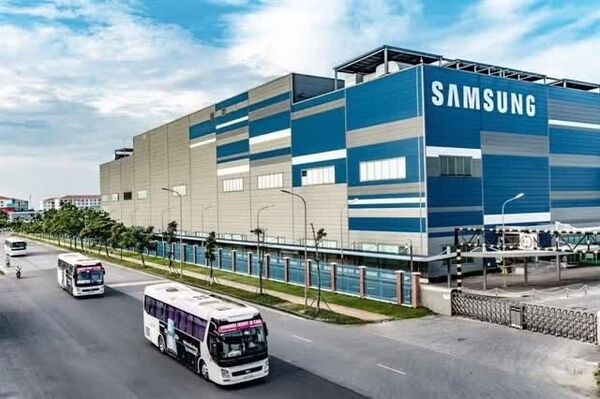
Sharing international experience, Nguyen Canh Cuong from the National University-Hanoi said Japan succeeded by identifying strategic industries and maintaining long-term investment. The Republic of Korea built flagship conglomerates such as Samsung and Hyundai Motor Company, while China leveraged its market size and strong policy support to develop industrial clusters and move up global value chains.
Together, Resolutions 68 and 79 are creating a more comprehensive policy framework for the growth of Vietnamese enterprises. Opportunities and foundations are now in place, with the key challenge lying in effective implementation and consistent long-term strategy.
Experts held that if Vietnam capitalises on this period effectively, the next decade could see the emergence of regional-scale conglomerates capable of strengthening the country’s position in global industrial value chains and advancing its economic ambitions./.