 |
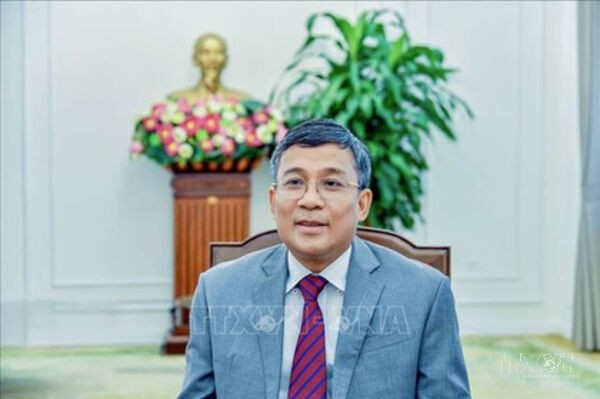
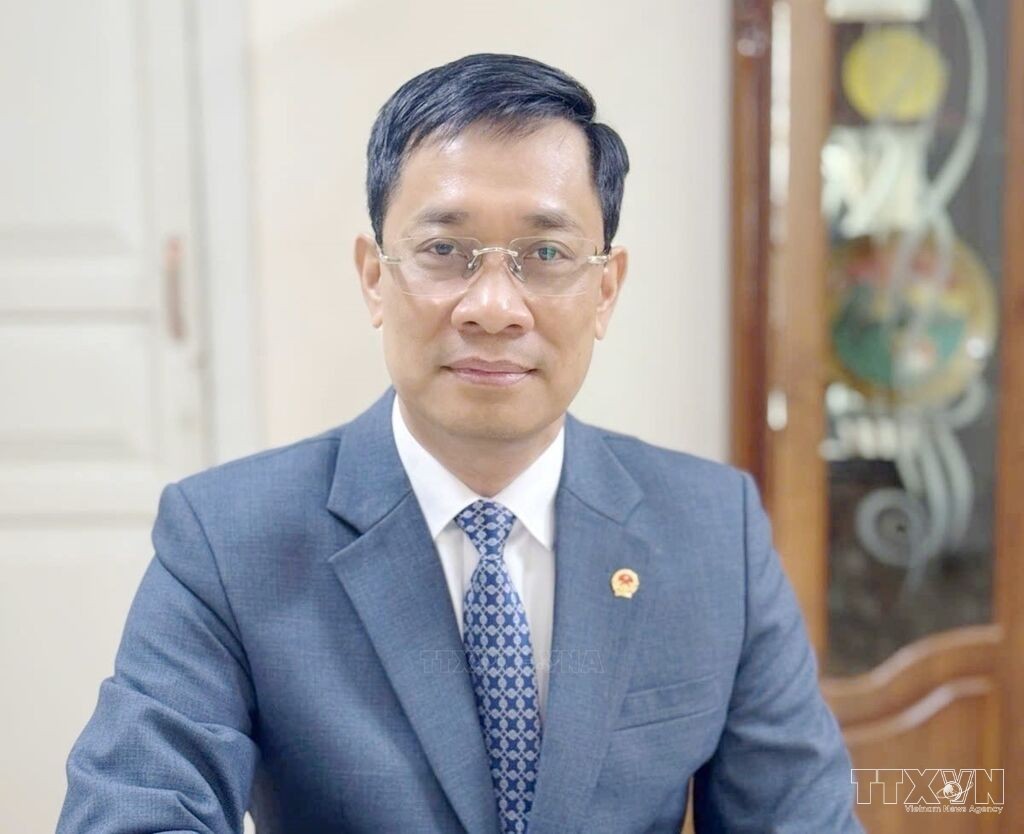
| Vietnamese Ambassador to Mongolia Nguyen Tuan Thanh (Photo published by VNA) |
Hanoi (VNA) – The upcoming official visit to Mongolia by National Assembly (NA) President Tran Thanh Man is expected to demonstrate the determination of Vietnam and Mongolia to make their newly established Comprehensive Partnership deeper, more substantive and effective, while strengthening political understanding and trust between the two countries.
In an interview with the Vietnam News Agency ahead of the September 9-11 visit, Vietnamese Ambassador to Mongolia Nguyen Tuan Thanh said the trip would be the second visit to Mongolia by a Vietnamese NA President since the two countries established diplomatic relations in 1954.
NA President Man, his spouse and a high-level Vietnamese delegation will meet with the Chairman of the State Great Hural, President, and Prime Minister of Mongolia, and take part in other important activities during the visit.
The trip comes at an important time, as Vietnam and Mongolia have recently upgraded their relations to a Comprehensive Partnership. It will be the first high-level visit by a key Vietnamese leader to Mongolia since the upgrade, providing an opportunity for the two sides to implement major commitments and orientations agreed by their leaders.
According to Thanh, Vietnam and Mongolia share a long-standing friendship as well as historical and cultural similarities and common aspirations for development. Against the backdrop of rapid changes in the regional and international situation, maintaining regular high-level exchanges and closer coordination at multilateral forums has become increasingly important.
The visit is expected to strengthen ties between the two legislatures. The ambassador said the parliarments serve as an important bridge between the two countries, not only in political relations but also in improving legal frameworks and promoting economic, trade and investment cooperation and people-to-people exchanges.
The two legislatures are expected to sign cooperation documents during the visit, creating a framework for greater exchanges of experience in lawmaking, supervision and making decisions on major national issues.
Thanh said the two sides are also set to discuss areas with considerable potential, including trade, investment, agriculture, energy, tourism, transport and climate change response.
“The most important point now is to move from establishing a framework for relations to achieving concrete cooperation results,” he said, stressing that people and businesses in both countries should be able to benefit from the new partnership.
He expressed his belief that if the Comprehensive Partnership is viewed as a major milestone, the NA President’s visit will be an important step toward turning that milestone into specific programmes, projects and results.
Stronger political and economic ties
The ambassador said Vietnam-Mongolia relations have entered a positive period following more than 70 years of diplomatic ties and the State visit to Mongolia by General Secretary of the Communist Party of Vietnam Central Committee and President To Lam in 2024.
Political and diplomatic relations have continued to develop through regular high-level visits and contacts, as well as mechanisms such as the Vietnam-Mongolia Intergovernmental Committee, political consultations and security and defence cooperation.
The recent upgrade to a Comprehensive Partnership has created a new framework and momentum for deeper and more substantive bilateral relations.
Economic, trade, investment and tourism cooperation have also gained new opportunities. The two economies are complementary, with considerable room for further cooperation.
Energy is emerging as a new pillar of economic ties. Trade has grown steadily, while Mongolian livestock products exported to Vietnam have contributed to the expansion of bilateral trade.
Direct air links have also helped improve connectivity, facilitating trade, tourism and people-to-people exchanges. Businesses from both countries are being encouraged to explore opportunities in agriculture, food, energy, minerals, tourism, logistics and digital transformation.
Cultural and educational cooperation has continued to expand through cultural and art programmes, exchanges and the translation of literary and cultural works.
A notable symbol of the friendship between the two peoples is School No. 14 in Ulaanbaatar, which has carried the name of President Ho Chi Minh since 1980. It provides a foundation for further educational cooperation, the ambassador said.
People-to-people and locality-to-locality ties are also becoming more active. Hanoi and Ulaanbaatar have established a twinning relationship, while Phu Tho and Tuv provinces and Dak Lak and Okhon provinces have also developed ties. The Vietnamese community in Mongolia contributes to bringing the two countries' people closer together.
Wide room for economic cooperation
Looking ahead, the Vietnamese ambassador said the two countries have substantial room to expand economic cooperation, particularly after upgrading their relations.
Mongolia boasts strengths in minerals, energy, livestock and raw materials, while Vietnam has advantages in processing and manufacturing, consumer goods, agricultural and food products, pharmaceuticals, textiles and electronics. These complementary strengths could help the two countries expand trade, diversify products and gradually develop suitable supply chains.
He called for stronger business connections through trade fairs and investment forums, as well as measures to address difficulties related to logistics, payments, quality standards and import-export procedures. Better transport and air connectivity would also help promote trade, tourism and people-to-people exchanges.
Investment cooperation has promising prospects in energy, minerals, processing, infrastructure, logistics, tourism and services. Vietnamese companies with growing experience in overseas investment could explore greater opportunities in Mongolia, while Mongolian businesses could benefit from Vietnam’s capital, technology and experience as the country seeks to diversify its economy beyond mining.
Agriculture and livestock are another promising area. The ambassador also highlighted opportunities for cooperation in climate-resilient agriculture, combating desertification, water use and agricultural science and technology.
He stressed that the Comprehensive Partnership should open the way for new, long-term areas of cooperation rather than focusing only on traditional sectors.
“If we do a good job of connecting businesses and removing bottlenecks in markets, logistics and information, I believe economic cooperation between Vietnam and Mongolia will have considerable room to grow and become an important pillar of bilateral relations in the coming period,” he said./.