 |
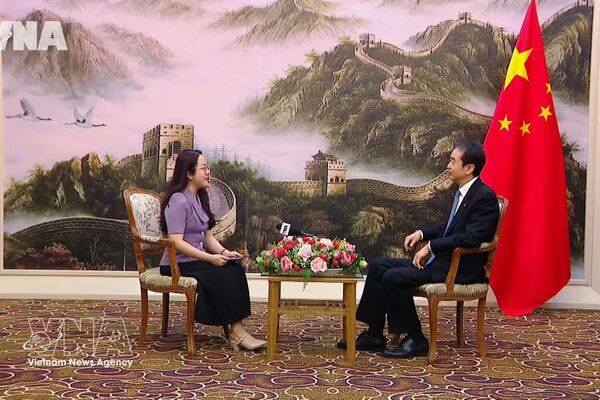
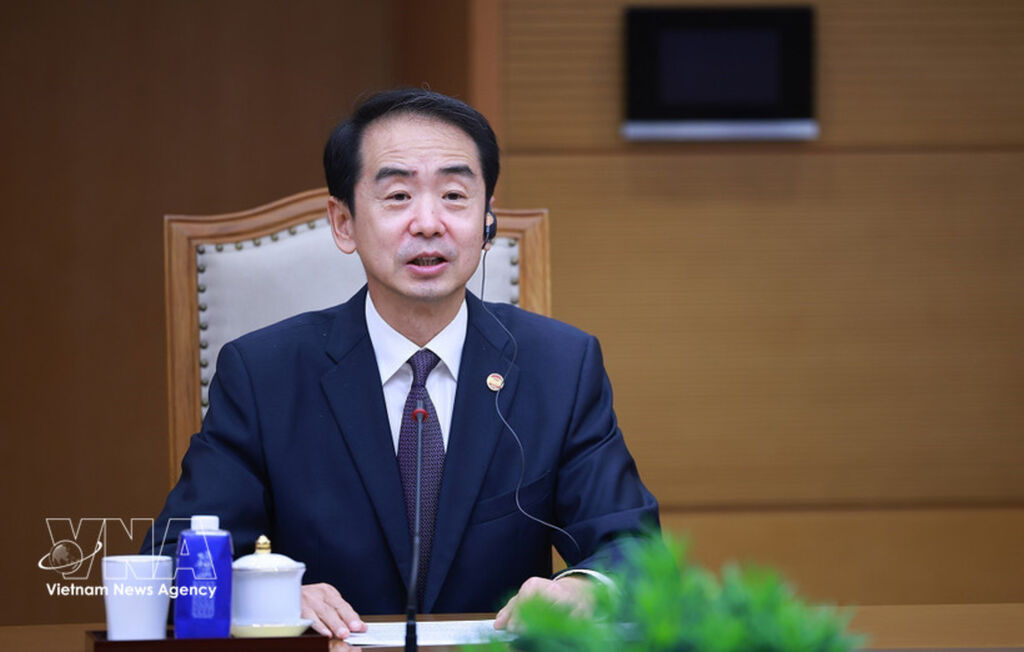
| Chinese Ambassador to Vietnam He Wei (Photo: VNA) |
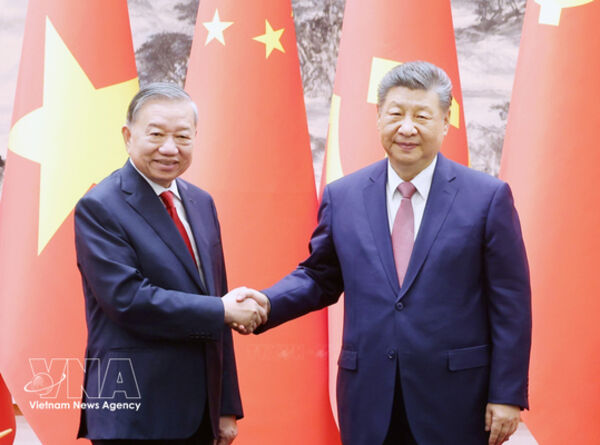
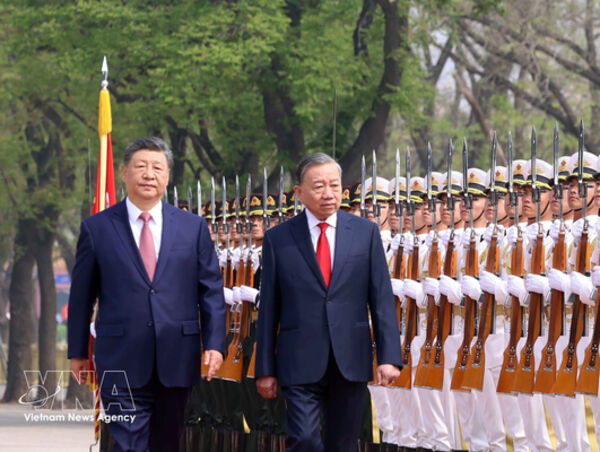
Beijing (VNA) – The recent state visit to China by General Secretary of the Communist Party of Vietnam (CPV) Central Committee and President of Vietnam To Lam has reinforced political trust, expanded practical cooperation, and set a clearer course for building a higher-level China – Vietnam community with a shared future that carries strategic significance, Chinese Ambassador to Vietnam He Wei has stated.
Beijing (VNA) – The recent state visit to China by General Secretary of the Communist Party of Vietnam (CPV) Central Committee and President of Vietnam To Lam has reinforced political trust, expanded practical cooperation, and set a clearer course for building a higher-level China – Vietnam community with a shared future that carries strategic significance, Chinese Ambassador to Vietnam He Wei has stated.
In an article recently published on the People’s Daily of China, the diplomat said against the backdrop of rapid global changes, the visit came at a pivotal moment as China embarks on its 15th Five-Year Plan and Vietnam enters a new era of national development. He highlighted the profound political significance of the visit, which sent a clear signal of the two countries’ commitment to strengthening mutual strategic trust, working towards common development and opening up a new chapter in advancing the building of a community with a shared future that carries strategic significance at a higher level.
He reflected on the three notable “firsts” of the trip – it was the Vietnamese leader’s first overseas trip after assuming the presidency; the first visit by a foreign head of state to the Xiong’an New Area, dubbed China’s “city of the future”; and the first time a foreign leader travelled 10 hours by high-speed rail across six Chinese provinces during a visit. These special arrangements, he wrote, clearly illustrated the special nature of China – Vietnam ties.
Stressing some outstanding points of the visit, the ambassador noted that as partners moving on the same path, the two countries reaffirmed their shared ideals and trust. The top leaders of the two Parties and States held in-depth discussions on overarching and strategic issues as well as orientations shaping bilateral relations. They reiterated the historic mission of the two Communist Parties to serve the people, develop the nations, and contribute to human progress.
Both sides emphasised that advancing bilateral relations is a shared strategic choice, and pledged to steadfastly pursue the socialist path and jointly safeguard the socialist regimes and the leadership role of their Communist Parties as their most fundamental common strategic interest, he said.
Their joint commitment to modernisation, He added, reflects the soundness of their chosen paths and demonstrates the strong political foundation underpinning bilateral ties.
China and Vietnam have accelerated the upgrade of practical cooperation. The two sides issued a high-quality joint statement outlining a clear roadmap for building a China – Vietnam community with shared future from a higher-level vision. Ministries, sectors, and localities signed 32 important cooperation documents, including those on strategic infrastructure projects such as three standard-gauge railway lines in northern Vietnam, as well as initiatives in agriculture, health care, human resources, and technological innovation. Over the years, the two countries have developed a cooperation framework that combines land – sea connectivity advantages with complementary industrial strengths. Their development strategies are increasingly aligned, providing a solid stepping stone for sustainable development of each country.
According to the ambassador, the visit injected fresh momentum into people-to-people exchanges, contributing to mutual understanding and bonds. Leaders of both countries jointly announced the launch of the China – Vietnam Tourism Cooperation Years for 2026–2027, building on the success of the China – Vietnam Year of Humanistic Exchange 2025. This is expected to create new impetus for bilateral exchanges and further strengthen the traditional friendship often described as a bond of “both comrades and brothers”. In the coming time, the two sides will work to develop a healthy tourism industry with outstanding destinations that reflect their distinctive cultural identities and appeal to visitors from both countries.
He stressed that China and Vietnam showed a renewed sense of responsibility and commitment in global and regional affairs. During the visit, the two sides exchanged views on issues of common concern and emphasised the need to promote a more just and equitable global governance system. They voiced strong support for multilateralism and for advancing common development and prosperity. Amid a complex and evolving international environment, their traditional friendship and shared commitment to humanity’s common interests, he noted, becomes increasingly valuable, bringing about stability and positive energy to peace and development in the region and the world.
At a new historical starting point, China stands ready to work with Vietnam to further harness the “strong momentum” of substantive cooperation while bettering management of differences, and translating high-level consensus into concrete plans and tangible “action plans” for building a community with a shared future, and to jointly chart a brighter future for bilateral relations, he stated./.
In an article recently published on the People’s Daily of China, the diplomat said against the backdrop of rapid global changes, the visit came at a pivotal moment as China embarks on its 15th Five-Year Plan and Vietnam enters a new era of national development. He highlighted the profound political significance of the visit, which sent a clear signal of the two countries’ commitment to strengthening mutual strategic trust, working towards common development and opening up a new chapter in advancing the building of a community with a shared future that carries strategic significance at a higher level.
He reflected on the three notable “firsts” of the trip – it was the Vietnamese leader’s first overseas trip after assuming the presidency; the first visit by a foreign head of state to the Xiong’an New Area, dubbed China’s “city of the future”; and the first time a foreign leader travelled 10 hours by high-speed rail across six Chinese provinces during a visit. These special arrangements, he wrote, clearly illustrated the special nature of China – Vietnam ties.
Stressing some outstanding points of the visit, the ambassador noted that as partners moving on the same path, the two countries reaffirmed their shared ideals and trust. The top leaders of the two Parties and States held in-depth discussions on overarching and strategic issues as well as orientations shaping bilateral relations. They reiterated the historic mission of the two Communist Parties to serve the people, develop the nations, and contribute to human progress.
Both sides emphasised that advancing bilateral relations is a shared strategic choice, and pledged to steadfastly pursue the socialist path and jointly safeguard the socialist regimes and the leadership role of their Communist Parties as their most fundamental common strategic interest, he said.
Their joint commitment to modernisation, He added, reflects the soundness of their chosen paths and demonstrates the strong political foundation underpinning bilateral ties.
China and Vietnam have accelerated the upgrade of practical cooperation. The two sides issued a high-quality joint statement outlining a clear roadmap for building a China – Vietnam community with shared future from a higher-level vision. Ministries, sectors, and localities signed 32 important cooperation documents, including those on strategic infrastructure projects such as three standard-gauge railway lines in northern Vietnam, as well as initiatives in agriculture, health care, human resources, and technological innovation. Over the years, the two countries have developed a cooperation framework that combines land – sea connectivity advantages with complementary industrial strengths. Their development strategies are increasingly aligned, providing a solid stepping stone for sustainable development of each country.
According to the ambassador, the visit injected fresh momentum into people-to-people exchanges, contributing to mutual understanding and bonds. Leaders of both countries jointly announced the launch of the China – Vietnam Tourism Cooperation Years for 2026–2027, building on the success of the China – Vietnam Year of Humanistic Exchange 2025. This is expected to create new impetus for bilateral exchanges and further strengthen the traditional friendship often described as a bond of “both comrades and brothers”. In the coming time, the two sides will work to develop a healthy tourism industry with outstanding destinations that reflect their distinctive cultural identities and appeal to visitors from both countries.
He stressed that China and Vietnam showed a renewed sense of responsibility and commitment in global and regional affairs. During the visit, the two sides exchanged views on issues of common concern and emphasised the need to promote a more just and equitable global governance system. They voiced strong support for multilateralism and for advancing common development and prosperity. Amid a complex and evolving international environment, their traditional friendship and shared commitment to humanity’s common interests, he noted, becomes increasingly valuable, bringing about stability and positive energy to peace and development in the region and the world.
The Chinese diplomat reaffirmed that as partners on the socialist path, China and Vietnam have consistently supported each other in their pursuit of national independence, development, and modernisation.
At a new historical starting point, China stands ready to work with Vietnam to further harness the “strong momentum” of substantive cooperation while bettering management of differences, and translating high-level consensus into concrete plans and tangible “action plans” for building a community with a shared future, and to jointly chart a brighter future for bilateral relations, he stated./.