 |
| Delegates at the 40th ASEAN Council of Teachers + Korea Convention (Photo: VNA) |
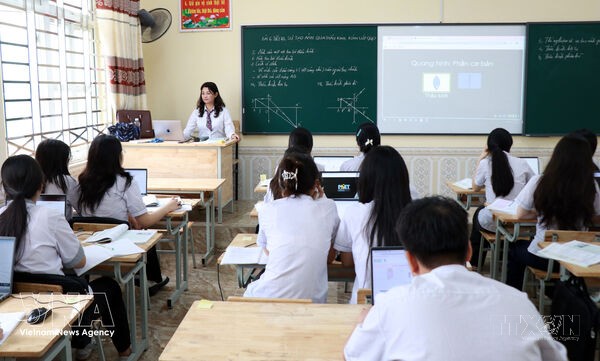
Singapore (VNA) – Effective integration of artificial intelligence (AI) into Vietnam’s general education system requires a human-centred approach that strengthens school leadership, safeguards teachers’ professional autonomy and ensures educational equity, Vietnamese education expert Dr. Trinh Thi Quy said at the 40th ASEAN Council of Teachers plus the Republic of Korea (ACT +1) Convention in Singapore.
Hosted by the Singapore Teachers' Union from October 22–25 under the theme “Navigating Our Future: Steered by Teachers; Anchored in Relationships; Propelled by AI”, the conference brought together educators and teacher leaders from across ASEAN and the RoK to exchange practical ideas, gain fresh perspectives and build meaningful professional connections.
In a presentation at the first national report session, Quy examined the opportunities and challenges of AI in Vietnam’s general education system and proposed a four-layer leadership model covering leadership styles, leadership mechanisms, areas of AI integration and integration outcomes.
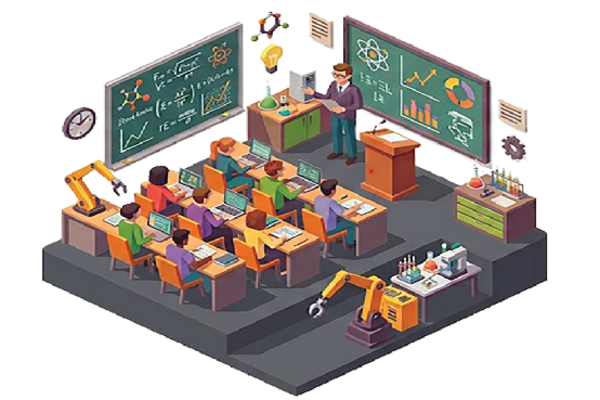
She noted that AI could support personalised learning and teaching, help identify students’ difficulties at an early stage, reduce administrative workloads and improve school management. However, its integration also poses challenges related to the capacity of education managers and teachers, digital infrastructure, unequal access to technology, algorithmic bias, data security and the risk of overdependence on technology.
Quy’s proposed model emphasises improving AI skills, strengthening data governance, ensuring educational equity, preserving teachers’ professional autonomy and putting people at the centre of technology adoption. She said effective AI integration was first and foremost a matter of school leadership and governance, adding that the model should be further tested in Vietnam’s education system.
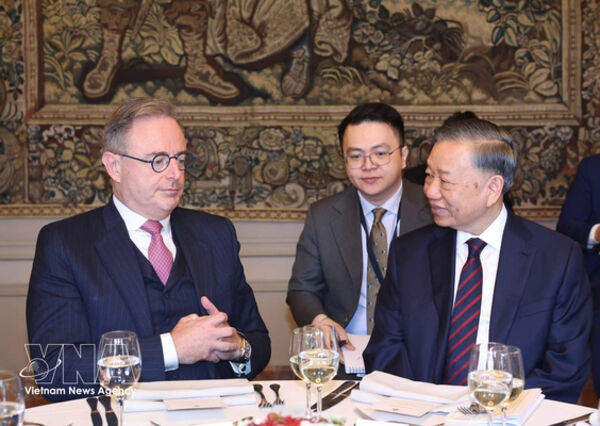
According to Dr. Nguyen Ngoc An, Chairman of the Vietnam Education Union, who led the Vietnamese delegation to the event, the conference’s theme holds a great significance to teachers and lecturers as countries accelerated digital transformation and the application of AI across society, including education. He said that beyond exchanging experience at the conference, the Vietnamese delegation also had opportunities to establish bilateral ties and cooperation on issues of pressing concern to Vietnam’s education sector.
He stressed that although technological advances require the education sector to adapt, its development depends not on technology itself but on teachers. Education could progress only if teachers were confident, prepared and equipped with the necessary capabilities, he said.
The conference featured workshops and discussions on AI in education, teaching methods and teachers’ professional development, alongside networking activities. Its resolution reaffirmed teachers’ leading role in AI adoption, called for the protection of teacher-student relationships, stronger digital capacity and ethical and equitable education, and urged member trade unions to develop national implementation plans and enhance regional cooperation and experience-sharing./.