 |
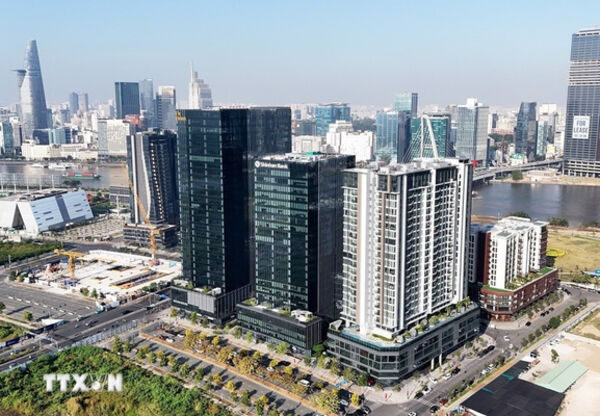
| In Vietnam, demand for infrastructure supporting AI, cloud computing, and digital services is rising at an unprecedented level. (Illustrative photo: VNA) |
HCM City (VNA) – The Vietnamese data centre market is entering a phase of explosive growth, transitioning from purely technical infrastructure to a high-tech real estate asset attracting international investment institutions.
The country’s cost advantages, coupled with the push from AI and national digital transformation, are ushering in a strong shift. However, this comes with the challenge of overcoming legal barriers and ensuring adequate electricity supply.
New momentum from the digital era
According to the CBRE Asia-Pacific Investor Intentions Survey 2025, published by CBRE Vietnam, data centres have surged to become the second most preferred alternative asset class in the region. Vietnam is no exception to this trend as demand for infrastructure supporting AI, cloud computing, and digital services has risen at an unprecedented level.
Studies indicate that approximately 70% of the global data centre workload from 2023 to 2030 will be related to AI, driving the growth in demand for infrastructure at a compound annual growth rate (CAGR) of 19–22%. The Asia-Pacific region is projected to account for 45–55 GW of global demand by 2028, a huge figure signalling the geographic shift of data centres towards emerging markets, with Vietnam being highly rated due to its competitive cost advantages.
GenAI is also driving a significant increase in the demand for higher rack densities and greater cooling capabilities. In Vietnam, new projects must optimise designs for high-density power capacity. For example, CMC Tan Thuan Data Centre has tailored its infrastructure to support up to 20 kW/rack, reflecting a clear shift towards infrastructure standards that cater to the needs of AI.
According to CBRE, Vietnam boasts one of the fastest-growing digital markets in the region, with 80 million Internet users, equivalent to 79% of the population, and a mobile penetration rate of up to 164%. The digital economy continues to expand, with e-commerce targeting a gross merchandise value (GMV) of 35 billion USD by 2025, while the cloud market is projected to grow at a CAGR of 21.65% through 2030.
The official operation of the National Data Centre from August 19, 2025 carries strategic significance, driving demand for high-performance computing infrastructure, data-sharing systems, and cloud services for government agencies. It also signals the establishment of new operational and cybersecurity standards for the market, creating advantages for domestic providers such as Viettel and VNPT, and boosting investment in standardisation to meet the strict requirements of regulatory authorities.
Opportunities for breakthrough
According to CBRE Vietnam, although the market has attracted significant interest from global investors, the scale of Vietnam’s data centre industry remains relatively small. As of October, total operational capacity had reached 104 MW, only one-tenth of Shanghai’s (1,071 MW) and still far behind Singapore (738 MW).
The market is currently dominated by five major players, primarily telecom operators and State-owned enterprises which make up 97% of total capacity. Among them, Viettel IDC leads with a 41% market share (42 MW), followed by VNPT (25 MW). This high supply concentration reflects significant barriers for foreign investors seeking to enter this emerging market.
However, growth potential is substantial. Planned additional capacity is expected to reach 589 MW, increasing the total market size by 5.6 times after 2030. Key growth hotspots include Ho Chi Minh City, forecast to surge by 811%, and former Binh Duong province, by 1,071%. Notably, the Tan Phu Trung Data Centre (Viettel, 140 MW) is Vietnam’s first mega-scale project, marking a clear move towards hyperscale development.
One of the key reasons for the emergence of Vietnam is its construction cost advantage. According to CBRE and Turner & Townsend, the construction cost of a Tier-III data centre in Ho Chi Minh City or Hanoi is only about 7 million USD per MW, nearly 50% lower than in Tokyo or Singapore.
In addition to cost advantages, Vietnam also benefits from its strategy to expand international connectivity infrastructure. The Government aims to deploy at least 10 new submarine cable routes by 2030, expected to help reduce latency – a key factor for establishing availability zones for major cloud providers such as AWS, Google Cloud, and Microsoft.
Alongside this, the amended Investment Law, digital economy development policies, and a young workforce, with a target of 75% of workers professionally trained by 2030, create a macro foundation strong enough for the long-term growth of Vietnam’s data centre market./.