 |
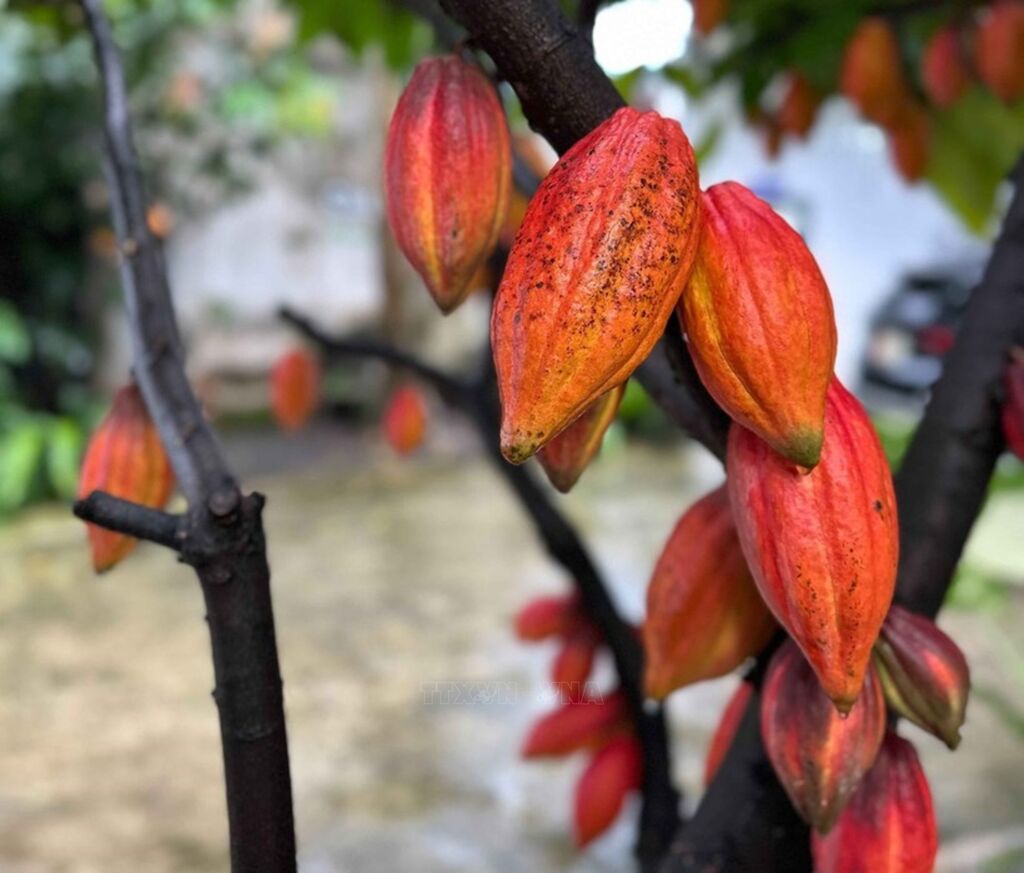
| One of the precious cocoa varieties preserved at the Azzan Cocoa–Chocolate JSC in Buon Ma Thuot ward, Dak Lak province. (Photo: VNA) |
Hanoi (VNA) – Vietnam has officially been recognised by the International Cocoa Organisation (ICCO) as a producer of Fine Flavour Cocoa (FFC), becoming the second Asian country to receive this prestigious status.
This recognition places Vietnam among a select group of countries whose cocoa beans are prized for distinctive flavour profiles rather than sheer volume. Fine Flavour Cocoa accounts for only about 10 – 15% of global production and is primarily used in premium and craft chocolate segments.
Vietnam enjoys a rare combination of advantages: inclusion in the fine-flavour category, diverse ecological conditions, and the ability to develop cocoa cultivation through agroforestry and intercropping models aligned with the trend of low-carbon and sustainable agriculture.
Rather than competing on output, Vietnam has a clear opportunity to pursue a high-value strategy centred on quality, branding and regional identity.
Opportunities for Vietnamese cocoa
For many years, cocoa in Vietnam remained a small-scale crop, largely absent from major agricultural value-chain strategies. However, in the context of agricultural restructuring linked to green growth, emissions reduction and deeper international integration, cocoa is emerging as a promising niche commodity.
MSc. Nguyen Thi Thanh Mai from the Western Highlands Agriculture and Forestry Science Institute (WASI), said Vietnamese cocoa is highly regarded for its rich flavour, balanced natural acidity and distinctive fruity notes – characteristics well suited to craft chocolate, dark chocolate and premium cocoa products.
“Fine flavour is not about volume, but about quality, traceability and the cultural story of a farming region,” she said.
Market Research Future (MRFR) estimates the global cocoa bean market reached approximately 17.17 billion USD in 2024 and is expected to exceed 37 billion USD by 2035, with a compound annual growth rate of around 7.3%. Growth is increasingly driven by high-end segments such as dark chocolate, artisanal chocolate, organic cocoa and sustainably sourced, traceable products.
Strategic role of Central Highlands
The Central Highlands is Vietnam’s largest cocoa-growing region, with Dak Lak province demonstrating the strongest potential to develop a structured and competitive cocoa industry. In addition to having the largest plantation of the tree nationwide, Dak Lak benefits from fertile basalt soil, a stable highland climate, extensive experience in industrial crop cultivation, and an emerging ecosystem of enterprises and cooperatives.
Notably, cocoa in Dak Lak is primarily grown through intercropping under coffee, fruit trees and forest canopies, consistent with regenerative agriculture principles. Cocoa improves soil cover, boosts organic matter, absorbs carbon, and doesn’t compete for nutrients, making it a great choice for long-term sustainable production.
The province currently has seven cooperatives engaged in cocoa production. Many farmers, cooperatives and producer groups have established linkages with enterprises for production and sale, helping stabilise markets and improve quality.
However, these linkages remain limited in scale, with most activities focused on raw material supply. Deep processing and value addition are still modest.
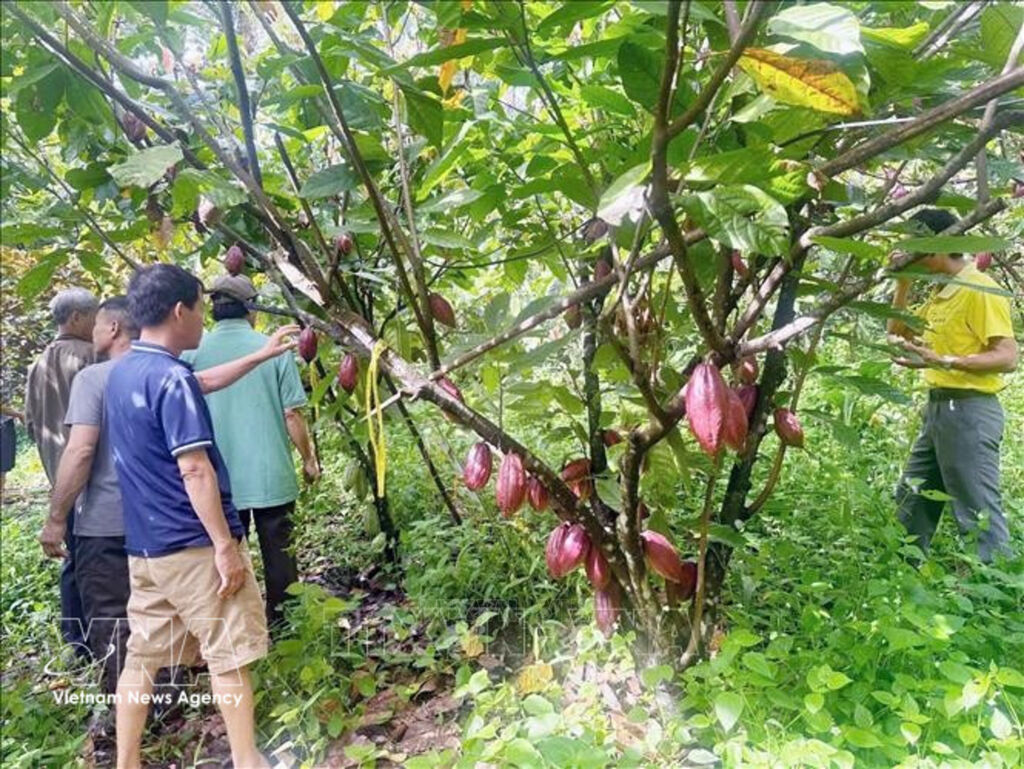 |
| Farmers learn about a cocoa cultivation model in Dak Lak province. (Photo: VNA) |
In response, Dak Lak’s agricultural sector is developing a cocoa value-chain strategy aimed at moving beyond raw production to include processing, branding and export market integration.
With a shared vision of transforming the province into a centre for Vietnamese cocoa and chocolate, businesses and farmers are working together to turn the red basalt plateau into a symbol of green and high-value export-oriented agriculture.
Doan Thi Kim Xuyen, Director of the Cacao Land Co. Ltd in Dak Lak, noted like many other distinctive products of the Central Highlands, the greatest value of cocoa lies not in raw beans, but in its potential to be processed deeply and tell the story of the local land and its people.
“A chocolate bar brings in many times more value than bean export. But more importantly, it helps Vietnam enter the market as a value creator, not a seller of raw materials,” she opined./.