 |
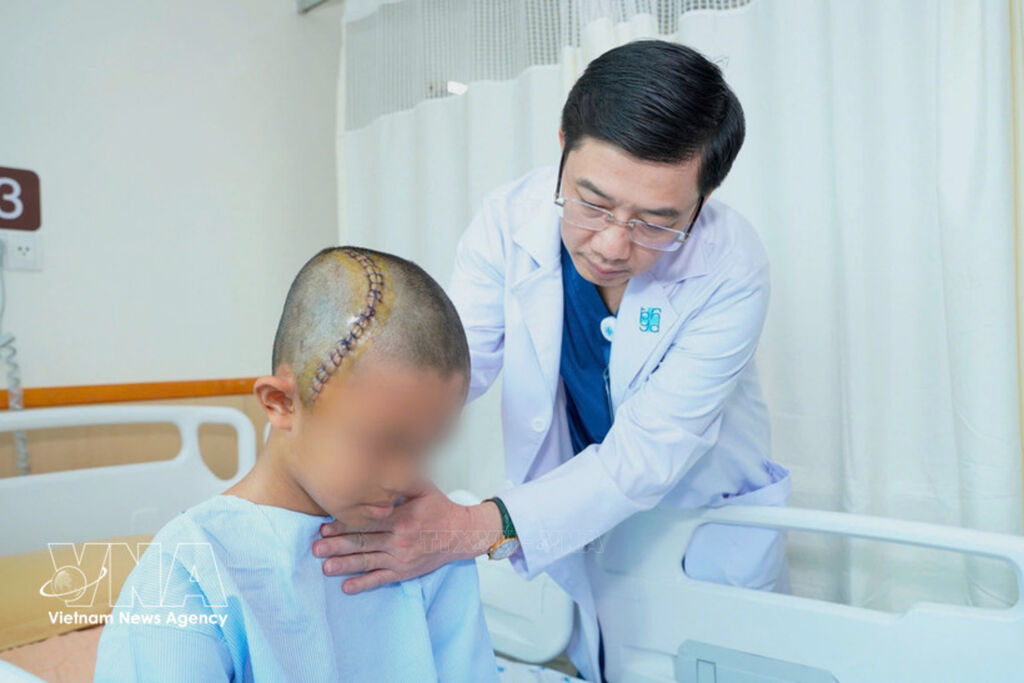
| Dr Truong Thanh Tinh, head of the Department of Neurosurgery under the University Medical Centre Ho Chi Minh City, gives a post-surgery check-up on the 12-year-old patient. (Photo: VNA) |
Ho Chi Minh City (VNA) – University Medical Centre Ho Chi Minh City has successfully performed Vietnam’s first awake brain surgery on a paediatric patient, marking a major milestone in neurosurgery and opening up new opportunities to preserve neurological function and long-term quality of life for children with high-risk brain tumours.
The hospital announced on May 19 that the patient, a 12-year-old boy, recovered well after surgery, remained fully conscious and showed no new focal neurological deficits. Post-operative imaging indicated that the tumour had been almost completely removed. Doctors are continuing close monitoring and preparing further treatment plans to support the child’s full recovery.
The boy was admitted to the hospital after experiencing prolonged headaches, temporary numbness and weakness on one side of the body, and a brief loss of consciousness. Examinations revealed a large brain tumour located near critical areas responsible for movement and speech.
According to Dr Do Hong Hai of the University Medical Centre Ho Chi Minh City, the tumour’s location posed significant surgical challenges, as any intervention carried the risk of long-term complications affecting mobility, communication and overall quality of life. Therefore, the goal was not only tumour removal but also maximum preservation of neurological function.
To address this challenge, doctors opted for awake craniotomy, an advanced neurosurgical technique typically used for lesions located near essential brain functions, instead of conventional general anaesthesia. During the procedure, the patient remains conscious so surgeons can directly assess speech and motor responses in real time.
Dr Hai said the technique enables surgeons to determine safe boundaries for tumour removal and promptly detect any risk of damage to critical neural pathways, thereby minimising neurological impairment.
Dr Truong Thanh Tinh, head of the Department of Neurosurgery under the University Medical Centre Ho Chi Minh City, noted that awake brain surgery in children requires a high level of expertise and close coordination among neurosurgeons, anaesthesiologists, nurses and psychological support teams.
With a 12-year-old patient, helping the child understand, trust and cooperate throughout the surgery was a key factor behind the successful outcome, he said.
Since 2025, the hospital has successfully performed 12 awake brain surgeries on adult patients. The successful application of the technique in a child demonstrates the hospital’s growing mastery of advanced functional neurosurgery.
Doctors also advised parents not to overlook neurological symptoms in children, such as prolonged headaches, temporary limb weakness or brief loss of consciousness, stressing that early detection and timely intervention are crucial to preserving brain function, learning ability and long-term development./.