 |
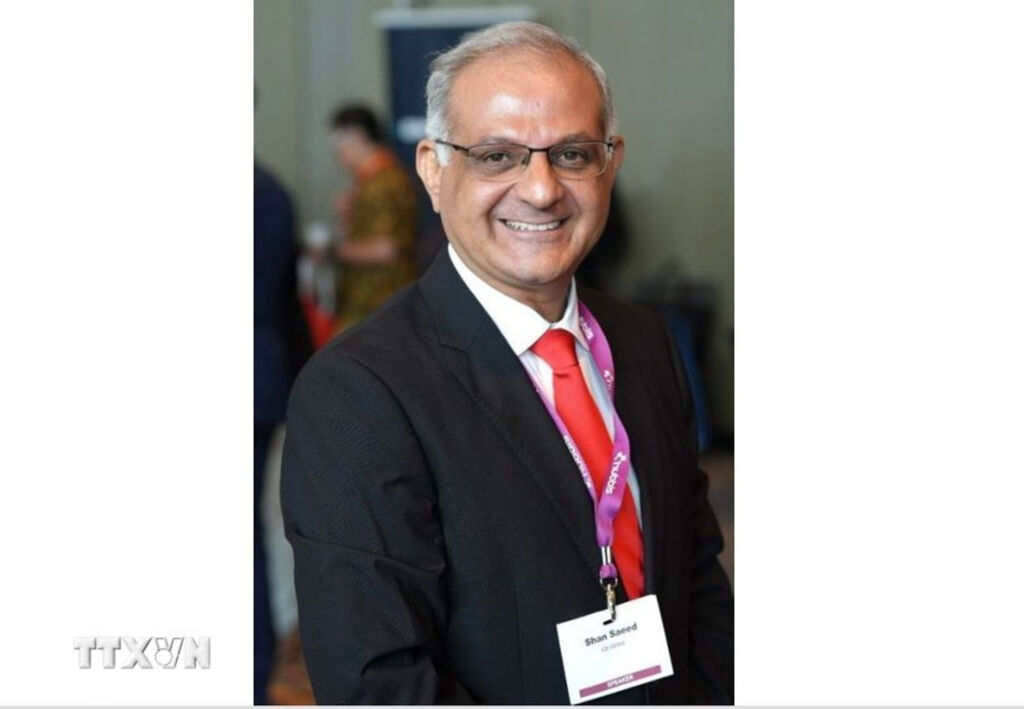
| Shan Saeed, Global Chief Economist at Malaysia-based international real estate firm IQI Juwai. (Photo: VNA) |
Hanoi (VNA) – The conflict in the Middle East is a major shock to the global energy market, pushing prices skyward and making supply security a top concern, said Shan Saeed, Global Chief Economist at Malaysia-based international real estate firm IQI Juwai, adding that the impact on Vietnam remains cyclical and manageable.
Saeed pointed out that with Brent crude hovering around 112 USD per barrel, the market is factoring in a built-in risk premium tied to the Strait of Hormuz, a vital passage for about 20% of the world’s oil and LNG shipments. Any disruption at this chokepoint could spark a global reassessment of energy risks.
Under a baseline scenario, Brent prices are expected to fluctuate between 100-120 USD per barrel, with the possibility of exceeding 150 USD if tensions escalate. Meanwhile, the gas market remains structurally tight. LNG prices in Asia stand at about 25 USD per mmBtu, up 68% since early 2026, reflecting supply disruptions in Qatar, cargo diversions to Europe, and limits in liquefaction and shipping capacity.
At the macro level, the oil market is undergoing sustained geopolitical risk repricing, while the gas market faces tightening caused by supply constraints and logistical bottlenecks - a structural rather than cyclical shift.
Saeed noted that Vietnam may experience short-term cost-push inflation through transport, logistics and industrial input costs. Inflation could rise to around 4% but remain within the control of the current policy framework.
Vietnam’s economy has nevertheless maintained strong macroeconomic fundamentals and resilience among emerging Asian economies. Supporting indicators included GDP growth of 8.02% in 2025, inflation at 3.31%, trade turnover exceeding 930 billion USD, a trade surplus of about 20 billion USD, and foreign exchange reserves reaching 85.4 billion USD.
In energy, Vietnam faces manageable constraints. In 2025, the country imported about 14.2 million tonnes of crude oil, with Kuwait as a key strategic partner, while domestic output is projected to decline to 5.8–8 million tonnes annually during 2026–2030.
These pressures are unlikely to alter Vietnam’s long-term growth trajectory. The country continues to benefit from double-digit export growth in early 2026, high-value FDI inflows into electronics, semiconductors and advanced manufacturing, and deeper integration into global supply chain restructuring.
At the same time, policies are being adjusted to rebalance the energy mix by expanding LNG imports and regasification capacity while accelerating renewable energy development, targeting renewables to account for about 30% of the energy structure by 2030.
The expert said Vietnam is moving from being a passive price-taker to actively building resilience. Instead of seeing the current shock as a barrier to growth, it should be viewed as a push for stronger energy security, industrial upgrades, and higher productivity.
Saeed recommended a cautious, market-oriented and long-term policy approach that balances short-term stability with structural reform. Key measures include targeted fuel reserves and appropriate fiscal tools to contain inflation spillovers, diversification of supply sources to reduce reliance on routes linked to the Strait of Hormuz, expansion of strategic oil reserves, and greater flexibility in refining and storage systems.
The expert stressed the importance of boosting energy efficiency, cutting the energy intensity of production, keeping the economy stable, and managing inflation and exchange-rate expectations. He also pointed out the need to work closely with the International Monetary Fund (IMF), World Bank (WB), and Asian Development Bank (ADB) to build financial resilience and support the shift to cleaner energy. Stronger ties with oil-producing nations are seen as the key to maintaining steady energy supplies./.